Creating A Online Presence – How To Attract Visitors

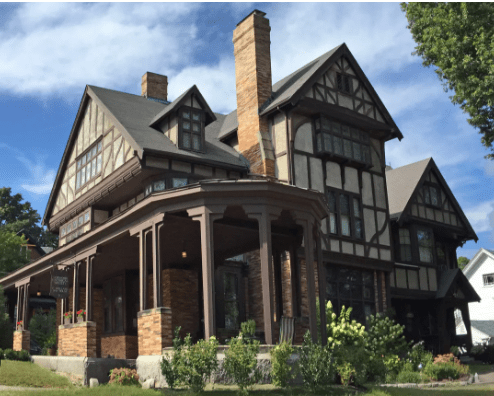
The beautiful Fred Holland Day House, the home of the Norwood Historical Society

            A few years ago, I was asked if I would join the Board of Directors of a local Historical Society. I became part of a dynamic group of people, each who bring a special interest or ability to the table, and together, I think we make a pretty good team. We have a beautiful old Victorian House that is our society’s headquarters, and we are always trying to come up with novel and interesting ways to physically bring people in our doors. Those that come to visit often say, “I grew up in this town and this is the first time I have been here.” Honestly, from being an active member of a couple of other local historical societies, I know this is a refrain heard over and over again. It seems our culture values the places and people who keep history alive in town, but they rarely have anything to do with that local history. When COVID hit, we, like everyone else, had to shutter our doors to guests. Although our physical home was closed, we still wanted visitors, so we went virtual.

This Day in Norwood History. A fun graphic created by George Curtis.

            One member of our Board of Directors created a daily posting he called “This Day in Norwood History.” Part of our collection contains bound copies of our local newspapers, going back for several decades. Taking a cue from today’s date, he looked through our collection for interesting newspaper articles with the same date. He usually selected a short article that may have featured a business or a person or a location. He transcribed it and posted it to our home page, then linked that posting to our Facebook page….of course he included a picture to catch someone’s eye. The response was incredible! Our Facebook post was shared and shared again. People often started threads discussing their memories of topic posted, and the traffic to our home page increased tremendously! We were reaching not only local folks, but those who had moved out of town settling in far way communities.

            Another local historical society where I volunteer did something similar. They thought it might be fun to photograph items from their collection, and post them on their Facebook account asking people if they can identify what the item was and/or what it was used for. This was an excellent way to not only show off their collection, and to spark conversations, but an even better way to attract virtual visitors. Another take on this is posting local places long gone, and asking visitors if they know where this place was…and what is there now.  Sparking a memory often will engage people, and bring you virtual visitors, who if in the area may physically walk though your doors someday.
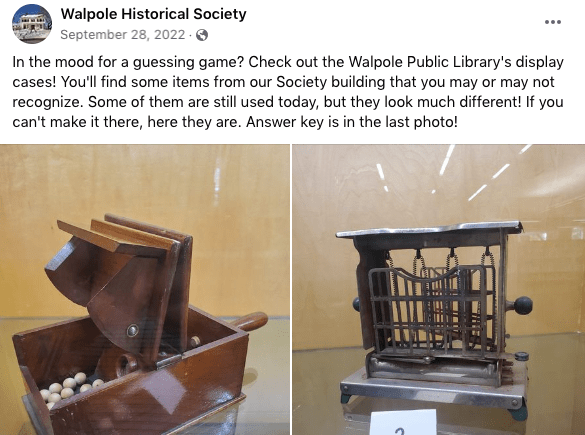
A fun Game from the Walpole Historical Society’s Facebook page.

            Today, so many historical societies struggle finding ways to share a their history and trying to engage people. Using the internet effectively a small society can potentially reach millions of people. Yes, using social media like Facebook, Tik Tok and Twitter (now X), can reach a large amount of people, but your society wants to have their robust own home page. One that offers visitors online exhibits to peruse, history article to read, and a place to join or buy society swag. Using social media will catch the attention of interested people, but linking those posts to your society’s home page will bring in virtual foot traffic and educate the public on your unique history.

            Initially “This Day in Norwood History,” was planned to be a program we were going to run during COVID, it has been wildly successful, and is still going today! The “What is this Item” the other historical society was doing, continues but at a more sporadically. Mostly because they are fun and engaging…which I think is exactly what history should be!

Walking Tours – Takin’ it to the Streets

An announcement card for the Walk Around the Park, Nowood, MA

            I apologize if now you have the Doobie Brothers stuck in your head, and well this discussion has nothing to do with the Doobie Brothers, and everything to do with developing walking tours. Finding and creating an informal ways to share local history can and will attract participants and draw attention to you local historical society can be challenging. One program that many people seem to enjoy are walking tours. I have been lucky enough to research, write and offer several walking tours for a local church and a couple of local historical societies. All tours were well received and many people have asked if they will be run again as they either want an encore presentation or were unable to make the scheduled tour.

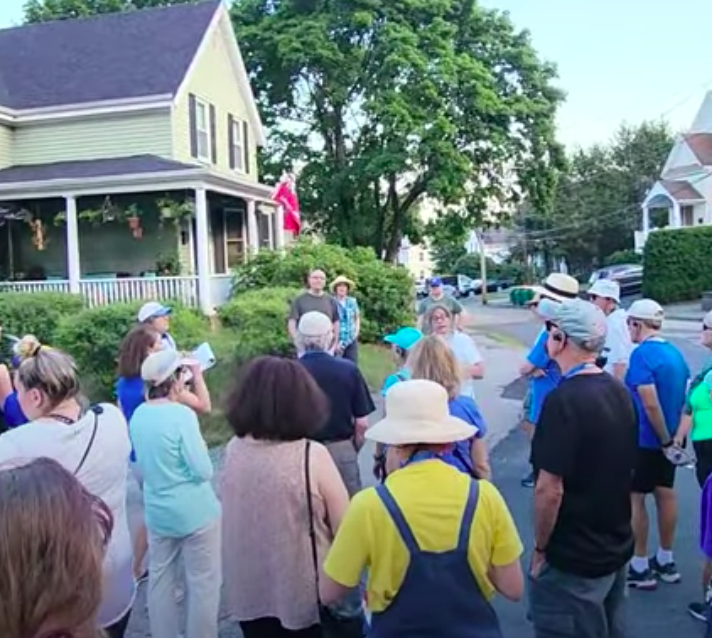
A snapshot of the Swedeville walking tour, Norwood, MA

            In the summer of 2022, the town of Norwood celebrated their 150th anniversary. A celebration committee was formed a couple of years in advance, and had planned some amazing year-long activities. Our historical society also wanted to offer opportunities to celebrate this anniversary, and we decided to offer several walking tours focusing on some of the ethnic neighborhoods that helped the town grow. These neighborhoods were established around 1900, and were home to so many people who came to Norwood in search is good jobs. A sort of chain migration occurred, as they told friends and family members of the wonderful opportunities Norwood had to offer. As I was researching these neighborhoods, I found it so fascinating how these new Americans shared their culture with their children in a variety of social organizations, churches, and celebrations. We offered seven tours over seven weeks over the summer on Tuesday nights. Every Tuesday, the number of attendees grew as people began talking about our tours. The last tours we gave had 50 to 60 participants!

A brochure was made of the History of Slavery in Wapole for people who would want to take a walking tour by themselves.

            A couple of years ago a local church began to explore the history of slavery in their church, with an eye towards reparations. I was asked to research a man who was enslaved in their town. This research led me to ask myself who else was enslaved there and what did their lives looks like during their enslavement and after (assuming they experienced freedom). First I had to identify people who had been enslaved in town, but the enslaved traditionally do not leave a lot of records behind. So I started with looking for wealthly residents and pulled wills, deeds and local published histories. As I was finding these people and the people they enslaved, I realized they all lived in walking distance of one another. I automatically thought writing and giving a walking tour about this history might be well received by the church and other interested people, but more importantly, I thought it was a wonderful way for people to learn about this history.

            Currently, my hometown is celebrating its 300th anniversary. A friend, who is a member the Board of Directors of our historical society, and I are planning to present six walking tours of our local cemeteries over the course of the year. I’ve been working on the research part and I think we have selected several great topics. So instead of giving a similar tour of each cemetery, we have selected an over arching theme for each tour. Some themes we will be discussing are founding families, early industries and wars that have affected Americans. By taking these themes and tying them into people who are buried in the cemetery we will create a walking tour that is more than “here is a grave of a person….AND here is another grave of a person,” hopefully it will be a tour that presents local history in a unique way.

The Rural Cemetery, Walpole, MA. Theme will be early industries in Walpole

            Some of my take-ways from the tours I have given, is to try to keep it around 1 hour to 1½ hours long. If they are too long, you will loose people. I have a couple of tours I know if are offered again, need to be edited. Also, have an idea regarding the physical length of the tour. If you cover a lot of area, let people know, that way they can judge if it is the right tour for them. It is also important to do a dry run of your tour, think of it as a dress rehearsal. On my slavery tour I just walked it, and I found the non-stop walk was about 55 minutes. I lopped off one stop on the tour, which gained be 15 minutes, and I shorten my talks at a couple of stops and hoped I was in the 1½ hour range. The other part I think is important is to share the presentation with another presenter. With the neighborhood tours, I had someone else helping me. One tour was of a swanky neighborhood filled with beautiful Victorian homes, my co-presenter was an architectural historian who offered a perspective that was not in my wheelhouse. In another neighborhood tour my co-presenter was someone who’s grandparents came to Norwood and helped established this neighborhood, her parents grew up there and she did too! She offered personal stories about the lives of the neighborhood residents, which sparked a great deal of conversation among our attendees.

            Walking tours are a wonderful casual way to share local history. It is through this kinds of low-key presentations, that will engage participants. They often feel free to ask questions or share memories. Walking tours are really an enjoyable way to teach local history!

Genealogical Research Uncovers the History of a Unique Neighborhood

My friend and I were working on developing a walking tour of a local neighborhood. We met a few times to walk the area, plan out the sights where we wanted to stop and talk. We noted things that were still there and things that were long gone. At one time, this area was in walking distance to jobs, social and sporting clubs, schools, a tavern, a store and even a beach, it had everything! Today so many components of this neighborhood are long gone and in fact, it is mostly a cut through people use to avoid busy streets. Chances are they don’t even realize they are traveling through what was once a vibrant neighborhood, as they zoom up and down its streets.

A Germantown street as it appears today.

Once we had a plan of action, we divvied up the research to be done then we began the process of creating our talk. We consulted printed local histories. Spoke to people who lived in the area. Looked into the roots of their social clubs, and reviewed maps and land deeds to understand how the neighborhood physically grew. We learned a lot about the area…me more so as I have only been here thirty years or so, and my friend is a life long local. However, from all our research we created a robust history and we thought a very informational talk! We looked forward to presenting it and crossed our fingers the pandemic would not put the kibosh on it.

As I was researching my piece of this presentation, it occurred to me, having been on other local history walking tours, that often the presenter gives a little biography on some of the people that had lived in there. I feel, this personalizes the talk…and seeing as I love genealogy, I went about researching some of the original residents of the area. I especially enjoy trying to find information on people whose voices are silent in history. The majority of these people are from the working class and this neighborhood was home to mostly immigrant laborers. People who had come here from Germany and Austria and found jobs in the local tannery and paper mill.

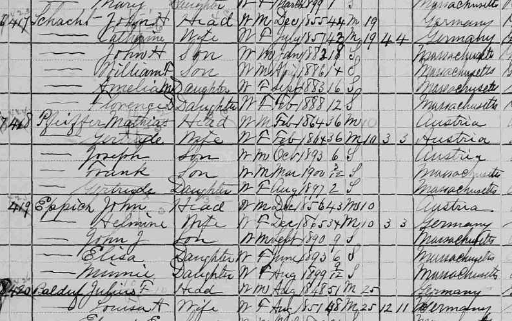
Portion of 1900 census showing families living in the area.

Starting with the 1900 and 1910 US Censuses gave me a list of people to research. I walked the neighborhood to compile a list of homes that would have been there during this era. Then using a variety of genealogical databases, I began to see what I could find on these people. First I started with the Eppich family, as there were several families with that surname living in this neighborhood. I soon discovered that many of the families in this neighborhood were related. So many of the residents here had married Eppich daughters, connecting many of these families together. One of the weirdest things I noticed was how in early census records these families stated they were Austrian, then later noted they were Yugoslavian. I found it odd that these people reported they were from two very different countries. How does someone not know where they came from? As luck would have it, one of the 1920 census takers not only recorded the county of origin, but also the county (or town) within that county of origin. This notation had me checking maps for these little towns in Austria…and the most extraordinary fact became clear; so many of the neighbors that were related and came from a place called Gottschee.

Map of Gottschee

As I dived into this revelation, I learned that Gottschee was a duchy within the Austrian-Hungry Empire. It is often described as a German-speaking island surrounded by a sea of Slavic speaking counties. Originally settled in the 14th century by Germans from several different German and Austrian towns, it was an unpopulated mountainous forest.  For over 500 years its German language developed into its own dialect and they maintained their own unique customs. Today, there are practically no Gottscheers living in this area. After World War I, Gottschee became part of a new country: Yugoslavia, and today it’s original borders are in Slovenia. After World War II, the Gottscheers who had lived there were expelled. Some went to Germany or Austria, but most came to the United States. Today the largest populations of Gottscheers live in Brooklyn, NY or in Cincinnati, OH.

Now we know, there was a small community of Gottscheers in Norwood and Walpole, Massachusetts! Although this unique story was new to me, so many descendants of local Gottscheers came to our walking tour and were already aware of their history.

This discovery made this Germantown Neighborhood extra special for me…especially as my little house is in that neighborhood and was home to a Gottschee family.

To me, this is another reason to look beyond vital records to tell a story of an ancestor. Dig deeper. You may be amazed at what you will find!

History Mystery Exploration Boxes

Children love to explore. It is how they learn best! You can take them to a museum to show them an historical artifact or a piece of art, and they might have a lovely time, but how much are they going to remember once they have returned home? If you give them an opportunity to roll up their sleeves to handle and use artifacts, they will remember them because they will remember the fun!

Adding History Mystery Boxes to your educational programs is a fantastic way of encouraging your visitors, young and old, to explore your collections, and this will add a whole new demention to your educational programs. They are versatile because they can be switched up in a number of ways. When one History Mystery Box gets old, a new one can be created, keeping them fresh. They can be part of an in-house exhibit, they can be taken to a school as part of an out-reach educational program, or they can be used as part of an in-house educational program.

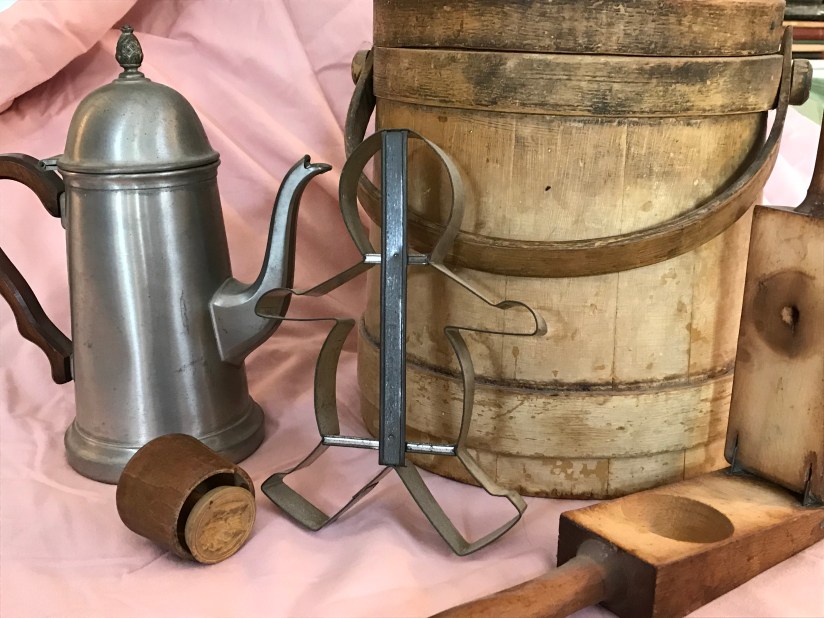
The idea behind these History Mystery Boxes is rather simple. Before you begin you will want to develop a few learning objectives – what do you want your visitors/students to learn? Let’s say you are interested in creating an exhibit that explores the various behind-the-scene jobs servants performed in a Victorian house. Next you will need a vessel (a box) to put our exploration items in. If this “box” can also be used as part of the collection, all the better! Based on your learning theme begin to find artifacts in your collections to fill the boxes. Make sure the items you select can take a lot of handling, also do not select items that may have a sharp edge, you do not want your visitor/students to get hurt.

Work Around the Victorian House:

BoxItems in the box
Wash tubScrub board
Bar of soap
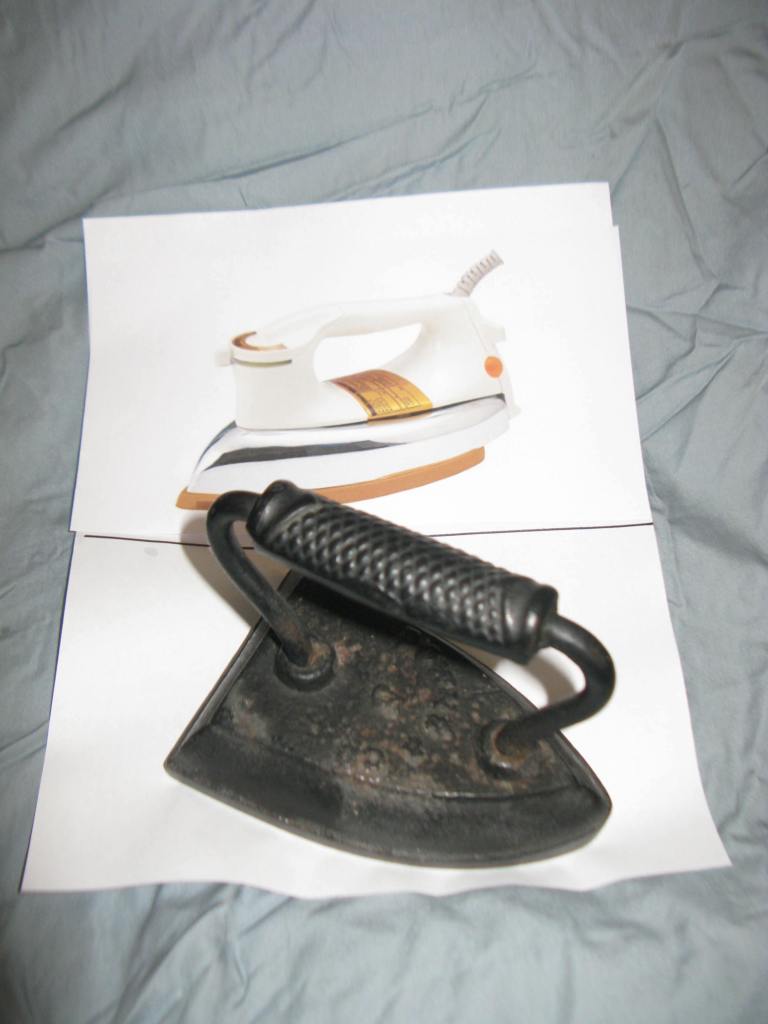
Iron
Piece of linen/muslin
Darning form
Tool BoxMallet
Measuring stick
Screw driver
Nails
Flour BoxButter press
Cookie cutter
Rolling pin
Apron
Tea pot

Once you have the items for the boxes selected, you will want to create the content that supports your lessons’ objectives. For young children you could provide laminated pictures of the modern equivalent of the artifact in your Mystery Box. Questions such as: What do you notice about the artifact? Is it heavy? What size is it? What do you think it was used for? Encourage them to think like a historian and this may spark a discussion. If you are using the Mystery Boxes in a small group setting, give each group a chance to explore each box. Having a follow up activity to reinforce your lesson. In this case, the children could each receive a sewing card, a laminated card with holes poked in them and a piece of yard (with a tape on one end and a knot on the other), then they can sew!

Mystery Boxes can also be used with seniors. Items selected from your collections should definitely have a theme and you can include items that may be a bit more delicate, and could be part of a PowerPoint presentation. Instead of playing a matching game with your laminated cards, you could use them to see if the seniors can recall the old fashioned name(s) for various artifacts, or the artifact could be displayed on the PowerPoint screen for easy viewing, and seniors could be asked to identify the object. They may even recall a parent or grandparent using the artifact. This may spark a conversation, and if recorded can be part of an oral history which ties into your exhibit.

Mystery Boxes are an excellent way to teach a lesson, show off some of your collections, and allow your visitor/students to interact with your exhibits. They can be tailored to young or old and are a fun and exciting way to create a spark!