More Breaking Down Brick Walls: Where to Look Next

Historical hunting!

So you think you have searched just about everywhere to find an elusive document that will prove a family connection. You know they come from a particular town in a particular state. You have searched every online database you could find, you’ve written to the town clerk and local historical society and you have not had any luck. Now you are totally frustrated and do not know where to turn next. I would suggest you take a break from your genealogy hunt and start a history hunt!

Having a working knowledge of the history of a certain area, immigration patterns, naming conventions, etc., can help you to break down a brick wall, or at the very least, it will help you to understand why your ancestors did what they did as well as put them into historical context. Having a better understanding of the big picture, can point you in a new direction to research, or to the archive that may have that elusive document in their collection.

The Establishment of States, Counties and Towns
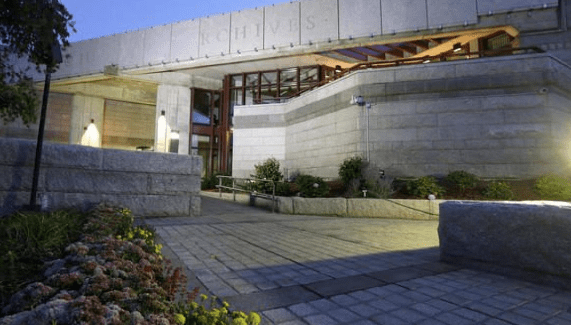
Massachusetts State Archives, Boston, MA

I live outside of Boston, Massachusetts. Records here go way back, which is awesome, but knowing where to find them can be tricky! For instance, Norfolk County was established in 1793, being “set off” from Suffolk County. So if you are looking for land deeds, probate records or any other legal document for someone who lived in Norfolk County pre-1793, you will find it in Suffolk County. Then there is the added confusion of an old Norfolk County in Massachusetts. It was established in 1643 and was what is today New Hampshire’s seacoast. Records from this old county, which ceased to exist when New Hampshire was established in the early 1690s can be found in the Essex County Registry or Deeds in Salem, Massachusetts. The town of Norwood was established in 1872, for almost 150 years it had been the Village of South Dedham, which was a precinct of the town of Dedham. Records regarding people who lived in Norwood/South Dedham before 1872 can be found in the town of Dedham. Have you done research in the state of Maine? Knowing that it was established in 1820, being set off from Massachusetts, will point you to the Massachusetts State Archives to find documents on Maine pre-1820. Out west, many counties were established from larger counties, and much of Arizona, New Mexico, California and Texas at one time were part of Mexico. So it is important to learn about these geographical changes in order to find information.

The New York State Dutch

New York State Archives, Albany, NY

The Dutch settled in New York State. We know the original name of Manhattan was New Amsterdam, which was a city within the colony of New Netherlands. This colony encompassed parts of modern day New Jersey, parts of coastal Delaware and stretched as far north as Schenectady and into parts of New England and was originally settled in the early 1600s and by 1700, it became part of the English colonies. Some Records from New Netherlands can be found at the New York State Archives and records from the Dutch India Company can be found at the National Archives in The Hague, in the Netherlands. Most of these records are in Dutch, so a translator may be necessary. When researching New York Dutch it is important to keep in mind that when they came to the east coast of North America, they brought with them their Dutch customs. One of these customs was their patriarchal naming custom. In other words their surname was their father’s first name with “son” or “daughter” following (ex. Jansson or Jansdotter) by the mid-1700s they began to adopt the family name custom, their English neighbors had been using for hundreds of years.

Immigration Patterns
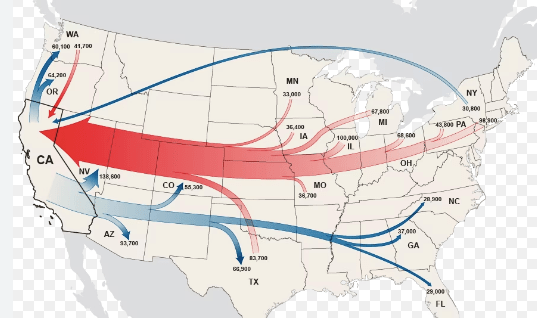
Knowing the paths immigrants took as they moved across North America is important, as well as knowing why they moved. I have run across records where someone recorded a New England groom marrying a Virginia bride in the early 1700s, and then of course this error is repeated and repeated in dozens of trees. Sure, there is a possibility this could have happened, but it is more likely there was a woman from New England who had the same name, and some researcher just clicked and accepted the name. With research, you can confirm these connections, some make sense and others do not. I had a family I was working on who lived outside of Boston, then someone shows they had a son move to New Jersey in the late 1700s. I thought this was an error, as most New Englanders either relocated to other New England states, or just kept pushing west through New York. With some study, I discovered this fellow indeed went to New Jersey. I tracked another New Englander from Vermont, through New York and finally Ohio over the course of thirty years. Many online trees had him coming from New Jersey. That is because his third (possibly fourth wife) Sabra (Mount) Vorhees (Look! There is one of those Dutch surnames!) was from New Jersey. Then he joins up with the Mormons and I further track him to a variety of Mormon settlements. Through careful study all his relocations make sense. Further, they can help confirm other familial relationships.

It is in the history of an area answers to genealogical questions can be found. So do not give up your genealogical searches….instead switch it up and look for the history. You never know what you will find!

Genealogy Conferences – a Gift you Give Yourself

         I think as learners we all get to a place where we need to turn to someone for help. There are plenty of online sites that have information that may hold the key to your questions – Facebook, YouTube, and blog posts are just a few that come to mind, and they may indeed have the answer you are looking for….but they can just as easily give you what you think is the answer, but it only confuses you more. As genealogical researcher, your questions may go from what does this word mean? To how do I break down a brick wall? And pretty much everything in between. The very best thing for you to do is to consider attending a genealogical club or conference to teach YOU how to do something new, instead of relying on input from a stranger. Over the years I have attended many genealogical conferences that not only simply educated me on a new technique or showed me a better way to find records, but these conference presentations fortified my research skills and has continued to assist me as a researcher, because I know what I am looking at.

            When DNA first came on the scene as a way to find wayward ancestors, I was not interested. I had a friend who was lovin’ it! And even she could not convince me to give it a whirl. Then one weekend I found my schedule was free AND my husband was willing to hang out with the kids, so I went to nearby Genealogy Conference….it was being held at a facility less then an hour from my home. I showed up as a walk in. There were booths to peruse, and books for sale, but best of all there were programs to attend. I decided to take in the DNA presentation, which was a two-part presentation.

            The presenter really started with the basics, starting with the vocabulary and then moved into using that vocabulary to explain what a DNA report was showing, and how to use that information to find family connections. She had a family mystery she was hoping to solve. She took us through her search step by step, showing us the breadcrumbs she discovered along the way. As her presentation progressed, she began to show us how she then put these pieces together to find her answer. I walked away with a new appreciation of DNA and how it can be used to break down a brick wall. I played with it for a couple of years, before I decided I needed to attend another conference. This was a week long one, and sadly because of COVID, I ended up attending it from the comfort of my own couch. We had presentations from several genealogical DNA rock stars. Their information added to my DNA tool kit, giving me a deeper understanding, as well as some new techniques that strengthened my skills.

            These conferences have been very helpful to me! Plus, hanging out with a bunch of Genealogists for a couple of days is fun! Imagine talking to someone who shares your enthusiasm! My poor husband has listened me, trying to be excited for my discoveries, but I know he is not. The conference that kicked off my DNA journey is only one of many conferences I have attended. I have taken in an all day “how to search and find Irish records,” a program I though would be helpful finding my husband’s Kearney ancestors. Another presentation I took in was “how to use ArkivDigital” Sweden’s Archives, which I figured would be helpful researching my grandmother’s line.

            As genealogists, we need to think of ourselves as life long learners. The more you learn….the better genealogist you will become!

(NOTE: All pictures are from RootsTech. A large in person/virtual Genealogy Conference. It happens every year in Frebrary. Some day I plan to go!)

Google: A Wonderful Genealogical Research Tool

Many years ago, long before genealogists began blogging, the best way to learn and grow online as a genealogist was to sign up to receive emails from professional genealogists.  This is exactly what I did! One email I received intrigued me; it was on how to use Google to find genealogical information. At the time, genealogical databases were still in their infancy; GenWeb seemed to offer the most information, FamilySearch.org and Ancestry.com were new, and Find A Grave had not been thought of yet. In fact, most of my research was done via snail mail! A free source of online information was welcome, and to date I use Google regularly to aid in my genealogical research.

The Google logo

Very often you will find scanned books that can be read online, local historical society’s websites that offer blogs on histories or genealogies, posted queries on old message boards, or a descendent family organizations that may offer a well researched genealogy.

I must admit, researching an unusual name is best, but don’t worry, if you have a common name like “John Smith” you will find results. It will take patience and perseverance.

First, using quotes around your research name will help you find information on “John Smith,” versus not using quotes you will get information on every “John” and every “Smith!” Yikes! That’s potentially a lot of useless information. To further narrow down your search answers add the name of his wife or the place(s) he lived: “John Smith” “Experience Jones”…..or “John Smith” Dedham, MA. Mix it up! You know your John Smith, and there might be pertinent information to YOUR John Smith that you could use in your Google searches to narrow down your answers and find the information you are seeking.

Google main page

I think the best piece of Google voodoo is using a minus (-) sign. For years now, I have been researching the Wormwood family of York County, Maine. Early on if I just used the surname “Wormwood” and “Maine”…or “obituary”…or “genealogy,” I found exactly what I was searching. Then about ten years ago, absinthe again became legal to sell in this country. Absinthe is made from the wormwood plant, and yup you guessed it, all of a sudden I got people selling absinthe in Maine! By using the minus sign…”Wormwood” “Maine”  “–absinthe”… my Google results are about the Wormwood family of Maine, and zero results on absinthe.

Now as you are reviewing your search results, do not forget to use the pull-down menu labeled “more.” When you click on it, a little drop down menu appears with the words video, books, flights and finance. Click on “books” and that will take you to a list of books your search-person may be in. Google has scanned many books that are out of copyright that you can fully read! But be wary, just because it is written in a book does not necessarily mean it is true or correct. Sometimes authors like to embellish a story to make the genealogy tale more interesting…so check and double check sources.

Google pull down menu

Google also offers Google Maps, which is a useful tool for genealogists. If you know your “John Smith” lived in Dedham, Massachusetts, but you are finding results for him in Needham, Massachusetts, a quick peek at Google Maps and you will see Dedham and Needham are abutting towns, so chances are you found YOUR John Smith. You can also use Google Maps to get directions, and this will also tell you the distance between towns. In my recent search on Abel Prior, I found him in Weathersfield, Vermont; then Augusta, New York; then Chautauqua County (near Charlotte Center), New York; and finally Kirtland, Ohio. Using Google Maps, I could visualize his straight progression from Vermont to Ohio.  Then pairing these findings with census records, I was able to verify his twenty-year migration.

Over the years, I have found Google to be very useful genealogical research tool. I would encourage everyone to experiment with it to see what you can find! Who knows, you may find the answer to a long held family secret or even break down one of your brick walls!

How to Research your Antique Home

So you live in old house and you want to learn more about its history.  Perhaps you heard it was a stop on the underground railroad, or you heard George Washington passed by on his way to Trenton, or you are interested in its architecture, whatever your reason may be, it is actually easy to trace your home’s “genealogy.”

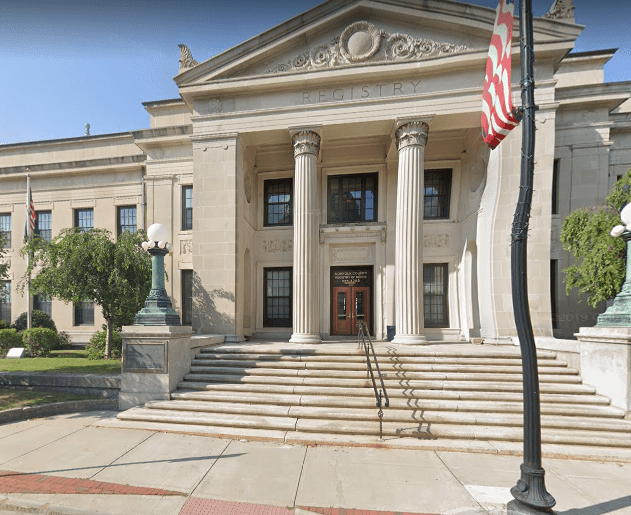
The Norfolk County Deeds Office, Dedham (MA)

The best place to start is your county deeds office where land deeds are filed. You can physically go there, but before you do, check to see if they offer online research. That way you can perform your search from the comfort of your own home! The first thing you will need is the book number and the page number where your deed is recorded. You can find that in the Grantor/Grantee index book. Once you have located your deed, read through it. You will find a reference to the book and page number for the sale of your home from when the previous owners purchased it. Keep working your way back until you find it was a piece of land with no structures on it. This will give you a good date for the construction of your house.

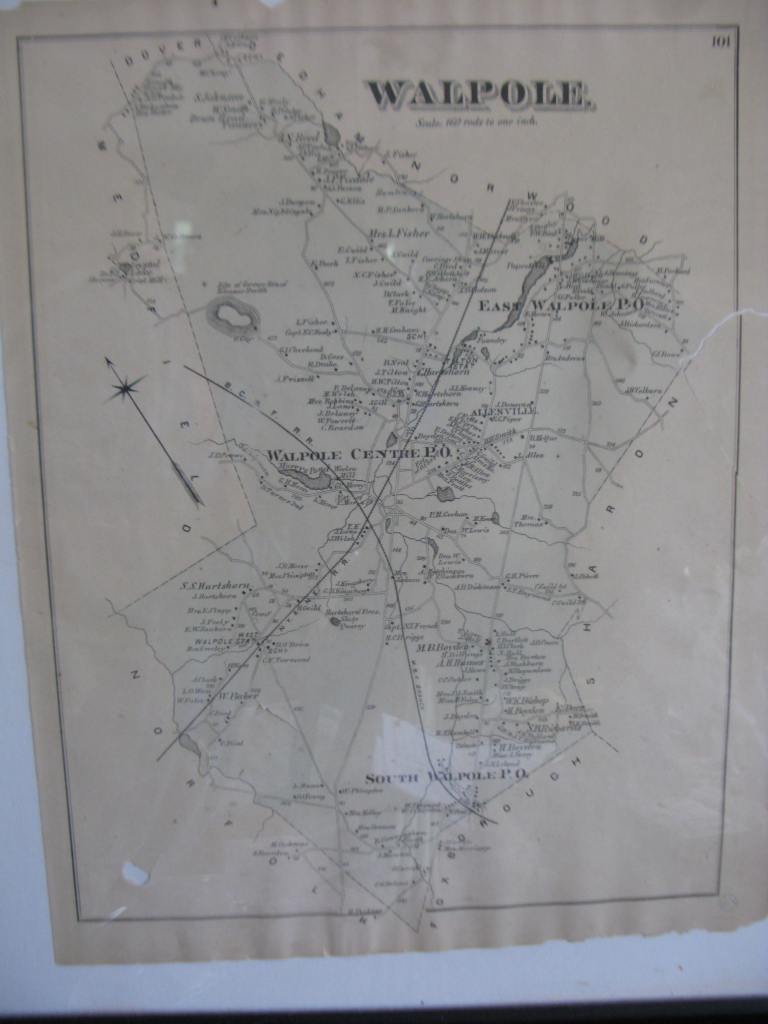
You can also refer to maps. Some maps can be found on file at the county deed office too. Very often when new streets are laid out or a new house or development is to be constructed, builders have to file plans, and those plans often include existing structures. Historical maps are also helpful as they sometimes include the structures, and they may have the added bonus of naming the owner of the home. Looking at maps was extremely helpful for my search, as the property had once been 40 acres, and now is less than one acre. Studying old boundaries and the neighborhood changes over 200 years helped me better understand my property.

Once you know all the owners of your home you can research them. FamilySearch.org will have census records and vital records that will help you reconstruct family who used to live in your home. This technique was very helpful for me. The two daughters of the original owner inherited my house; one daughter had died, so her seven children inherited her half. These children sold their shares back and forth. Following the various purchases and sales was tricky, especially as a few of the transactions were never recorded in county deeds. By reconstructing the family, I was able to figure out the sibling relationships. I also followed up probate court where I pulled wills for the various family members.

Once you have a good picture of the past owners of your home, you can visit your local library or reach out to your local historical society. They may have information on the families who owned your home, they may know if your home has any historical importance, or they may have pictures of your house from way back when.

Visiting your local library may turn up books on local history or general architecture. Having a working knowledge of house styles and trends may also help date your house. How the house is constructed? Is it post and beam? Is it stick built? Is it made from a kit? The answers to these questions will help you confirm the age of your home. It will also help you identify original details you may now want to preserve. I found in a published record that for one season, the original owners of my house allowed it to be the school for the local children. So my house may not really be a schoolhouse….but this is still an interesting tidbit!

My little 1757 Cape Cod style house!

You do not really have to hire a professional to trace the age of your home. Honestly, I do not think it is that hard to do, but it does take time and perseverance. If you do the work, you will know your house’s history, you will not question a finding or wonder if your hired researcher left something out. But mostly you can take pride in your research and know you did a good job!

Maps as a Learning Tool

Sometimes when teaching the history of your town it can be difficult to engage your students. Here in Massachusetts, the curriculum frame works recommend third graders should learn about their town. Eight-year-olds are just beginning to be aware of and understand things outside of themselves (social, political, and other people’s personal issues). They are becoming less egocentric. This is a good time to start to learn about their town, because it is a place they are familiar with. A local history program can be given at the historical society, the history room at the library, or it can travel to the school, but if the bulk of the program is lecture based, the children may recall very little of what is discussed. Coming up with a program to activity engage the students can be difficult, and if this program needs to travel it can be even trickier. But if students have a hands-on program that is fun, then they will remember the history of their town for many years. Making all your efforts worthwhile.

Activity One: Maps….Old and New

One of the best methods to help students learn about the changes and growth of their town is to use maps. The wonderful thing about maps is that they have been around for hundreds of years, long before photography, and illustrate the changes a town has experienced over time. Select approximately four maps, the earliest should be from about the time your town was established and the newest should be relatively recent. Choose maps that children will find easy to read. Be aware this may be the first time these children may have ever read a map. The maps should also show the same area (neighborhood) over time, in other words, be very similar. You may want to highlight the main road or a particular intersection for ease of locating streets/buildings to help compare the maps to each other. Also, when making copies of the maps, make sure they are all oriented the same, north top of the page and south on the bottom, and number each map. Make plenty of copies so students can work in small groups, and then laminate them for longevity! (plus dry erase markers can be used on lamination)

Other items you may want to have on hand when using map cards, are photographs of landmarks, dry erase markers, and paper towels. Using the map cards, have children compare and contrast the maps.  Can see any changes between map 1 and map 3? Can they note changes from map to map over time? Have them locate something familiar, and circle it. Have them draw a line on an older map showing where a newer road is today. The possibilities are endless with these cards.

Activity Two: Links & Chains

Did you know an acre was once considered to be the area one could plow in a day? As time went on, a particular size was settled on (43,560 sq ft, which is a little bit smaller than a football field) and surveyors were hired to measure the land and to draw maps. In fact, George Washington was a surveyor and his surveying equipment is on display at Mount Vernon.

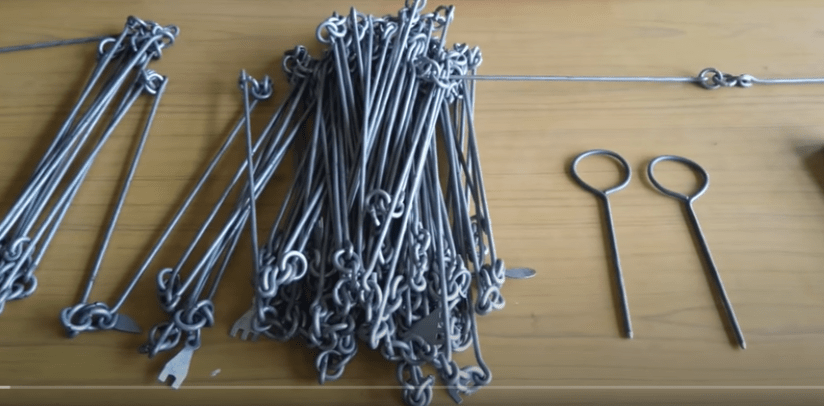
For this activity you will need: paper and a pencil, a measuring tape, a kit with chains and rods, six stakes (or orange cones) to mark out the space (length) that children will measure, and a couple of land deeds (one that lays out the area in links and chains and one that lays out the area in feet). Have a copy of the original deed, but also provide a transcription so the children can easily read the deed.

Preparation: The children will be measuring three similar lengths. Set the stakes (or cones) out, one is the starting point and the other the end. Before the children measure these lengths, have them read the deed cards and discuss the different ways measurement is recorded. Ask why they think it is important to have a standard form of measurement.

Break the children up into three groups for the measuring activity. The first length will be measured using the students’ feet in heel-toe style, the second using the measuring tape, and the third using links & chains. Have each group rotate through each measuring activity so they all have an opportunity to try each type of measurements. Gather the children together to discuss their findings and again ask if they think it is important to have a standard form of measurement.

Historical Note: A Chain is 66 feet, there are 100 links in the chain, there are 4 rods in a chain. (A chain is a little less than a ¼ the length of a football field.)

An accurate chain is not necessary for this activity. It would be too heavy and difficult for children to handle. You will find a chain at your local hardware store. It is more important to have a chain with 100 links in it, even if it does not measure 66 feet.

Activity Three: Make a map of your neighborhood

The Norwood Historical Society (MA) has in its collection a map hand drawn by a resident (circa 1900) that shows how the town looked in 1840 how this resident remembered it. He notes homes, roads and businesses. It is a wonderful piece of memorabilia. Have the children draw a map of their neighborhood. Then take their maps to add to your historical society’s collections so some day a researcher will study them and perhaps use them as part of their project.