So, you think you would like to discover your roots and you don’t know where to start? Well that is easy! Start with yourself, your parents and your grandparents! Jot down birthdates, marriage dates and death dates (if you know them!). Then have a conversation with the older generations in your family. Having all this personal first hand knowledge is a great place to start.
With your notes firmly in hand, you are ready to begin to search in earnest! I recommend starting the FamilySearch.org site. They will want you to sign up for a free account. They do not ask for any payment information (i.e. your credit card), and they do not flood your email account with unwanted emails. FamilySearch is owned and operated by the Latter Day Saints (the Mormons). Part of their belief system is that families are very important in this life as well as in the after life, and by finding (and baptizing them as Mormons) long dead relatives, they all will be reunited in heaven. The nice thing about their website is that they have imaged thousands of original documents (primary sources). It is these primary sources that prove your line, some secondary sources or a story passed down for a few generations may be false! My great-grandmother told my dad and his brothers we were related to Pocahontas. When I was little, I thought that was pretty cool, and indeed it was one of those facts I went searching for when I first started researching my family. It took a while, but I found my great-grandmother’s grandmother maiden name was “Rolfe.” That was clearly where the story came from, but my Rolfes were in no way related to the family into which Pocahontas married.
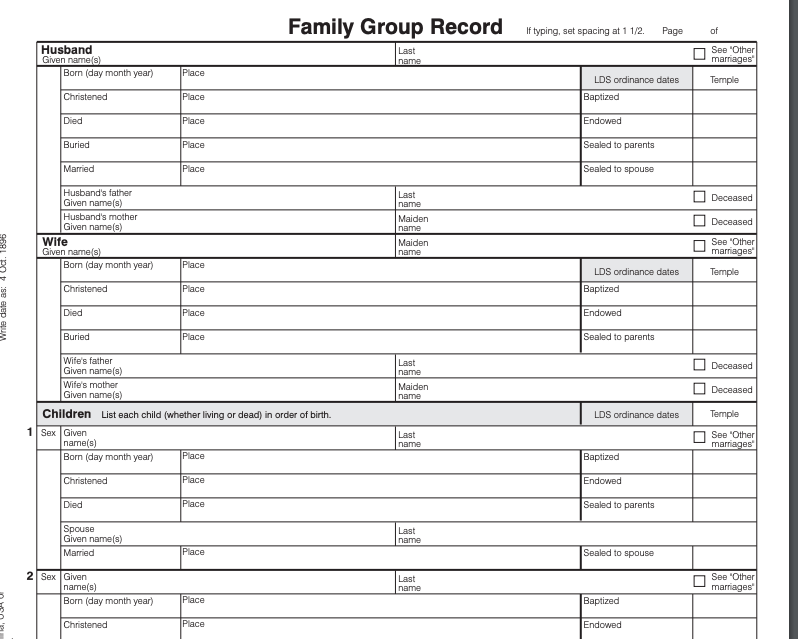
One of the most important things you can do is to keep accurate records. Notes of your conversations, family group sheets, pedigree charts, when and where you researched (so you do not repeat your searches!). You can keep these records in a binder or invest is some genealogy software. (There is free software out there, but I would research it before you download it!). I often start a new search by opening a Microsoft Word document, and take my notes there before I start making a tree. I can also cut and paste links in this document, so if I go back and revisit this family, I can re-visit the links!
It is very important to Document, Document, Document! Keep track of all your sources. By doing so you can show your proof, you can return to your searches if you need to re-evaluate the accuracy of your source, and it will also prevent you from doing the same searches over and over again. Once on a genealogy Facebook page (consider joining one!), I came across a fellow who posted that he had just started tracing his family tree and had already managed to trace back to Adam and Eve. He most likely copied someone else’s tree, who did not have any sources. Genealogists on the page had to gently explain to him that this was very unlikely.
Evaluate your sources for accuracy. Very often some sources are questionable. I have seen people document a marriage, which occurred in the 1600s between someone in New England and someone in Virginia…although in theory possible, the distance would have made it difficult. In tracking that pesky Rolfe line, I found a Rolfe raised in Massachusetts in the mid 1700s, relocated to New Jersey. I thought this maybe untrue, but the more I looked, the more primary sources I found, and it turned out to be true! So, double and triple the sources, especially if you found the information on someone else’s tree. If it does not make sense, it is probably wrong.
Genealogy is a fun pursuit. I love to untangle a historical question. Sometimes the information comes to you very easily and other times it may take years before you find the next generation, but don’t give up!
So keep this in mind: Gather what you know. Research can begin. Accurate Records must be kept. Document your sources. Evaluate your sources for accuracy.
Many years ago, long before genealogists began blogging, the best way to learn and grow online as a genealogist was to sign up to receive emails from professional genealogists. This is exactly what I did! One email I received intrigued me; it was on how to use Google to find genealogical information. At the time, genealogical databases were still in their infancy; GenWeb seemed to offer the most information, FamilySearch.org and Ancestry.com were new, and Find A Grave had not been thought of yet. In fact, most of my research was done via snail mail! A free source of online information was welcome, and to date I use Google regularly to aid in my genealogical research.
The Google logo
Very often you will find scanned books that can be read online, local historical society’s websites that offer blogs on histories or genealogies, posted queries on old message boards, or a descendent family organizations that may offer a well researched genealogy.
I must admit, researching an unusual name is best, but don’t worry, if you have a common name like “John Smith” you will find results. It will take patience and perseverance.
First, using quotes around your research name will help you find information on “John Smith,” versus not using quotes you will get information on every “John” and every “Smith!” Yikes! That’s potentially a lot of useless information. To further narrow down your search answers add the name of his wife or the place(s) he lived: “John Smith” “Experience Jones”…..or “John Smith” Dedham, MA. Mix it up! You know your John Smith, and there might be pertinent information to YOUR John Smith that you could use in your Google searches to narrow down your answers and find the information you are seeking.
Google main page
I think the best piece of Google voodoo is using a minus (-) sign. For years now, I have been researching the Wormwood family of York County, Maine. Early on if I just used the surname “Wormwood” and “Maine”…or “obituary”…or “genealogy,” I found exactly what I was searching. Then about ten years ago, absinthe again became legal to sell in this country. Absinthe is made from the wormwood plant, and yup you guessed it, all of a sudden I got people selling absinthe in Maine! By using the minus sign…”Wormwood” “Maine” “–absinthe”… my Google results are about the Wormwood family of Maine, and zero results on absinthe.
Now as you are reviewing your search results, do not forget to use the pull-down menu labeled “more.” When you click on it, a little drop down menu appears with the words video, books, flights and finance. Click on “books” and that will take you to a list of books your search-person may be in. Google has scanned many books that are out of copyright that you can fully read! But be wary, just because it is written in a book does not necessarily mean it is true or correct. Sometimes authors like to embellish a story to make the genealogy tale more interesting…so check and double check sources.
Google pull down menu
Google also offers Google Maps, which is a useful tool for genealogists. If you know your “John Smith” lived in Dedham, Massachusetts, but you are finding results for him in Needham, Massachusetts, a quick peek at Google Maps and you will see Dedham and Needham are abutting towns, so chances are you found YOUR John Smith. You can also use Google Maps to get directions, and this will also tell you the distance between towns. In my recent search on Abel Prior, I found him in Weathersfield, Vermont; then Augusta, New York; then Chautauqua County (near Charlotte Center), New York; and finally Kirtland, Ohio. Using Google Maps, I could visualize his straight progression from Vermont to Ohio. Then pairing these findings with census records, I was able to verify his twenty-year migration.
Over the years, I have found Google to be very useful genealogical research tool. I would encourage everyone to experiment with it to see what you can find! Who knows, you may find the answer to a long held family secret or even break down one of your brick walls!
Oh boy, Brick walls are frustrating! They often take years to resolve, and once resolved they often lead to another brick wall…or it may completely open up a new long genealogical line. Over the years, I have run headlong into several brick walls, and two took me about twenty years to find the answers.
Abigail (Butler) Hubbard
Abigail (Butler) Hubbard is my 4x’s great-grandmother. She was the wife of Rev. Zaddock Hubbard. They came from Middletown, Connecticut, moved to Lenox, Massachusetts and finally to Moretown, Vermont. Two pieces of paper I found in Zaddock’s autobiography had Abigail’s birth date on them, as well as those of Zaddock and their children. Only problem was one listed Abigail’s birthdate as May 6, 1773 and the other had her birthdate as May 6, 1768. The Barber Collection had the baptism of an Abigail Butler in Middletown, but it listed her birthdate as May 6, 1774! Was this a clue? Was she possibly the daughter of Dorney Houghton Butler and his wife Mindwell Clark? Research on this line did not yield any answers, and I searched for years! There were no Butler friends or family that traveled with the Hubbards as they moved around New England, and there were no clues in the names Zaddock and Abigail chose for their children. Then about five years ago, Ancestry.com added “Connecticut Wills and Probate Records, 1609-1999” to their databases. Although Dorney did not leave a will, there was an administration of estate for Mindwell Butler’s, and lo and behold Abigail, wife of Zaddock Hubbard is mentioned in the estate! And just like that my brick wall was knocked down! Solving the mystery of Abigail (Butler) Hubbard ultimately took patience, because the answer was hiding in a document, I just had to wait for it to come online.
Solving the brick wall of another ancestor took perseverance and a lot of research. Mary [?] Simons, is my husband’s 3x’s great grandmother. She was the wife of Charles Rodney Simons, and as a young married couple, they came to Sacramento, California from Ohio in the late 1800s. The family knew very little about Mary and early research on my part did not produce any answers. Then a third cousin put up on his Ancestry family tree two scanned pages from the Simons family Bible. These pages gave me Mary’s maiden name (Bassett), the name of her first husband (James Malonee), and a notation that their daughter, Carrie Malonee, was born in Kirtland, Ohio.
Mary Ellen (Bassett) Malonee-Simons
Although this information did not immediately knock down the brick wall, it did give a place to begin searching – Kirtland Ohio. Looking for Mary Malonee and her baby daughter in the 1870 US federal census, a Mary & Carrie Malong (the “g” zoomed-in, is a “y”), was found in Kirtland. Taking a chance, I searched for a Mary Bassett in the 1850 US federal census, and a Mary “Balseth” (Bassett) was found with her parents, Harmon & Maria and a brother Oliver in Kirtland. Harmon, I love unusual names! Checking to see if another transcription error befell this family, a Google search for “Harmon Bassett” found a marriage record for Oliver Harmon Bassett and Marina Prior. A further Google search for this couple led to an online Bassett family tree listing tons of credible sources. However, this Bassett tree did not know what happened to Mary or her mother Marina.
Following Marina Bassett led to the discovery several remarriages. Her second husband was Leonard Rich. Leonard & Marina Rich’s family are in Kirtland (OH) in the 1860 census, and it indicated a third child, Sarah, from her pervious marriage to Oliver Harmon Bassett. Next marriage for Marina Rich was to Simeon Hall, then Marina Hall married Green Parker, and a Marina Parker’s death record is recorded as August 11, 1891 in Mentor, Ohio. (It should be noted the deaths of all Marina’s husbands can be found online, supporting the timeline of her marriages.) An old family story about a possible relationship to a James Flood, is the lynch pin in proving that Marina Prior is Mary’s mother, because Marina shares a cemetery plot with her daughter, Sarah (Bassett) Flood, and her husband, James Flood.
All of these informational pieces of Mary Ellen (Bassett) Malonee-Simons mother’s life come together to break down this brick wall. So if you are struggling with a brick wall, do not give up. You never know if the answer will be handed to you or through dogged research you find the answer yourself!
Headstone of Huldah (Wormwood) Witham.Find A Grave, database with images, memorial no 94660761, citing Congregational Church Cemetery, Alfred, ME
When I do genealogical research I like to assemble the entire family. Who were all the siblings/children? Where were all the places a family lived? Where did they go to church? Did the family have an important role in their town? Did anyone serve in the military? Asking these questions not only helps to know and understand the family, but also may give research clues when trying to trace a particular family member. This especially is true if you come across two or more people with the same name.
Years ago, I added Huldah Wormwood, daughter of Amos and Lydia (Storer) Wormwood, into my family tree because she was the sister of my direct ancestor. From what I could find, she lived her whole life in the town of Alfred, Maine. However, another online researcher had a Huldah Wormwood in their tree. She was born in Vermont (or New York) and lived her adult life in New York State, but this researcher had her entered in their tree as the Huldah Wormwood born in Alfred, Maine. Trying to figure out which Huldah was actually the daughter of Amos and Lydia (Storer) Wormwood meant careful study of available records.
Headstone of Huldah (Wormwood) Oliver. Find A Grave, database with images, memorial no. 89919566, citing Fairview Cemetery, Brasher Falls, NY
The other researcher theorized that Amos and Lydia (Storer) Wormwood moved briefly to Vermont in 1797, had Huldah, then returned to Alfred, Maine by the time of the 1800 census. Then, she believes Huldah moved to upstate New York by 1820 when she married Alfred Oliver. Although to me, this theory did not seem logical, to the other researcher it made sense. Theories are good. They give one a place to start. Once you have developed a theory, the next thing to do is to see (or to prove) if you are right or wrong. That is when you need to find all available records and to carefully consider each record as it pertains to your research question.
There are most definitely two Huldahs who were alive about the same time and were about the same age. Sometimes, I find it helpful to create a chart of available records. This makes it easier to compare and contrast information.
Huldah Wormwood (wife of Jeremiah Witham)
Huldah Wormwood (wife of Alfred Oliver)
born
25 Dec 1806 (find a grave)
1797/98 (1850 census/ find a grave)
married
24 Aug 1829 (Maine Marriages)
9 Nov 1820 (10,000 VR of eastern NY)
died
22 Jul 1874 (find a grave)
17 May 1854 (find a grave)
1850 census
b. 1807
b. 1797
1860 census
b. 1807
X
1870 census
b. 1807
X
From looking at this chart, one can see the two Huldahs are about ten years apart in age. It should also be noted Huldah (Wormwood) Oliver’s children, in various records, either record her place of birth as Vermont or New York, but most records appear to agree with Huldah in the 1850 census that Vermont was her place of birth. Unfortunately, there are not any other records to add to this chart. So considering records regarding Amos and Lydia (Storer) Wormwood may lead to an answer.
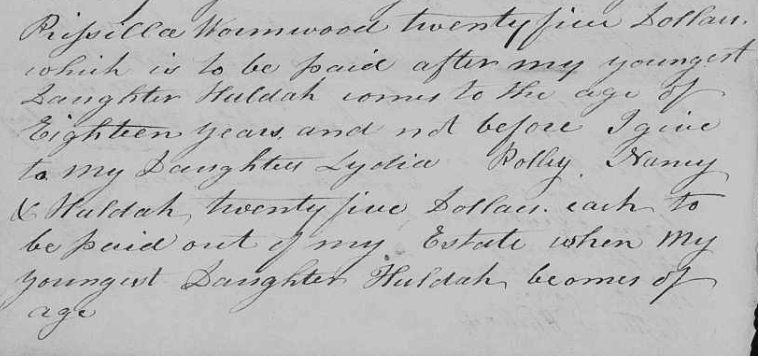
Screen shot of a portion of Amos Wormwood’s will.
Amos and Lydia grew up in Wells, Maine and married there on August 30, 1781. Their first three children were born and baptized in Wells, before the family removed to Sanford, Maine (the part that is now Alfred). Unfortunately, the minister of the Alfred Congregational Church took the records with him when he left the church for another ministry. Amos had his daughter, Huldah baptized on June 18, 1807 by the new minister of the Alfred Church. Amos left a will naming all his children. The will establishes Amos and Lydia were the parents of nine children, their youngest is Huldah, as he wants the monies he left his children to be paid out when his “youngest daughter,” Huldah turns 18.
As for the notion of the other researcher that the family moved to Vermont and back to Maine over a very short time span, documents in York County, Maine illustrate a different story. Amos (then later Lydia) are enumerated in the 1790, 1800, 1810 and 1820 censuses. Amos is listed in the Massachusetts and Maine Direct Tax list in 1798. The town of Alfred records the deaths of three of Amos and Lydia’s children in 1797, 1800 and 1801. Also, land deeds show Amos bought land in 1797 Maine (York County deed book 88; page 256). All these records indicate Amos was living in Alfred, Maine in the late 1790s and early 1800s and did not move temporarily to Vermont. Plus, the Alfred Historical Society and Fred R. Boyle, author of Early Families of Alfred, Maine, believe Amos and Lydia (Storer) Wormwood are the parents of Huldah (Wormwood) Witham, wife of Jeremiah.
These documents seem to answer the research question that Huldah (Wormwood) Witham is the daughter of Amos and Lydia (Storer) Wormwood but they do not tell us who the parents of Huldah (Wormwood) Oliver were. She was most likely born in Vermont, she quite possibly is the daughter of Joseph Wormwood (brother of Amos) or one of their nephews Daniel Wormwood or Ezra Wormwood, all three men moved to Vermont in the late 1790s/early 1800s.
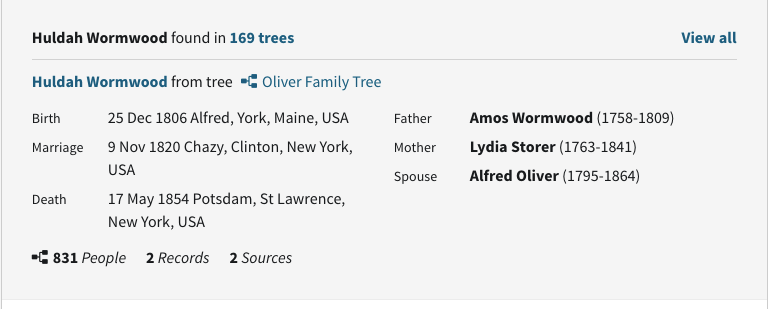
Screen shot of an Ancestry.com family tree search showing there are 169 trees with the wrong information!
It should also be noted that 169 online trees erroneously show Huldah (Wormwood) Oliver as the daughter of Amos and Lydia! Next time you run across two people with the same name, study all the information you can find on them. Don’t just click and add the wrong person to your database. Accuracy is key!
When one is researching genealogy, it is not uncommon to find many ancestors with a prefix or a suffix in their names. Of course, we are familiar with Mr., Mrs., and Dr., because these prefixes are used in the same way today. Some suffixes that we are familiar with, such as Esq., and Jr., were used very differently in the eighteenth century than they are used today. Knowing how they were used and when the usage change occurred as well as what they meant is important because it will make your research accurate.
Today, when a son is named after his father the suffix “Jr.” follows the name. Even long after the father has died, the son uses the “Jr.” after his name. Should this son also name his son after himself, then the suffix “III” follows the name. I once met a “XIV”! It should be noted this is a modern day convention.
In the 1700s, in New England and probably in other geographical areas as well, parents often named their children after their parents and themselves. This means their children often followed the same naming patterns. So if Henry Brown had six sons, (one being a Henry Brown) they each may have a Henry Brown and within two generations, a town may have eight Henry Browns living in their borders! This does NOT mean they were recorded as Henry Brown Sr., Henry Brown Jr., and six Henry Brown IIIs in official records. So how did officials record all these different Henrys?
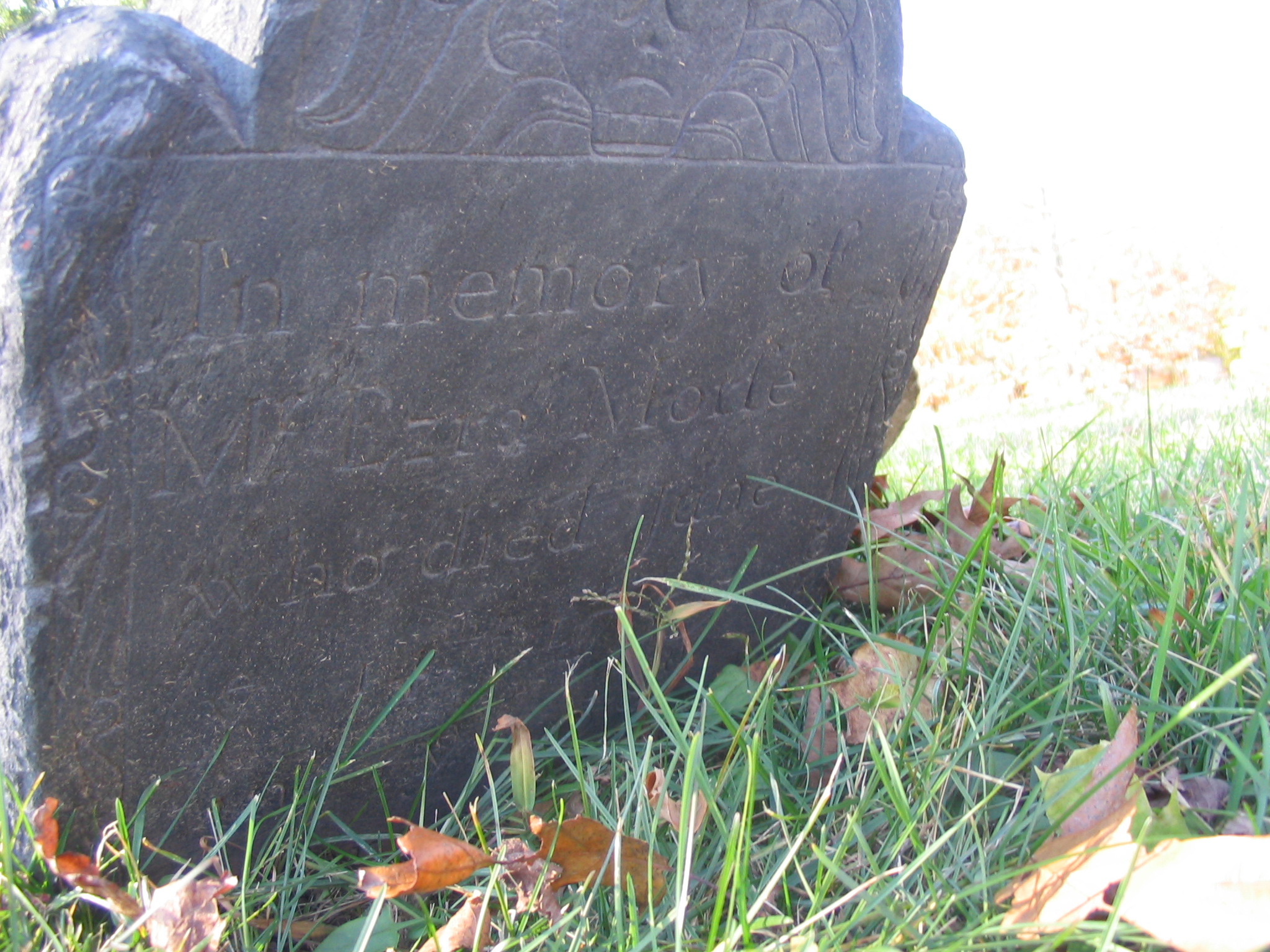
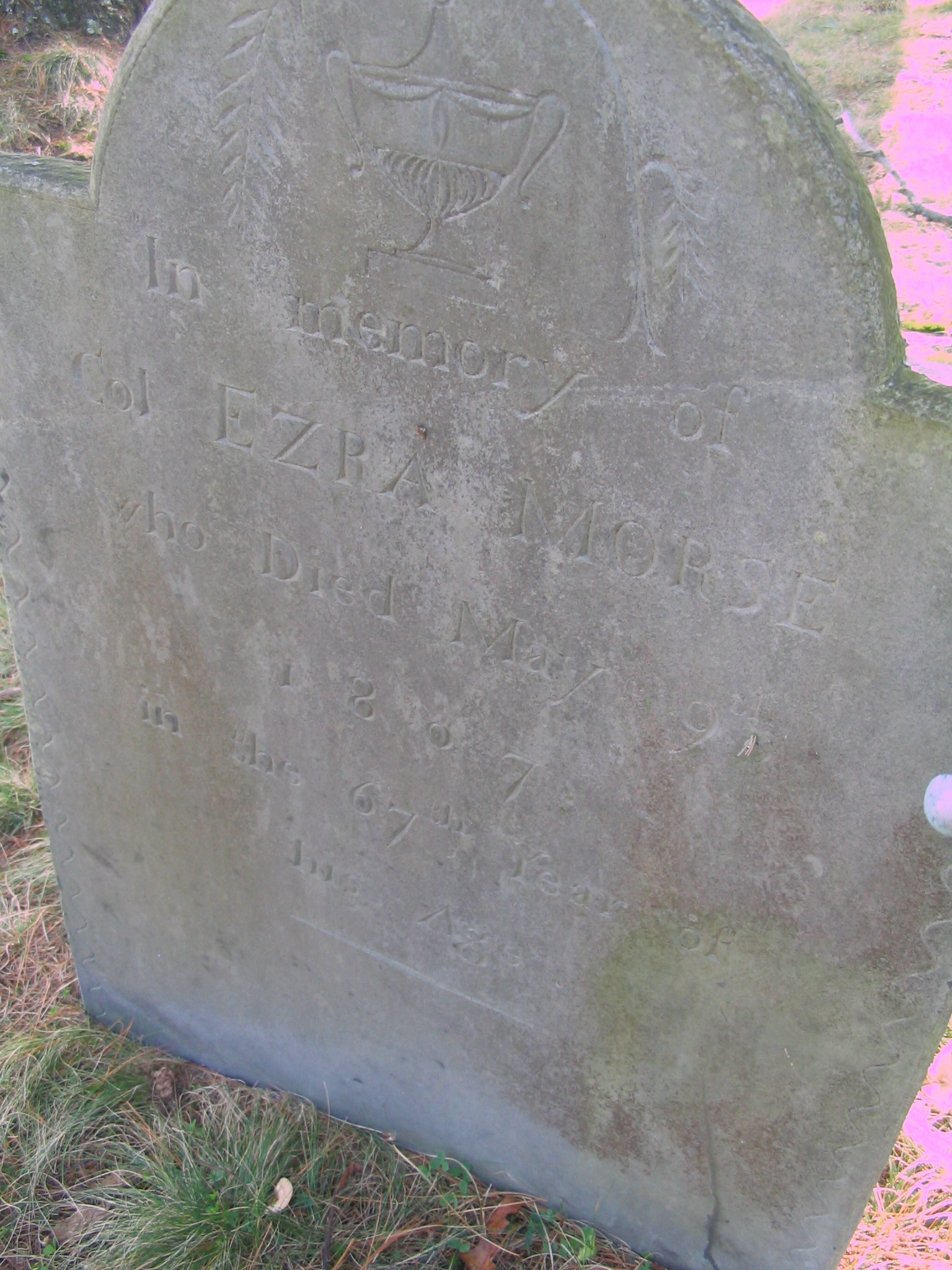
When I first started doing genealogy, I thought the modern day use of Sr., Jr., etc. was also the historical norm, until I began to transcribe the records of the Second Parish of Dedham (now the First Church of Norwood). As I was working my way through some of the earliest records, I came across Ezra Morse, Ezra Morse Junior, and Ezra Morse Tertius. I had not seen the term “Tertius” before and had to look it up. An online dictionary said it meant “third, the ordinal number after secundus (second), and before quartus (fourth).” In researching this Morse family, I found this is a grandfather, father, and son, but in researching other men with the “Jr.” suffix, I have discovered the “Jr.” does not necessary mean a father and son. It often indicates that the “Jr.” is the younger of the two men living in town. So when you come across the use of “Jr.” do not simply assume you have a son named after his father, and add a “Sr.” to your tree. You could be wrong and when you figure that out, you will have to start lopping of branches of your tree. Do a little research first and to make sure you have a correct entry right at the start!
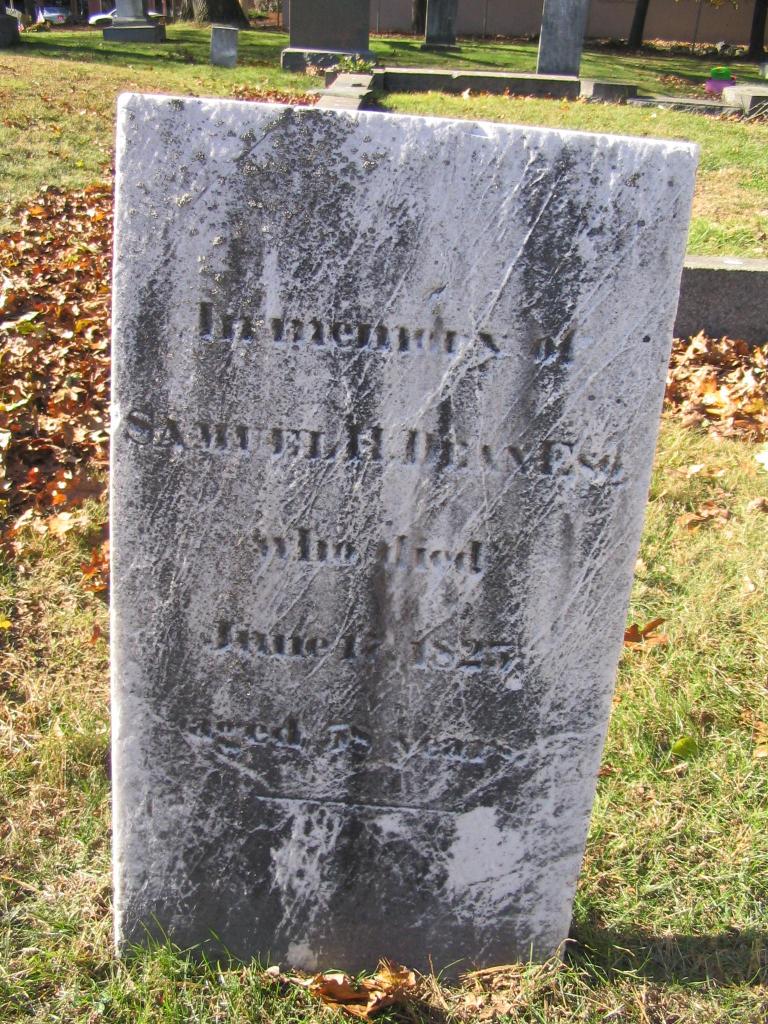
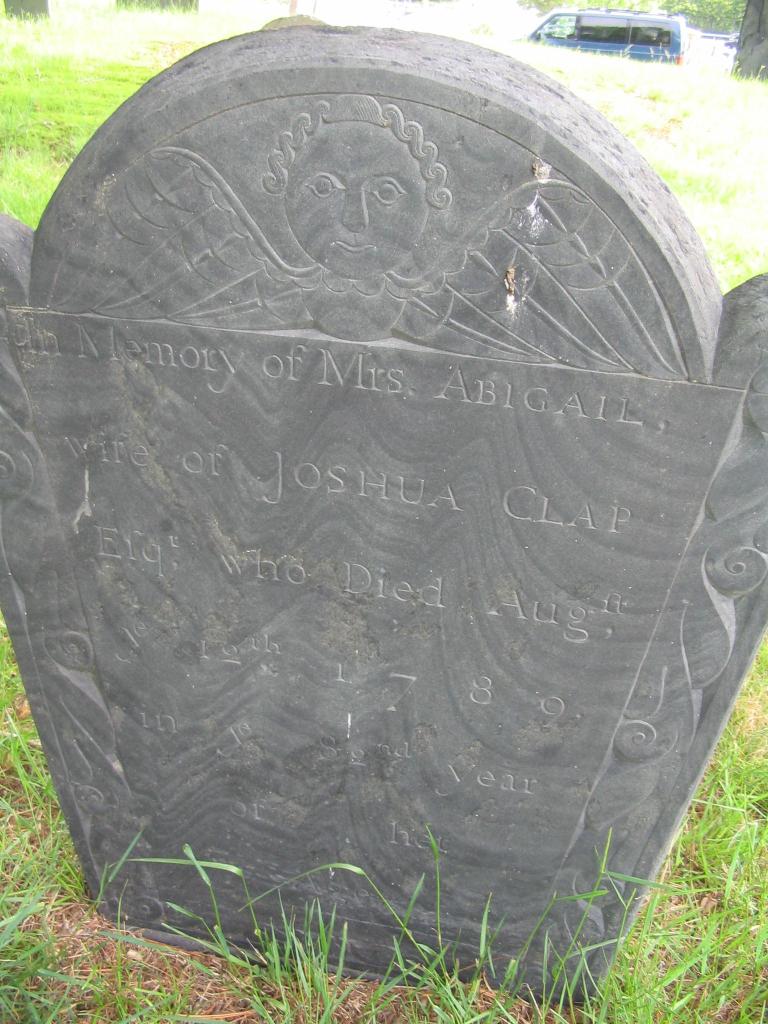
It is interesting to note the suffix, “Esq.” (which means “Esquire”) is often found on headstones and legal documents of men who lived in the eighteen century. Today we know this term is associated with the legal profession. People who are lawyers often have the suffix Esq. after their names, and as a society, we instantly know they are lawyers. However, earlier usage of the term Esq. does not mean that our ancestors were necessarily lawyers. Understanding how this term was used in the 1700s and early 1800s will help us understand more about our ancestors.
In the eighteenth century, the term Esquire meant gentleman, someone who had social stature in the community. This notion often confused me when I came across this term as I was doing local history, and knew this particular “Esq.” was neither a lawyer nor a gentleman because he had come from very humble beginnings. As I began to understand the term by delving deeper into local history, I learned that these men of humble beginnings were titans of local industry, rising to become quite wealthy. As they rose in social standings they often took leading roles in local government or in churches. The term Esq., being tacked on to the end of their name, reflects how they were seen within their local community. We begin to see “Esq.” being used as we know it today around the mid 1800s. So be careful and check the history of your ancestor to confirm if they were a community gentleman or a local lawyer.
Although the use of such prefixes as Mr., Mrs., and Dr., have remained unchanged over the centuries, knowing a little about their initial meanings is interesting! The term “Mr.” we know to be an abbreviation of the word “mister.” However, its initial roots were in the word “master,” and the word “mister” evolved out of the abbreviation, as people attempted to pronounce the “m” and the “r” as a word. The prefix “Mrs.” is an abbreviation of the word “mistress” and is associated with a married woman. It should be noted the prefix “Miss” also comes from the word “mistress” but is associated with an unmarried woman. However, in the eighteenth century the abbreviations Mrs. and Miss were used interchangeably. I have seen many marriage documents recording a Mrs. Sarah Jones marrying Mr. So-in-so. This often confused me as other records indicated Mrs. Sarah Jones was really Miss Sarah Jones. Now I understand the interchangeability of Mrs. and Miss and do not fret about how they are being used….but this does not mean that I do not research to confirm if the ancestor in question was married or not! So, it is important to not only understand the old usage of prefixes and suffixes tacked on to names, but it is equally important to research the use of these prefixes and suffixes on the name of your ancestors, as it will make your research more accurate.
Around 1900, Americans took a great interest in United States history, local history and in their personal family histories. During this time Historical Societies formed, and an interest in supporting and creating local historical sites occurred. Also, linage organizations were established, such as The Daughter’s of the American Revolution and The Mayflower Society. It was at this time many books on local histories were published which often included a genealogical sketch of prominent citizens. These books, most which can be found on Google Books, are wonderful resources, but they should be treated as a clue and not as a fact. Very often their genealogies were often incorrect and the histories they include on the families were just wrong.
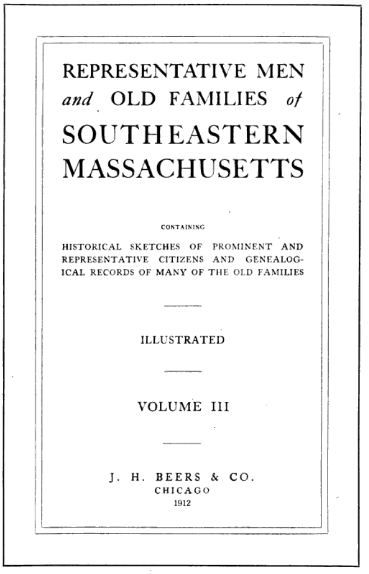
One such article I came across when I was researching the family of Thomas Penney (1710-1809) of Wells, Maine. In this article, on Justin Benjamin Penney in the book “Representative Men of Southeastern Massachusetts” published in 1919, by J.H. Beers & Co, states that Justin’s great-great-grandfather, Thomas Penney was the father of nineteen children, ten with his first wife Abigail Grey and nine with his second wife Adah (Hatch) Spear, who came to this marriage with two children. The article goes on to tell a fantastic story of Adah’s life saying:
“Adah (Spear) Penney was taken captive by the Indians and kept prisoner eighteen years. She had a child born shortly after her capture, of which the Indians became very fond, but in one of their drunken orgies and war dances they accidentally killed it. To conceal all evidence the burned the body before the mother’s eyes. The heartbroken woman found a rib bone in the ashes and hid it in the folds of her dress. At last the Indians discovered it, and feared she intended to keep it to show the whites’ and make trouble. She was finally set at liberty.”
It should be noted that there is no other mention of this incident in Wells history. By reviewing the time line of Adah Hatch’s life, it is clear, a lot of her life is documented. There are many times where Adah’s name appears in Wells records, from her baptism, her two marriages and the baptism of her Spear children and her Penney children. These documents will prove the unlikely story of Adah’s capture.
Timeline of Adah’s life using primary documents:
Date
Event
Source
Gap b/w events & age
13 Aug 1727
Baptized at First Church of Wells
Wells, ME. Church records.
—–
13 Dec 1748
Intention to marry to Gideon Spear
Wells, ME. Church records.
21 years (21yrs)
15 Feb 1756
Baptism of three Spear children: Ebenezer, Mary & John
Wells, ME. Church records.
8 years (29yrs)
13 Jan 1759
Marriage to Thomas Penney
Wells, ME. Church records.
3 years (32yrs)
12 Feb 1760
Bapt. of daughter Joanna Penney
Wells, ME. Church records.
1 year (33yrs)
7 Jan 1762
Birth of twin sons Benjamin & Joseph Penney
Per Benjamin Penney’s Revolutionary pension application
2 years (35yrs)
22 Aug 1762
Bapt of twin sons: Benjamin & Joseph
Wells, ME. Church records.
8 months (35yrs)
(Maybe, but highly doubtful) 1766 to 1775
(birth of possibly more children)
According to the article, Adah had 5 more Penney children, possibly born b/w 1766 and 1775. No records to support this notion.
2 years to 9 years (b/w ages of 39 to 48 yrs)
Bef 1790
death
There are no records for her death. As Thomas gave his all his land to son John in return for life care
(sometimes making a table of facts can help to visualize someone’s life)
The story tells of her capture as a young woman, not a child, so Adah would not have been captured between birth and her first marriage. Documents over the next twenty years do not have an eighteen-year stretch. Also, if one takes into consideration the article’s reported notion she had five more Penney children born to her, then the only possible time block for this capture to have occurred is in the late 1770’s, (putting her in her late 40s/early 50s…almost too old to have a baby) and having a release just before 1800. Plus, history records note attacks on New England settlements by Native Americans was a problem in the 1670’s not the 1770’s. Thus, by studying the facts and comparing them with this story, illustrates that this story about Adah story is highly likely never happened and appears to be a fabrication on the author’s part.
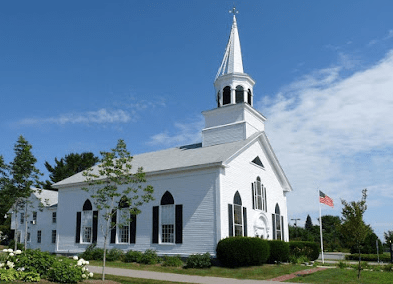
The First Chruch of Wells. Now the Wells Historical Society
Googling to find genealogies and histories is an excellent tool, but be aware that what you find may not be based in fact. The story of Adah’s capture is indeed an amazing story, and one that would be cool to pass down…but it simply is not true. I have also discovered that very often the genealogies found on line, whether in an early-published book, or on a web page, are fraught with errors. It should be noted that most of these histories/genealogies are accurate…but do yourself a BIG favor and check for sources. That way you know you have created an accurate tree filled with accurate stories!
Recently, I was participating in a committee, where someone stated, in reference to a local history…if it was published then it MUST be true.
My friend and I were working on developing a walking tour of a local neighborhood. We met a few times to walk the area, plan out the sights where we wanted to stop and talk. We noted things that were still there and things that were long gone. At one time, this area was in walking distance to jobs, social and sporting clubs, schools, a tavern, a store and even a beach, it had everything! Today so many components of this neighborhood are long gone and in fact, it is mostly a cut through people use to avoid busy streets. Chances are they don’t even realize they are traveling through what was once a vibrant neighborhood, as they zoom up and down its streets.
A Germantown street as it appears today.
Once we had a plan of action, we divvied up the research to be done then we began the process of creating our talk. We consulted printed local histories. Spoke to people who lived in the area. Looked into the roots of their social clubs, and reviewed maps and land deeds to understand how the neighborhood physically grew. We learned a lot about the area…me more so as I have only been here thirty years or so, and my friend is a life long local. However, from all our research we created a robust history and we thought a very informational talk! We looked forward to presenting it and crossed our fingers the pandemic would not put the kibosh on it.
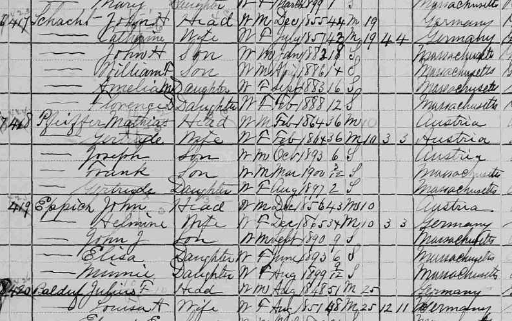
As I was researching my piece of this presentation, it occurred to me, having been on other local history walking tours, that often the presenter gives a little biography on some of the people that had lived in there. I feel, this personalizes the talk…and seeing as I love genealogy, I went about researching some of the original residents of the area. I especially enjoy trying to find information on people whose voices are silent in history. The majority of these people are from the working class and this neighborhood was home to mostly immigrant laborers. People who had come here from Germany and Austria and found jobs in the local tannery and paper mill.
Portion of 1900 census showing families living in the area.
Starting with the 1900 and 1910 US Censuses gave me a list of people to research. I walked the neighborhood to compile a list of homes that would have been there during this era. Then using a variety of genealogical databases, I began to see what I could find on these people. First I started with the Eppich family, as there were several families with that surname living in this neighborhood. I soon discovered that many of the families in this neighborhood were related. So many of the residents here had married Eppich daughters, connecting many of these families together. One of the weirdest things I noticed was how in early census records these families stated they were Austrian, then later noted they were Yugoslavian. I found it odd that these people reported they were from two very different countries. How does someone not know where they came from? As luck would have it, one of the 1920 census takers not only recorded the county of origin, but also the county (or town) within that county of origin. This notation had me checking maps for these little towns in Austria…and the most extraordinary fact became clear; so many of the neighbors that were related and came from a place called Gottschee.
Map of Gottschee
As I dived into this revelation, I learned that Gottschee was a duchy within the Austrian-Hungry Empire. It is often described as a German-speaking island surrounded by a sea of Slavic speaking counties. Originally settled in the 14th century by Germans from several different German and Austrian towns, it was an unpopulated mountainous forest. For over 500 years its German language developed into its own dialect and they maintained their own unique customs. Today, there are practically no Gottscheers living in this area. After World War I, Gottschee became part of a new country: Yugoslavia, and today it’s original borders are in Slovenia. After World War II, the Gottscheers who had lived there were expelled. Some went to Germany or Austria, but most came to the United States. Today the largest populations of Gottscheers live in Brooklyn, NY or in Cincinnati, OH.
Now we know, there was a small community of Gottscheers in Norwood and Walpole, Massachusetts! Although this unique story was new to me, so many descendants of local Gottscheers came to our walking tour and were already aware of their history.
This discovery made this Germantown Neighborhood extra special for me…especially as my little house is in that neighborhood and was home to a Gottschee family.
To me, this is another reason to look beyond vital records to tell a story of an ancestor. Dig deeper. You may be amazed at what you will find!
It was a hot Sunday in June and I was attempting to prepare my garden for the summer season, which entailed plenty of water breaks indoors in front of the air conditioner. Once I was nestled in my comfy chair in a cool room, with a glass of ice water in hand, I checked my computer for any news updates, emails or FaceBook posts. That Sunday I came across a post from the Boxford Historic Document Center requesting genealogical help. They posed the following on their FaceBook page.
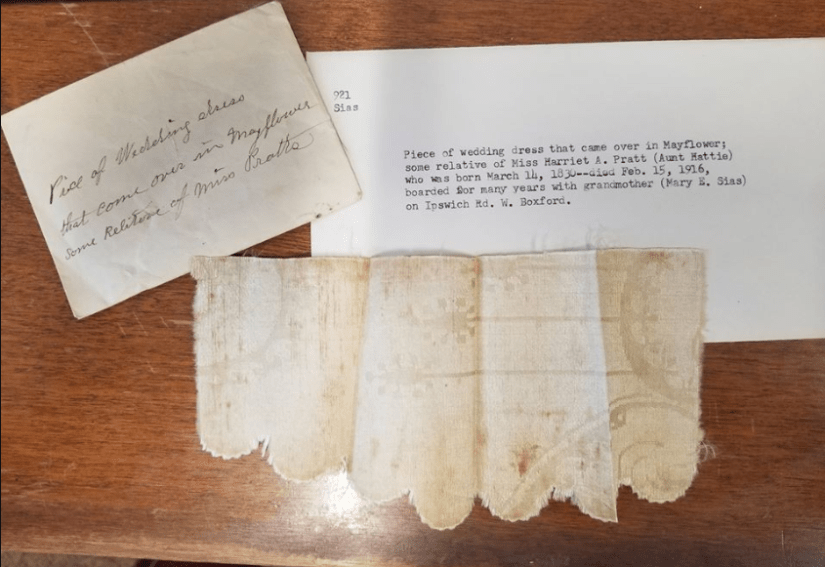
This was the image the Boxford Historic Document Center included with their FaceBook request for help.
“I have a fun challenge for someone who has a really good Mayflower tree or a lot of time on their hands! I came across this wedding dress fragment in our collection that supposedly belonged to a Mayflower emigrant relative of Harriet “Hattie A. Pratt….Can anyone figure out which Mayflower relative this might have been?”
Now I had a decision to make….Go back to the hot garden, or stay in the cool house and build a family tree. Cool house/build tree won! In all honesty, it was not a difficult choice I really love building trees!
The Boxford Historic Document Center FaceBook page contained a few facts about Hattie. Her birth and death dates. The full name of her father. But only the first name of her mother. So first I needed to to confirm and identify both of Hattie’s parents. Hattie’s death certificate was easy to locate on FamilySearch. It confirmed her father’s name, Joshua Hall Pratt, but only listed her mother’s first name, “Elizabeth,” which matched the post from the Boxford Historic Document. I then turned to the vital records from Chelsea, which was Joshua H. Pratt’s hometown. I quickly found a marriage record, that showed Joshua married Elizabeth Pratt. Chelsea’s records had the births of all their children, including Hattie, and her birthdate also matched the Document Center’s information. Now with starting information confirmed, it was time to build a family tree!
Harriet A. Pratt’s death certificate “Massachusetts State Vital Records, 1841-1920,” Database with images, FamilySearch (FamilySearch.org: accessed 10 Jun 2020) Harriett A. Pratt, 15 Feb 1916 Boxford (MA), certificate no 2, citing Secretary of the Commonwealth, Massachusetts State Archives, Boston (MA)
I did not want to take a deep dive on this tree, but wanted to create one that was built quickly, building back to the generation of the person who could have owned the scrap of wedding dress fabric. This meant I needed to build Hattie’s tree back to people who were born about 1600, which was about six generations back.
Although I was moving quickly, I did not want to be careless with my research. I easily could have copied someone’s already built tree. But I knew there are a lot of trees out there that contain incorrect information. Thus, I thought it more important to start from scratch. Starting from Hattie’s parents and searching vital records, Hattie’s family tree began to grow. I also used Google searches to aid in this research. Google books had several genealogical books, written in the early 1900s, which were specific to Hattie’s family! These books were extremely helpful pointing out the next generation, and town’s vital records then confirmed each generation. Awesome find!!
As Hattie’s family tree grew, it was becoming apparent that most, if not all of her ancestors had settled in towns north of Boston. In other words, in the Massachusetts Bay Colony and not in the Plymouth Colony, which was south of Boston. A Pilgrim ancestor was not becoming evident. However, two possible candidates emerged, which required further review. Both candidates were in Hattie’s Wolcott line; Joanna Emerson wife of John Wolcott (III) and Experience Walker wife of John Wolcott (V).
The book, Wolcott immigrants: and their Early Descendants (The First Six Generations) states that Joanna Emerson, who married John Wolcott (III), was a descendent of a Pilgrim. Joanna Emerson was born about 1663 (according to her age at death) in Ipswich, Massachusetts. Her parents are believed to be Nathaniel Emerson and his wife Sarah. There are no birth registrations of children in vital records for this couple, nor did Nathaniel leave behind a will, which makes it difficult to prove any children for this couple. It cannot be disregarded that Joanna is not listed as a daughter of Nathaniel and Sarah in the book The Ipswich Emersons; A.D. 1638-1900. Joanna “Hannah” married John Wolcott 4 January 1684 in Newbury, Massachusetts. Nathaniel Emerson was the son of Thomas Emerson and his wife Elizabeth Brewster. Nathaniel is a proven son; he was baptized in 1630 in the church his parents married in and he is mentioned in his father’s will. It was thought Elizabeth Brewster was the daughter of Pilgrim William Brewster. There are many books published around 1900 with this notation. However, today the Mayflower Society does not recognize that Elizabeth Brewster, wife of Thomas Emerson is the daughter of Pilgrim William Brewster.
The other possible Mayflower connection is Experience Walker, who married John Wolcott (V), the grandson of John (III) and Joanna (Emerson) Wolcott. According to the book Wolcott Immigrants: and their Early Descendants (The First Six Generations), Experience was born in 1727. The book does not provide a death date nor the names of her parents. Checking vital records for Brookfield, Massachusetts, an Experience Walker was born there in the early 1730s to Benjamin and Experience (Hayward) Walker. This is the Experience Walker many assume is the woman who married John Wolcott. Although no published genealogy or other factual source indicated this possible relationship, many family trees on Ancestry.com and FamilySearch.org illustrate this possible connection.
Further research on the family of Benjamin and Experience (Hayward) Walker, identifies that Experience Hayward has a confirmed genealogy to a Mayflower ancestor. She is listed in the “Silver Books” a published series by General Society of Mayflower Descendants containing the approved lineages for Mayflower families. She was the daughter of George Hayward (1673-1725), granddaughter of Anna White (1649-1712), and great-granddaughter of Resolved White (1615-1687), who came to Plymouth with his parents William and Susanna (Jackson) White. However, according to Brookfield vital records, Benjamin and Experience (Hayward) Walker’s daughter Experience died in 1738 at the age of nine. She cannot be the wife of John Wolcott (V).
It appears that both Joanna Emerson and Experience Walker are dead ends, and unlikely to be the descendants of a Mayflower ancestor who owned the scrap of fabric that was thought to be part of a Pilgrim wedding dress.
Notation from The Ipswich Emersons; A.D. 1638-1900 indicating provenance of a family heirloom.
However, an interesting notation in The Ipswich Emersons; A.D. 1638-1900 regarding Elizabeth (Fuller) King, granddaughter of Thomas and Elizabeth [Brewster] Emerson, who owned a similar scrap of linen fabric, which the family preserved as an heirloom caught my attention. It tells how Elizabeth (Brewster) Emerson’s had descended from a respectable English family, and her mother had been given a piece of linen by Queen Elizabeth, (who reigned from 1558 to 1603), which the family had passed down as an heirloom. Could it be possible the Boxford Historic Document Center’s scrap of fabric is not from a Pilgrim’s wedding dress but from that original piece of linen?
It appears Harriet A. Pratt does not have a Mayflower ancestor, but when she was alive and for several decades after her death, it was believed her ancestor Elizabeth (Brewster) Emerson, was the daughter of the Pilgrim William Brewster.
The notion of having a special dress to get married in did not develop until the mid-1800s, so this scrap of fabric may not have come from a wedding dress. The scrap of fabric, that is part of the collection of the Boxford Historic Document Center, appears to be linen with a damask pattern. A piece of linen is documented in the Emerson Genealogy, that was gifted to the family from Queen Elizabeth I, as having come through Elizabeth (Brewster) Emerson, and is noted the family considers it an heirloom. It is very possible the piece of linen was cut into smaller pieces so several branches of the family could each have a piece of this heirloom, and Hattie was the person who ended up with her branch’s piece.
In summary, I believe that Hattie Pratt does not have a Mayflower ancestor and it is highly likely this scrap of fabric is from the gift of Queen Elizabeth to Elizabeth (Brewster) Emerson.
Mystery solved.
Bibliography:
Appleton, William Sumner. Record of the Descendants of William Sumner, of Dorchester, Mass., 1636. Boston (MA): David Clapp & Son, Printer, 1879.
Bond, Henry. Family Memorials and Genealogies of the Families and Descendants of the Early Settlers of Watertown, Massachusetts. Boston (MA): Little, Brown, and Company, 1885.
Cox, John Hosmer. New England Cox Families: A Series of Genealogical Papers, Vol. 5. Lexington (MA): 1890.
Chamberlain, George Walter. The Spragues of Malden, Massachusetts. Boston (MA): Privately printed, 1923.
Chamberlain, George Walter (ed). “Early Settlers Before 1665,” Proceedings of the Hundred Seventy-Fifth Anniversary of Malden, Massachusetts, 1924.
Emerson, Benjamin Kendall. The Ipswich Emersons; A.D. 1638-1900. Boston (MA): David Clapp & Son, 1900.
Fuller, Arthur Buckminister. Historical Notes of Thomas Fuller and his Descendants: With A Genealogy of the Fuller Family, 1638-1902. Cambridge (MA): 1902.
Garrity, Robert M. “Concord’s First Settlers, 1636-1640,” yankeeancestry.tripod.com. Acton, Massachusetts: 2006. accessed 20 jun 2020
Sewall, Samuel. The History of Woburn, Middlesex County, Massachusetts, “Genealogical Notices of the Earliest Inhabitants of Woburn, and Their Families” Boston (MA): Wiggin & Lunt Publishers, 1868.
Wakefield, Robert S. (ed). Mayflower Families Through Five Generations: William White, third edition, Vol 13. Plymouth (MA): General Society of Mayflower Descendants, 2006.
Wolcott, John Benjamin, Charles V. Wald. Wolcott immigrants: and their Early Descendants (The First Six Generations). Rochester: Gorham Printing, 2002.
So you live in old house and you want to learn more about its history. Perhaps you heard it was a stop on the underground railroad, or you heard George Washington passed by on his way to Trenton, or you are interested in its architecture, whatever your reason may be, it is actually easy to trace your home’s “genealogy.”
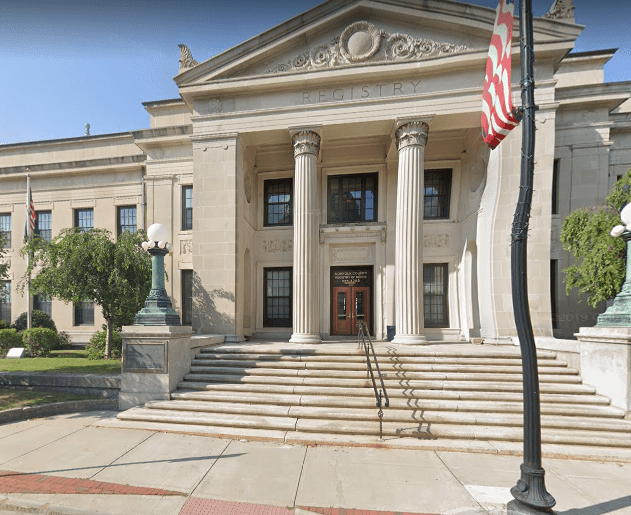
The Norfolk County Deeds Office, Dedham (MA)
The best place to start is your county deeds office where land deeds are filed. You can physically go there, but before you do, check to see if they offer online research. That way you can perform your search from the comfort of your own home! The first thing you will need is the book number and the page number where your deed is recorded. You can find that in the Grantor/Grantee index book. Once you have located your deed, read through it. You will find a reference to the book and page number for the sale of your home from when the previous owners purchased it. Keep working your way back until you find it was a piece of land with no structures on it. This will give you a good date for the construction of your house.
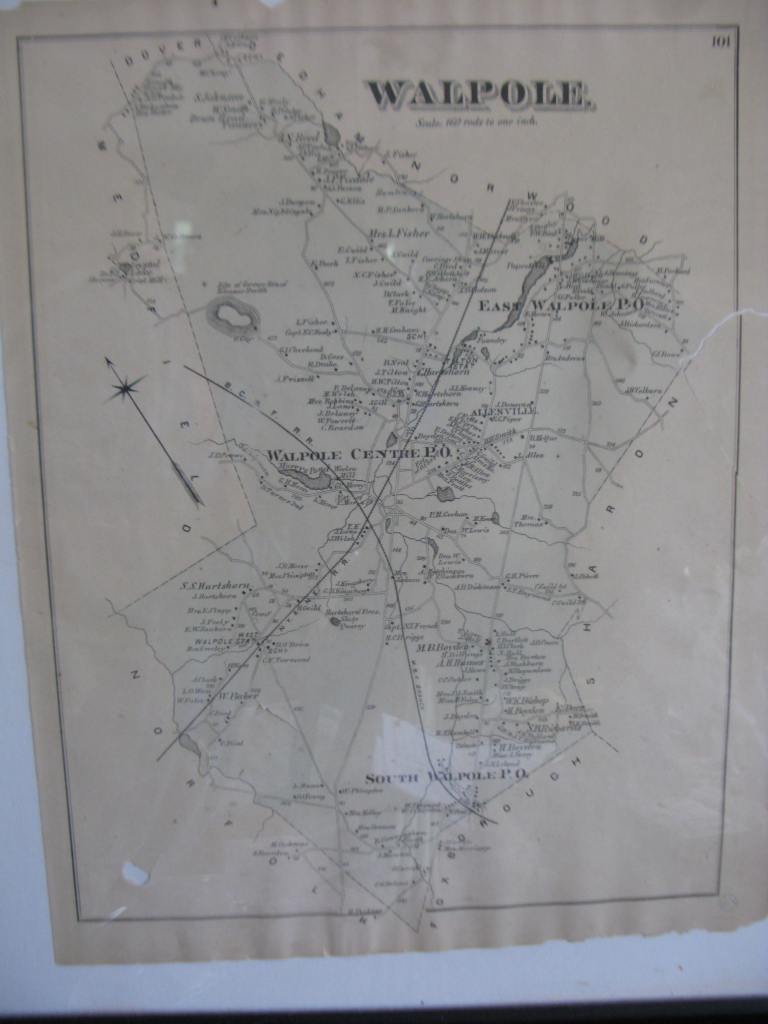
You can also refer to maps. Some maps can be found on file at the county deed office too. Very often when new streets are laid out or a new house or development is to be constructed, builders have to file plans, and those plans often include existing structures. Historical maps are also helpful as they sometimes include the structures, and they may have the added bonus of naming the owner of the home. Looking at maps was extremely helpful for my search, as the property had once been 40 acres, and now is less than one acre. Studying old boundaries and the neighborhood changes over 200 years helped me better understand my property.
Once you know all the owners of your home you can research them. FamilySearch.org will have census records and vital records that will help you reconstruct family who used to live in your home. This technique was very helpful for me. The two daughters of the original owner inherited my house; one daughter had died, so her seven children inherited her half. These children sold their shares back and forth. Following the various purchases and sales was tricky, especially as a few of the transactions were never recorded in county deeds. By reconstructing the family, I was able to figure out the sibling relationships. I also followed up probate court where I pulled wills for the various family members.
Once you have a good picture of the past owners of your home, you can visit your local library or reach out to your local historical society. They may have information on the families who owned your home, they may know if your home has any historical importance, or they may have pictures of your house from way back when.
Visiting your local library may turn up books on local history or general architecture. Having a working knowledge of house styles and trends may also help date your house. How the house is constructed? Is it post and beam? Is it stick built? Is it made from a kit? The answers to these questions will help you confirm the age of your home. It will also help you identify original details you may now want to preserve. I found in a published record that for one season, the original owners of my house allowed it to be the school for the local children. So my house may not really be a schoolhouse….but this is still an interesting tidbit!
My little 1757 Cape Cod style house!
You do not really have to hire a professional to trace the age of your home. Honestly, I do not think it is that hard to do, but it does take time and perseverance. If you do the work, you will know your house’s history, you will not question a finding or wonder if your hired researcher left something out. But mostly you can take pride in your research and know you did a good job!
I have had the pleasure of being a merit badge counselor for Walpole Troop 44 for several years. I helped scouts earn their Fingerprinting, Cooking, Citizenship in the Community, Disabilities Awareness merit badges and yes, the Genealogy merit badge.
I must say, getting kids interested in their heritage is not an easy task. The Boy Scouts have put together an list of requirements for the genealogy merit badge which if the leader does it correctly, a scout will enjoy working on this badge.
I would recommend working on this badge at a time when families get together….like Thanksgiving. This provides the scout with an opportunity to interview his family.
First, I like to prepare folders for each of the boys. I print copies of pedigree charts and family group sheets, and the Genealogy merit badge requirement worksheets, and provide lined paper for each folder.
At the first meeting have the boys write down the words ancestor, genealogy and descendent, then give them a few minutes to look the words up on their cell phones and write down the definitions. For the next portion of the meeting have the boys brainstorm interview questions. This activity may lead to several interesting discussions. Note, you will want to keep a list of their ideas so you (or a scout) can create a master list of questions for the boys to take with them when their family gathers. This can segue into a discussion of timelines, give the boys some lined paper to write down some of the events that have occurred in their lives. (Homework, have them turn their notes into a proper timeline and have them include a written biography to accompany their timeline). Before you end the session, have them tell you the definition of the three words they looked up at the beginning to the merit badge meeting.
At the second meeting have the boys begin by sharing their timelines and reading their biographies. When all the boys have had a turn, ask them if now they have heard other boys timelines, did that make them think of stuff they left out of their time line. Next have the boys fill in some family group sheets. The boys should know about their own family and perhaps their parent’s families. Then have them begin to fill out a pedigree chart, starting with them selves and go back a few generations. The boys will only be able to get one or two generation back, but not to worry, when the meet with their family, a grandparent may know a few more generations. Give the scouts copies of the complied interview questions they discussed at the last meeting. You can have them look them over and discuss them for a little bit. (Homework, have the boys plan to meet with a family member to be interviewed and to help filling in more family group sheets and extending their pedigree chart.)
Scouts from troop 44 Walpole (MA) take a break to pose for a photograph from working on an Eagle Scout project. (from the collection of Laurie Kerns)
Plan a field trip to the local historical society. Most historical societies have a genealogical repository/library on site, and the historian can show the boys the kinds of books and documents they have in their collections for genealogical research. Perhaps you can arrange for a professional genealogist to be on hand, either in person or online. (Homework, have the boys get a copy of a birth, marriage, death or baptismal certificate and bring a copy (not the original) of it to the next meeting.)
At the next meeting, give the boys an old document, like a will. Challenge them to see if they can read the old handwriting. They may find this activity fun as they struggle to read the document. Then provide the boys with a transcription so they can see/learn about what they were trying to read! Make sure the document has some useful genealogical information in it. Next have the boys present their vital record certificates; also provide a few other documents like obituaries and a death or birth notice, maybe a Bible entry. Have the boys discuss if each document is useful or not for charting a family tree. (Homework, have the boys log on to FamilySearch.org and to findagrave.com to see if they can extend their family trees. Have them bring their research findings and trees to the next meeting along with a few family pictures)
Scouts from Troop 44 Walpole (MA). Drew Cormier, Emerson Kerns, Ben Kerns ans Nick Kearney, are now all Eagle Scouts! (from the collection of Laurie Kerns)
Last meeting, have the boys discuss their findings, both from online and from family interviews. What was the most helpful? Ask how computers and photography has influenced genealogical research. Have them share their trees and tell what they learned about their family. Provide a few sheet protectors to the boys can assemble their findings, interviews, pictures, family group sheets and pedigree charts into a book they can keep.

















 Laurie L. Kearney