More Naming Conventions: Ye Olde Use of Prefixes and Suffixes

When one is researching genealogy, it is not uncommon to find many ancestors with a prefix or a suffix in their names. Of course, we are familiar with Mr., Mrs., and Dr., because these prefixes are used in the same way today. Some suffixes that we are familiar with, such as Esq., and Jr., were used very differently in the eighteenth century than they are used today. Knowing how they were used and when the usage change occurred as well as what they meant is important because it will make your research accurate.

Today, when a son is named after his father the suffix “Jr.” follows the name. Even long after the father has died, the son uses the “Jr.” after his name. Should this son also name his son after himself, then the suffix “III” follows the name. I once met a “XIV”! It should be noted this is a modern day convention.

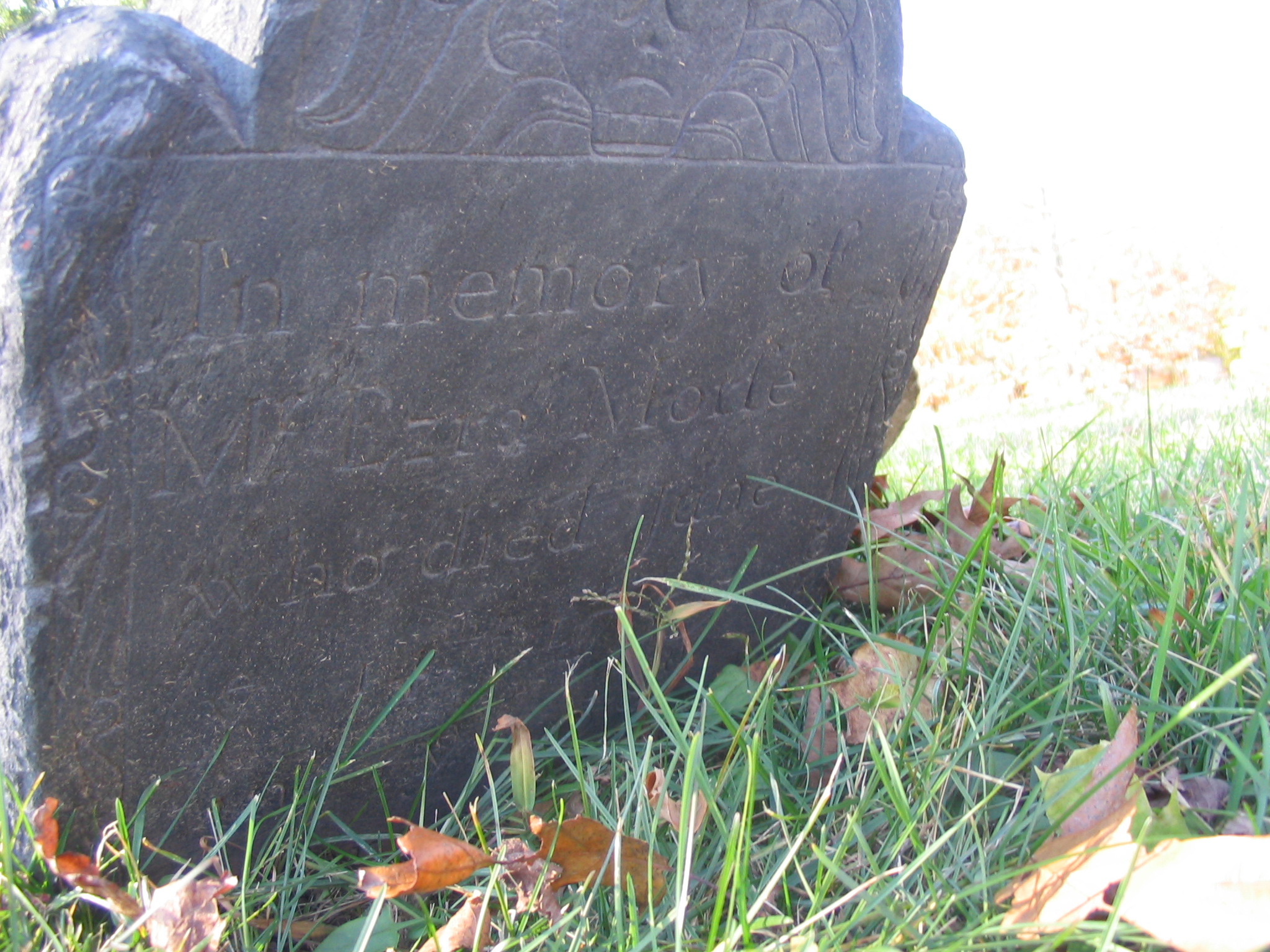
In the 1700s, in New England and probably in other geographical areas as well, parents often named their children after their parents and themselves. This means their children often followed the same naming patterns. So if Henry Brown had six sons, (one being a Henry Brown) they each may have a Henry Brown and within two generations, a town may have eight Henry Browns living in their borders! This does NOT mean they were recorded as Henry Brown Sr., Henry Brown Jr., and six Henry Brown IIIs in official records. So how did officials record all these different Henrys?

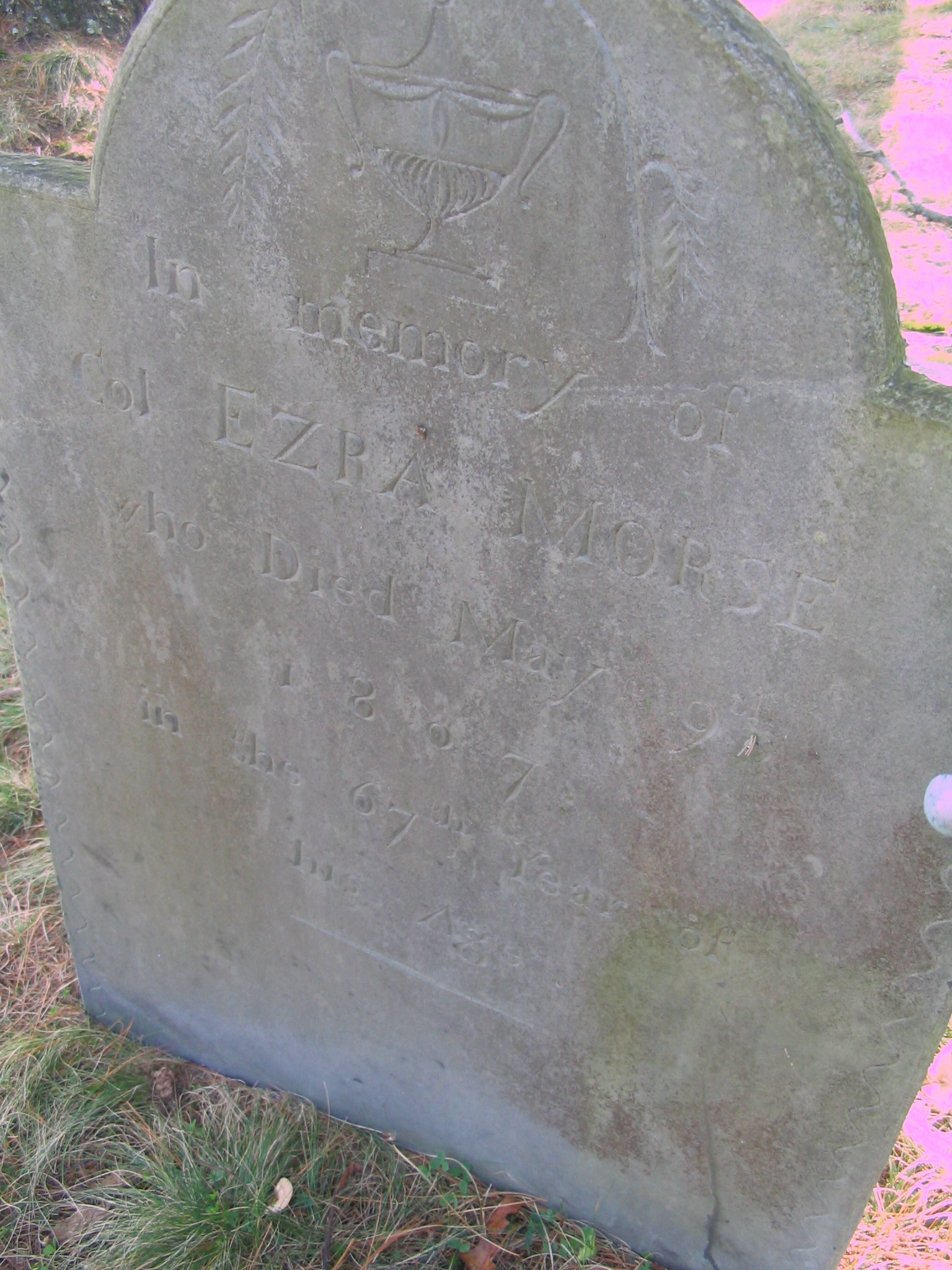
When I first started doing genealogy, I thought the modern day use of Sr., Jr., etc. was also the historical norm, until I began to transcribe the records of the Second Parish of Dedham (now the First Church of Norwood). As I was working my way through some of the earliest records, I came across Ezra Morse, Ezra Morse Junior, and Ezra Morse Tertius. I had not seen the term “Tertius” before and had to look it up. An online dictionary said it meant “third, the ordinal number after secundus (second), and before quartus (fourth).” In researching this Morse family, I found this is a grandfather, father, and son, but in researching other men with the “Jr.” suffix, I have discovered the “Jr.” does not necessary mean a father and son. It often indicates that the “Jr.” is the younger of the two men living in town. So when you come across the use of “Jr.” do not simply assume you have a son named after his father, and add a “Sr.” to your tree. You could be wrong and when you figure that out, you will have to start lopping of branches of your tree. Do a little research first and to make sure you have a correct entry right at the start!
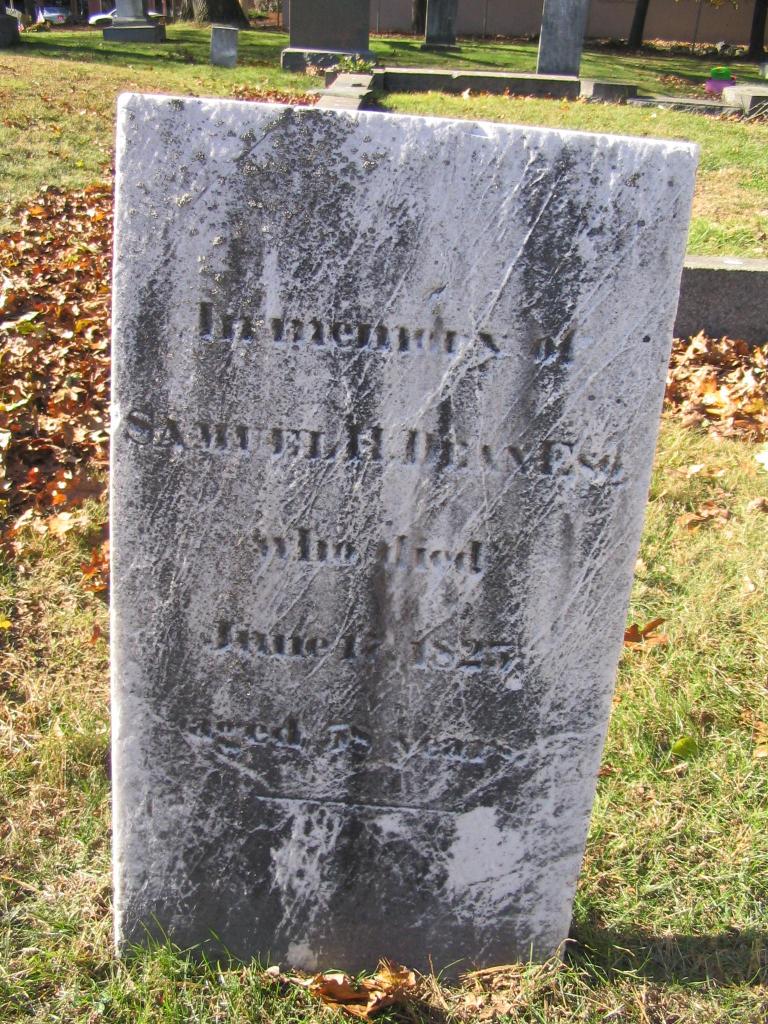
It is interesting to note the suffix, “Esq.” (which means “Esquire”) is often found on headstones and legal documents of men who lived in the eighteen century. Today we know this term is associated with the legal profession. People who are lawyers often have the suffix Esq. after their names, and as a society, we instantly know they are lawyers. However, earlier usage of the term Esq. does not mean that our ancestors were necessarily lawyers. Understanding how this term was used in the 1700s and early 1800s will help us understand more about our ancestors.

In the eighteenth century, the term Esquire meant gentleman, someone who had social stature in the community. This notion often confused me when I came across this term as I was doing local history, and knew this particular “Esq.” was neither a lawyer nor a gentleman because he had come from very humble beginnings. As I began to understand the term by delving deeper into local history, I learned that these men of humble beginnings were titans of local industry, rising to become quite wealthy. As they rose in social standings they often took leading roles in local government or in churches. The term Esq., being tacked on to the end of their name, reflects how they were seen within their local community. We begin to see “Esq.” being used as we know it today around the mid 1800s. So be careful and check the history of your ancestor to confirm if they were a community gentleman or a local lawyer.
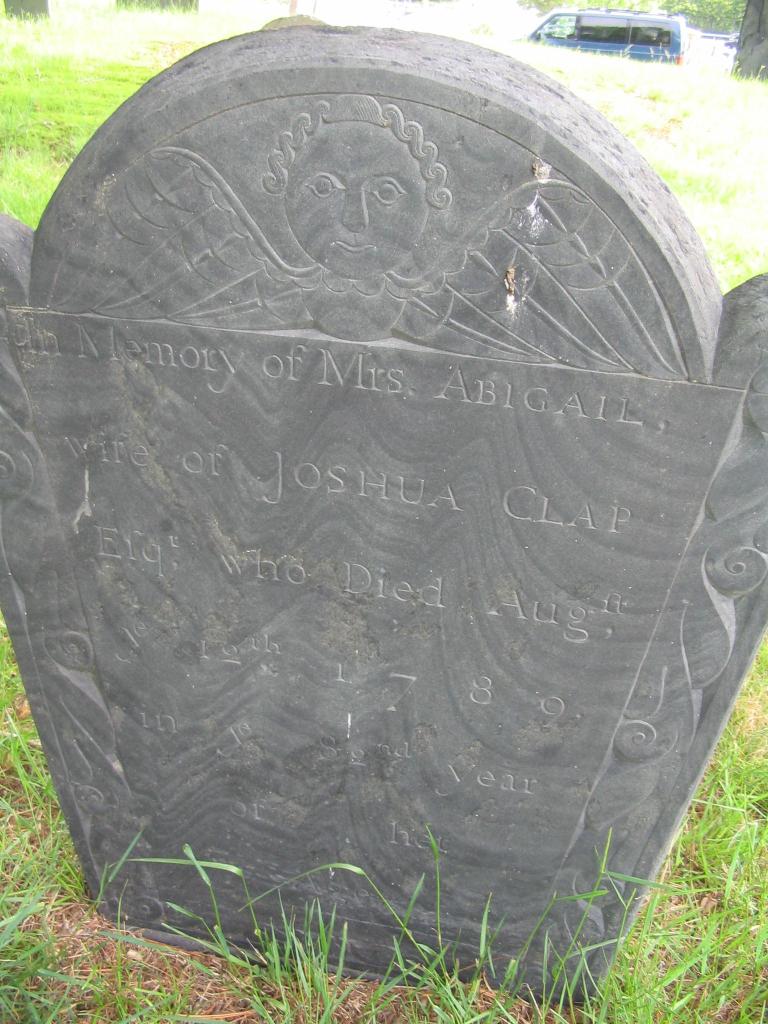
Although the use of such prefixes as Mr., Mrs., and Dr., have remained unchanged over the centuries, knowing a little about their initial meanings is interesting! The term “Mr.” we know to be an abbreviation of the word “mister.” However, its initial roots were in the word “master,” and the word “mister” evolved out of the abbreviation, as people attempted to pronounce the “m” and the “r” as a word. The prefix “Mrs.” is an abbreviation of the word “mistress” and is associated with a married woman. It should be noted the prefix “Miss” also comes from the word “mistress” but is associated with an unmarried woman. However, in the eighteenth century the abbreviations Mrs. and Miss were used interchangeably. I have seen many marriage documents recording a Mrs. Sarah Jones marrying Mr. So-in-so. This often confused me as other records indicated Mrs. Sarah Jones was really Miss Sarah Jones. Now I understand the interchangeability of Mrs. and Miss and do not fret about how they are being used….but this does not mean that I do not research to confirm if the ancestor in question was married or not! So, it is important to not only understand the old usage of prefixes and suffixes tacked on to names, but it is equally important to research the use of these prefixes and suffixes on the name of your ancestors, as it will make your research more accurate.

Beware: Secondary Sources often Lie!

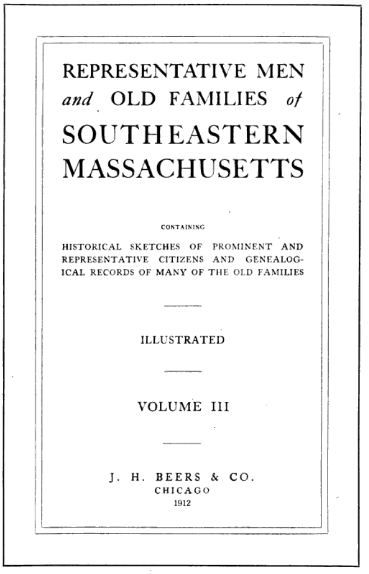
Around 1900, Americans took a great interest in United States history, local history and in their personal family histories. During this time Historical Societies formed, and an interest in supporting and creating local historical sites occurred. Also, linage organizations were established, such as The Daughter’s of the American Revolution and The Mayflower Society. It was at this time many books on local histories were published which often included a genealogical sketch of prominent citizens. These books, most which can be found on Google Books, are wonderful resources, but they should be treated as a clue and not as a fact. Very often their genealogies were often incorrect and the histories they include on the families were just wrong.

One such article I came across when I was researching the family of Thomas Penney (1710-1809) of Wells, Maine. In this article, on Justin Benjamin Penney in the book “Representative Men of Southeastern Massachusetts” published in 1919, by J.H. Beers & Co, states that Justin’s great-great-grandfather, Thomas Penney was the father of nineteen children, ten with his first wife Abigail Grey and nine with his second wife Adah (Hatch) Spear, who came to this marriage with two children. The article goes on to tell a fantastic story of Adah’s life saying:

“Adah (Spear) Penney was taken captive by the Indians and kept prisoner eighteen years.  She had a child born shortly after her capture, of which the Indians became very fond, but in one of their drunken orgies and war dances they accidentally killed it.  To conceal all evidence the burned the body before the mother’s eyes.  The heartbroken woman found a rib bone in the ashes and hid it in the folds of her dress.  At last the Indians discovered it, and feared she intended to keep it to show the whites’ and make trouble.  She was finally set at liberty.”

It should be noted that there is no other mention of this incident in Wells history.  By reviewing the time line of Adah Hatch’s life, it is clear, a lot of her life is documented.  There are many times where Adah’s name appears in Wells records, from her baptism, her two marriages and the baptism of her Spear children and her Penney children. These documents will prove the unlikely story of Adah’s capture.

Timeline of Adah’s life using primary documents:

DateEventSourceGap b/w events & age
13 Aug 1727Baptized at First Church of WellsWells, ME. Church records. —–
13 Dec 1748Intention to marry to Gideon SpearWells, ME. Church records.21 years (21yrs)
15 Feb 1756Baptism of three Spear children: Ebenezer, Mary & JohnWells, ME. Church records.8 years (29yrs)
13 Jan 1759Marriage to Thomas PenneyWells, ME. Church records.3 years (32yrs)
12 Feb 1760Bapt. of daughter Joanna PenneyWells, ME. Church records.1 year (33yrs)
7 Jan 1762Birth of twin sons Benjamin & Joseph PenneyPer Benjamin Penney’s Revolutionary pension application2 years (35yrs)
22 Aug 1762Bapt of twin sons: Benjamin & JosephWells, ME. Church records.8 months (35yrs)
(Maybe, but highly doubtful)
1766 to 1775
(birth of possibly more children) According to the article, Adah had 5 more Penney children, possibly born b/w 1766 and 1775. No records to support this notion.2 years to 9 years (b/w ages of 39 to 48 yrs)
Bef 1790deathThere are no records for her death. As Thomas gave his all his land to son John in return for life care
(sometimes making a table of facts can help to visualize someone’s life)

The story tells of her capture as a young woman, not a child, so Adah would not have been captured between birth and her first marriage. Documents over the next twenty years do not have an eighteen-year stretch. Also, if one takes into consideration the article’s reported notion she had five more Penney children born to her, then the only possible time block for this capture to have occurred is in the late 1770’s, (putting her in her late 40s/early 50s…almost too old to have a baby) and having a release just before 1800. Plus, history records note attacks on New England settlements by Native Americans was a problem in the 1670’s not the 1770’s.  Thus, by studying the facts and comparing them with this story, illustrates that this story about Adah story is highly likely never happened and appears to be a fabrication on the author’s part.

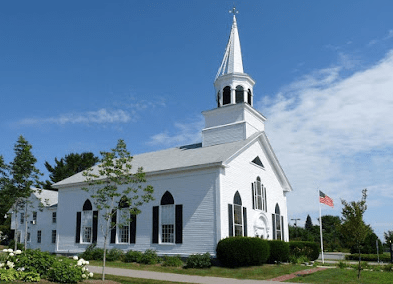
The First Chruch of Wells. Now the Wells Historical Society

Googling to find genealogies and histories is an excellent tool, but be aware that what you find may not be based in fact. The story of Adah’s capture is indeed an amazing story, and one that would be cool to pass down…but it simply is not true. I have also discovered that very often the genealogies found on line, whether in an early-published book, or on a web page, are fraught with errors. It should be noted that most of these histories/genealogies are accurate…but do yourself a BIG favor and check for sources. That way you know you have created an accurate tree filled with accurate stories!

Recently, I was participating in a committee, where someone stated, in reference to a local history…if it was published then it MUST be true.

No. No it is not…just do the work and prove it!

A Mayflower Mystery: Seeking The Ancestors of Hattie Pratt

It was a hot Sunday in June and I was attempting to prepare my garden for the summer season, which entailed plenty of water breaks indoors in front of the air conditioner. Once I was nestled in my comfy chair in a cool room, with a glass of ice water in hand, I checked my computer for any news updates, emails or FaceBook posts.  That Sunday I came across a post from the Boxford Historic Document Center requesting genealogical help. They posed the following on their FaceBook page.

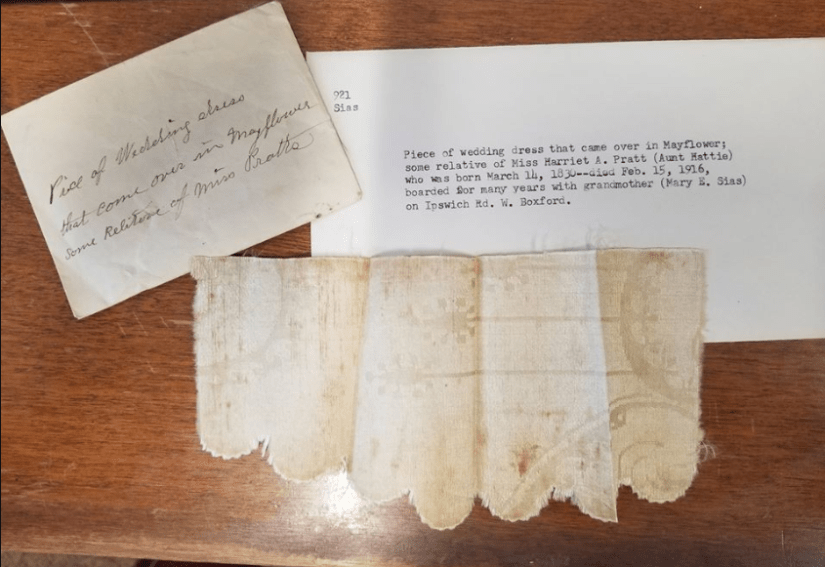
This was the image the Boxford Historic Document Center included with their FaceBook request for help.

 “I have a fun challenge for someone who has a really good Mayflower tree or a lot of time on their hands! I came across this wedding dress fragment in our collection that supposedly belonged to a Mayflower emigrant relative of Harriet “Hattie A. Pratt….Can anyone figure out which Mayflower relative this might have been?”

Now I had a decision to make….Go back to the hot garden, or stay in the cool house and build a family tree. Cool house/build tree won! In all honesty, it was not a difficult choice I really love building trees!

The Boxford Historic Document Center FaceBook page contained a few facts about Hattie. Her birth and death dates. The full name of her father. But only the first name of her mother. So first I needed to to confirm and identify both of Hattie’s parents. Hattie’s death certificate was easy to locate on FamilySearch. It confirmed her father’s name, Joshua Hall Pratt, but only listed her mother’s first name, “Elizabeth,” which matched the post from the Boxford Historic Document. I then turned to the vital records from Chelsea, which was Joshua H. Pratt’s hometown. I quickly found a marriage record, that showed Joshua married Elizabeth Pratt. Chelsea’s records had the births of all their children, including Hattie, and her birthdate also matched the Document Center’s information. Now with starting information confirmed, it was time to build a family tree!

Harriet A. Pratt’s death certificate
“Massachusetts State Vital Records, 1841-1920,” Database with images, FamilySearch (FamilySearch.org: accessed 10 Jun 2020) Harriett A. Pratt, 15 Feb 1916 Boxford (MA), certificate no 2, citing Secretary of the Commonwealth, Massachusetts State Archives, Boston (MA)

I did not want to take a deep dive on this tree, but wanted to create one that was built quickly, building back to the generation of the person who could have owned the scrap of wedding dress fabric. This meant I needed to build Hattie’s tree back to people who were born about 1600, which was about six generations back.

Although I was moving quickly, I did not want to be careless with my research. I easily could have copied someone’s already built tree. But I knew there are a lot of trees out there that contain incorrect information. Thus, I thought it more important to start from scratch. Starting from Hattie’s parents and searching vital records, Hattie’s family tree began to grow. I also used Google searches to aid in this research. Google books had several genealogical books, written in the early 1900s, which were specific to Hattie’s family! These books were extremely helpful pointing out the next generation, and town’s vital records then confirmed each generation. Awesome find!!

As Hattie’s family tree grew, it was becoming apparent that most, if not all of her ancestors had settled in towns north of Boston. In other words, in the Massachusetts Bay Colony and not in the Plymouth Colony, which was south of Boston. A Pilgrim ancestor was not becoming evident. However, two possible candidates emerged, which required further review. Both candidates were in Hattie’s Wolcott line; Joanna Emerson wife of John Wolcott (III) and Experience Walker wife of John Wolcott (V).

The book, Wolcott immigrants: and their Early Descendants (The First Six Generations) states that Joanna Emerson, who married John Wolcott (III), was a descendent of a Pilgrim. Joanna Emerson was born about 1663 (according to her age at death) in Ipswich, Massachusetts. Her parents are believed to be Nathaniel Emerson and his wife Sarah. There are no birth registrations of children in vital records for this couple, nor did Nathaniel leave behind a will, which makes it difficult to prove any children for this couple. It cannot be disregarded that Joanna is not listed as a daughter of Nathaniel and Sarah in the book The Ipswich Emersons; A.D. 1638-1900. Joanna “Hannah” married John Wolcott 4 January 1684 in Newbury, Massachusetts. Nathaniel Emerson was the son of Thomas Emerson and his wife Elizabeth Brewster. Nathaniel is a proven son; he was baptized in 1630 in the church his parents married in and he is mentioned in his father’s will. It was thought Elizabeth Brewster was the daughter of Pilgrim William Brewster. There are many books published around 1900 with this notation. However, today the Mayflower Society does not recognize that Elizabeth Brewster, wife of Thomas Emerson is the daughter of Pilgrim William Brewster.

The other possible Mayflower connection is Experience Walker, who married John Wolcott (V), the grandson of John (III) and Joanna (Emerson) Wolcott. According to the book Wolcott Immigrants: and their Early Descendants (The First Six Generations), Experience was born in 1727. The book does not provide a death date nor the names of her parents. Checking vital records for Brookfield, Massachusetts, an Experience Walker was born there in the early 1730s to Benjamin and Experience (Hayward) Walker. This is the Experience Walker many assume is the woman who married John Wolcott. Although no published genealogy or other factual source indicated this possible relationship, many family trees on Ancestry.com and FamilySearch.org illustrate this possible connection.

Further research on the family of Benjamin and Experience (Hayward) Walker, identifies that Experience Hayward has a confirmed genealogy to a Mayflower ancestor. She is listed in the “Silver Books” a published series by General Society of Mayflower Descendants containing the approved lineages for Mayflower families. She was the daughter of George Hayward (1673-1725), granddaughter of Anna White (1649-1712), and great-granddaughter of Resolved White (1615-1687), who came to Plymouth with his parents William and Susanna (Jackson) White. However, according to Brookfield vital records, Benjamin and Experience (Hayward) Walker’s daughter Experience died in 1738 at the age of nine. She cannot be the wife of John Wolcott (V).

It appears that both Joanna Emerson and Experience Walker are dead ends, and unlikely to be the descendants of a Mayflower ancestor who owned the scrap of fabric that was thought to be part of a Pilgrim wedding dress.

Notation from The Ipswich Emersons; A.D. 1638-1900 indicating provenance of a family heirloom.

However, an interesting notation in The Ipswich Emersons; A.D. 1638-1900 regarding Elizabeth (Fuller) King, granddaughter of Thomas and Elizabeth [Brewster] Emerson, who owned a similar scrap of linen fabric, which the family preserved as an heirloom caught my attention. It tells how Elizabeth (Brewster) Emerson’s had descended from a respectable English family, and her mother had been given a piece of linen by Queen Elizabeth, (who reigned from 1558 to 1603), which the family had passed down as an heirloom. Could it be possible the Boxford Historic Document Center’s scrap of fabric is not from a Pilgrim’s wedding dress but from that original piece of linen?

It appears Harriet A. Pratt does not have a Mayflower ancestor, but when she was alive and for several decades after her death, it was believed her ancestor Elizabeth (Brewster) Emerson, was the daughter of the Pilgrim William Brewster.

The notion of having a special dress to get married in did not develop until the mid-1800s, so this scrap of fabric may not have come from a wedding dress. The scrap of fabric, that is part of the collection of the Boxford Historic Document Center, appears to be linen with a damask pattern. A piece of linen is documented in the Emerson Genealogy, that was gifted to the family from Queen Elizabeth I, as having come through Elizabeth (Brewster) Emerson, and is noted the family considers it an heirloom. It is very possible the piece of linen was cut into smaller pieces so several branches of the family could each have a piece of this heirloom, and Hattie was the person who ended up with her branch’s piece.

In summary, I believe that Hattie Pratt does not have a Mayflower ancestor and it is highly likely this scrap of fabric is from the gift of Queen Elizabeth to Elizabeth (Brewster) Emerson.

Mystery solved.

Bibliography:

  • Appleton, William Sumner. Record of the Descendants of William Sumner, of Dorchester, Mass., 1636. Boston (MA): David Clapp & Son, Printer, 1879.
  • Bond, Henry. Family Memorials and Genealogies of the Families and Descendants of the Early Settlers of Watertown, Massachusetts. Boston (MA): Little, Brown, and Company, 1885.
  • Cox, John Hosmer. New England Cox Families: A Series of Genealogical Papers, Vol. 5. Lexington (MA): 1890.
  • Chamberlain, George Walter. The Spragues of Malden, Massachusetts. Boston (MA): Privately printed, 1923.
  • Chamberlain, George Walter (ed). “Early Settlers Before 1665,” Proceedings of the Hundred Seventy-Fifth Anniversary of Malden, Massachusetts, 1924.
  • Emerson, Benjamin Kendall. The Ipswich Emersons; A.D. 1638-1900. Boston (MA): David Clapp & Son, 1900.
  • Fuller, Arthur Buckminister. Historical Notes of Thomas Fuller and his Descendants: With A Genealogy of the Fuller Family, 1638-1902. Cambridge (MA): 1902.
  • Garrity, Robert M. “Concord’s First Settlers, 1636-1640,” yankeeancestry.tripod.com. Acton, Massachusetts: 2006. accessed 20 jun 2020
  • Sewall, Samuel. The History of Woburn, Middlesex County, Massachusetts, “Genealogical Notices of the Earliest Inhabitants of Woburn, and Their Families” Boston (MA): Wiggin & Lunt Publishers, 1868.
  • Wakefield, Robert S. (ed). Mayflower Families Through Five Generations: William White, third edition, Vol 13. Plymouth (MA): General Society of Mayflower Descendants, 2006.
  • Wolcott, John Benjamin, Charles V. Wald. Wolcott immigrants: and their Early Descendants (The First Six Generations). Rochester: Gorham Printing, 2002.