My friend and I were working on developing a walking tour of a local neighborhood. We met a few times to walk the area, plan out the sights where we wanted to stop and talk. We noted things that were still there and things that were long gone. At one time, this area was in walking distance to jobs, social and sporting clubs, schools, a tavern, a store and even a beach, it had everything! Today so many components of this neighborhood are long gone and in fact, it is mostly a cut through people use to avoid busy streets. Chances are they don’t even realize they are traveling through what was once a vibrant neighborhood, as they zoom up and down its streets.
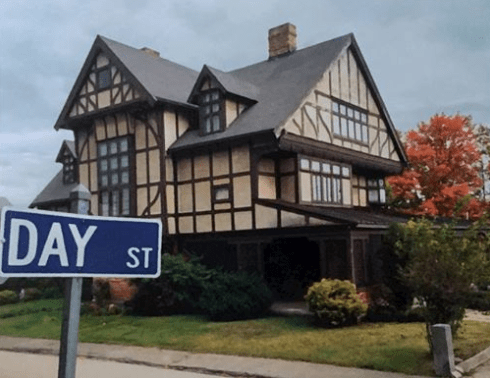
A Germantown street as it appears today.
Once we had a plan of action, we divvied up the research to be done then we began the process of creating our talk. We consulted printed local histories. Spoke to people who lived in the area. Looked into the roots of their social clubs, and reviewed maps and land deeds to understand how the neighborhood physically grew. We learned a lot about the area…me more so as I have only been here thirty years or so, and my friend is a life long local. However, from all our research we created a robust history and we thought a very informational talk! We looked forward to presenting it and crossed our fingers the pandemic would not put the kibosh on it.
As I was researching my piece of this presentation, it occurred to me, having been on other local history walking tours, that often the presenter gives a little biography on some of the people that had lived in there. I feel, this personalizes the talk…and seeing as I love genealogy, I went about researching some of the original residents of the area. I especially enjoy trying to find information on people whose voices are silent in history. The majority of these people are from the working class and this neighborhood was home to mostly immigrant laborers. People who had come here from Germany and Austria and found jobs in the local tannery and paper mill.
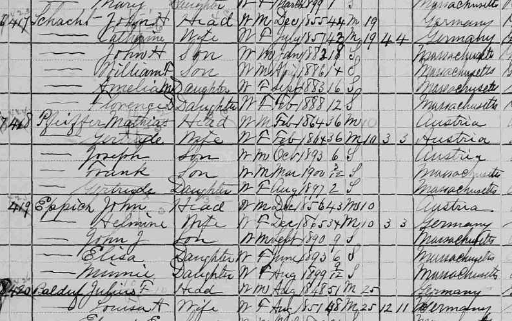
Portion of 1900 census showing families living in the area.
Starting with the 1900 and 1910 US Censuses gave me a list of people to research. I walked the neighborhood to compile a list of homes that would have been there during this era. Then using a variety of genealogical databases, I began to see what I could find on these people. First I started with the Eppich family, as there were several families with that surname living in this neighborhood. I soon discovered that many of the families in this neighborhood were related. So many of the residents here had married Eppich daughters, connecting many of these families together. One of the weirdest things I noticed was how in early census records these families stated they were Austrian, then later noted they were Yugoslavian. I found it odd that these people reported they were from two very different countries. How does someone not know where they came from? As luck would have it, one of the 1920 census takers not only recorded the county of origin, but also the county (or town) within that county of origin. This notation had me checking maps for these little towns in Austria…and the most extraordinary fact became clear; so many of the neighbors that were related and came from a place called Gottschee.
Map of Gottschee
As I dived into this revelation, I learned that Gottschee was a duchy within the Austrian-Hungry Empire. It is often described as a German-speaking island surrounded by a sea of Slavic speaking counties. Originally settled in the 14th century by Germans from several different German and Austrian towns, it was an unpopulated mountainous forest. For over 500 years its German language developed into its own dialect and they maintained their own unique customs. Today, there are practically no Gottscheers living in this area. After World War I, Gottschee became part of a new country: Yugoslavia, and today it’s original borders are in Slovenia. After World War II, the Gottscheers who had lived there were expelled. Some went to Germany or Austria, but most came to the United States. Today the largest populations of Gottscheers live in Brooklyn, NY or in Cincinnati, OH.
Now we know, there was a small community of Gottscheers in Norwood and Walpole, Massachusetts! Although this unique story was new to me, so many descendants of local Gottscheers came to our walking tour and were already aware of their history.
This discovery made this Germantown Neighborhood extra special for me…especially as my little house is in that neighborhood and was home to a Gottschee family.
To me, this is another reason to look beyond vital records to tell a story of an ancestor. Dig deeper. You may be amazed at what you will find!
It was a hot Sunday in June and I was attempting to prepare my garden for the summer season, which entailed plenty of water breaks indoors in front of the air conditioner. Once I was nestled in my comfy chair in a cool room, with a glass of ice water in hand, I checked my computer for any news updates, emails or FaceBook posts. That Sunday I came across a post from the Boxford Historic Document Center requesting genealogical help. They posed the following on their FaceBook page.
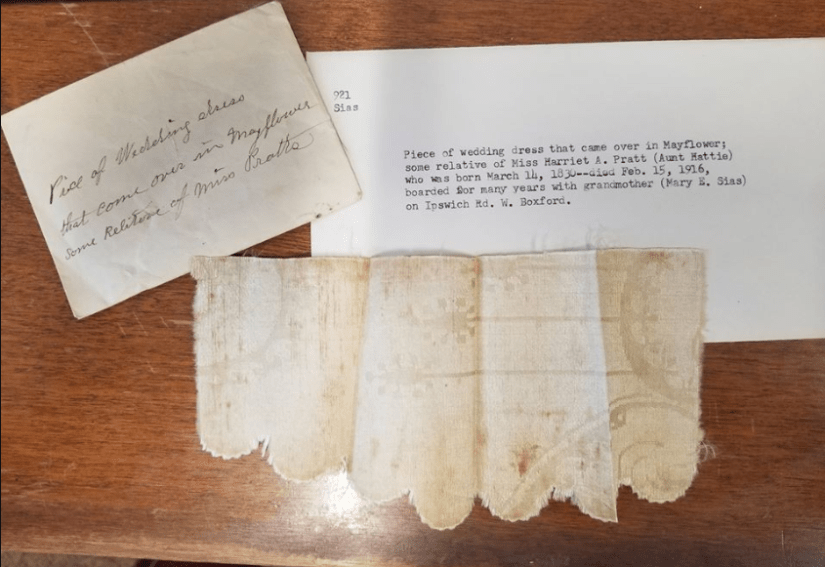
This was the image the Boxford Historic Document Center included with their FaceBook request for help.
“I have a fun challenge for someone who has a really good Mayflower tree or a lot of time on their hands! I came across this wedding dress fragment in our collection that supposedly belonged to a Mayflower emigrant relative of Harriet “Hattie A. Pratt….Can anyone figure out which Mayflower relative this might have been?”
Now I had a decision to make….Go back to the hot garden, or stay in the cool house and build a family tree. Cool house/build tree won! In all honesty, it was not a difficult choice I really love building trees!
The Boxford Historic Document Center FaceBook page contained a few facts about Hattie. Her birth and death dates. The full name of her father. But only the first name of her mother. So first I needed to to confirm and identify both of Hattie’s parents. Hattie’s death certificate was easy to locate on FamilySearch. It confirmed her father’s name, Joshua Hall Pratt, but only listed her mother’s first name, “Elizabeth,” which matched the post from the Boxford Historic Document. I then turned to the vital records from Chelsea, which was Joshua H. Pratt’s hometown. I quickly found a marriage record, that showed Joshua married Elizabeth Pratt. Chelsea’s records had the births of all their children, including Hattie, and her birthdate also matched the Document Center’s information. Now with starting information confirmed, it was time to build a family tree!
Harriet A. Pratt’s death certificate “Massachusetts State Vital Records, 1841-1920,” Database with images, FamilySearch (FamilySearch.org: accessed 10 Jun 2020) Harriett A. Pratt, 15 Feb 1916 Boxford (MA), certificate no 2, citing Secretary of the Commonwealth, Massachusetts State Archives, Boston (MA)
I did not want to take a deep dive on this tree, but wanted to create one that was built quickly, building back to the generation of the person who could have owned the scrap of wedding dress fabric. This meant I needed to build Hattie’s tree back to people who were born about 1600, which was about six generations back.
Although I was moving quickly, I did not want to be careless with my research. I easily could have copied someone’s already built tree. But I knew there are a lot of trees out there that contain incorrect information. Thus, I thought it more important to start from scratch. Starting from Hattie’s parents and searching vital records, Hattie’s family tree began to grow. I also used Google searches to aid in this research. Google books had several genealogical books, written in the early 1900s, which were specific to Hattie’s family! These books were extremely helpful pointing out the next generation, and town’s vital records then confirmed each generation. Awesome find!!
As Hattie’s family tree grew, it was becoming apparent that most, if not all of her ancestors had settled in towns north of Boston. In other words, in the Massachusetts Bay Colony and not in the Plymouth Colony, which was south of Boston. A Pilgrim ancestor was not becoming evident. However, two possible candidates emerged, which required further review. Both candidates were in Hattie’s Wolcott line; Joanna Emerson wife of John Wolcott (III) and Experience Walker wife of John Wolcott (V).
The book, Wolcott immigrants: and their Early Descendants (The First Six Generations) states that Joanna Emerson, who married John Wolcott (III), was a descendent of a Pilgrim. Joanna Emerson was born about 1663 (according to her age at death) in Ipswich, Massachusetts. Her parents are believed to be Nathaniel Emerson and his wife Sarah. There are no birth registrations of children in vital records for this couple, nor did Nathaniel leave behind a will, which makes it difficult to prove any children for this couple. It cannot be disregarded that Joanna is not listed as a daughter of Nathaniel and Sarah in the book The Ipswich Emersons; A.D. 1638-1900. Joanna “Hannah” married John Wolcott 4 January 1684 in Newbury, Massachusetts. Nathaniel Emerson was the son of Thomas Emerson and his wife Elizabeth Brewster. Nathaniel is a proven son; he was baptized in 1630 in the church his parents married in and he is mentioned in his father’s will. It was thought Elizabeth Brewster was the daughter of Pilgrim William Brewster. There are many books published around 1900 with this notation. However, today the Mayflower Society does not recognize that Elizabeth Brewster, wife of Thomas Emerson is the daughter of Pilgrim William Brewster.
The other possible Mayflower connection is Experience Walker, who married John Wolcott (V), the grandson of John (III) and Joanna (Emerson) Wolcott. According to the book Wolcott Immigrants: and their Early Descendants (The First Six Generations), Experience was born in 1727. The book does not provide a death date nor the names of her parents. Checking vital records for Brookfield, Massachusetts, an Experience Walker was born there in the early 1730s to Benjamin and Experience (Hayward) Walker. This is the Experience Walker many assume is the woman who married John Wolcott. Although no published genealogy or other factual source indicated this possible relationship, many family trees on Ancestry.com and FamilySearch.org illustrate this possible connection.
Further research on the family of Benjamin and Experience (Hayward) Walker, identifies that Experience Hayward has a confirmed genealogy to a Mayflower ancestor. She is listed in the “Silver Books” a published series by General Society of Mayflower Descendants containing the approved lineages for Mayflower families. She was the daughter of George Hayward (1673-1725), granddaughter of Anna White (1649-1712), and great-granddaughter of Resolved White (1615-1687), who came to Plymouth with his parents William and Susanna (Jackson) White. However, according to Brookfield vital records, Benjamin and Experience (Hayward) Walker’s daughter Experience died in 1738 at the age of nine. She cannot be the wife of John Wolcott (V).
It appears that both Joanna Emerson and Experience Walker are dead ends, and unlikely to be the descendants of a Mayflower ancestor who owned the scrap of fabric that was thought to be part of a Pilgrim wedding dress.
Notation from The Ipswich Emersons; A.D. 1638-1900 indicating provenance of a family heirloom.
However, an interesting notation in The Ipswich Emersons; A.D. 1638-1900 regarding Elizabeth (Fuller) King, granddaughter of Thomas and Elizabeth [Brewster] Emerson, who owned a similar scrap of linen fabric, which the family preserved as an heirloom caught my attention. It tells how Elizabeth (Brewster) Emerson’s had descended from a respectable English family, and her mother had been given a piece of linen by Queen Elizabeth, (who reigned from 1558 to 1603), which the family had passed down as an heirloom. Could it be possible the Boxford Historic Document Center’s scrap of fabric is not from a Pilgrim’s wedding dress but from that original piece of linen?
It appears Harriet A. Pratt does not have a Mayflower ancestor, but when she was alive and for several decades after her death, it was believed her ancestor Elizabeth (Brewster) Emerson, was the daughter of the Pilgrim William Brewster.
The notion of having a special dress to get married in did not develop until the mid-1800s, so this scrap of fabric may not have come from a wedding dress. The scrap of fabric, that is part of the collection of the Boxford Historic Document Center, appears to be linen with a damask pattern. A piece of linen is documented in the Emerson Genealogy, that was gifted to the family from Queen Elizabeth I, as having come through Elizabeth (Brewster) Emerson, and is noted the family considers it an heirloom. It is very possible the piece of linen was cut into smaller pieces so several branches of the family could each have a piece of this heirloom, and Hattie was the person who ended up with her branch’s piece.
In summary, I believe that Hattie Pratt does not have a Mayflower ancestor and it is highly likely this scrap of fabric is from the gift of Queen Elizabeth to Elizabeth (Brewster) Emerson.
Mystery solved.
Bibliography:
Appleton, William Sumner. Record of the Descendants of William Sumner, of Dorchester, Mass., 1636. Boston (MA): David Clapp & Son, Printer, 1879.
Bond, Henry. Family Memorials and Genealogies of the Families and Descendants of the Early Settlers of Watertown, Massachusetts. Boston (MA): Little, Brown, and Company, 1885.
Cox, John Hosmer. New England Cox Families: A Series of Genealogical Papers, Vol. 5. Lexington (MA): 1890.
Chamberlain, George Walter. The Spragues of Malden, Massachusetts. Boston (MA): Privately printed, 1923.
Chamberlain, George Walter (ed). “Early Settlers Before 1665,” Proceedings of the Hundred Seventy-Fifth Anniversary of Malden, Massachusetts, 1924.
Emerson, Benjamin Kendall. The Ipswich Emersons; A.D. 1638-1900. Boston (MA): David Clapp & Son, 1900.
Fuller, Arthur Buckminister. Historical Notes of Thomas Fuller and his Descendants: With A Genealogy of the Fuller Family, 1638-1902. Cambridge (MA): 1902.
Garrity, Robert M. “Concord’s First Settlers, 1636-1640,” yankeeancestry.tripod.com. Acton, Massachusetts: 2006. accessed 20 jun 2020
Sewall, Samuel. The History of Woburn, Middlesex County, Massachusetts, “Genealogical Notices of the Earliest Inhabitants of Woburn, and Their Families” Boston (MA): Wiggin & Lunt Publishers, 1868.
Wakefield, Robert S. (ed). Mayflower Families Through Five Generations: William White, third edition, Vol 13. Plymouth (MA): General Society of Mayflower Descendants, 2006.
Wolcott, John Benjamin, Charles V. Wald. Wolcott immigrants: and their Early Descendants (The First Six Generations). Rochester: Gorham Printing, 2002.
The town of Walpole, Massachusetts, according to MapQuest, is situated approximately 20 miles from Boston, Massachusetts and 25 miles from Providence, Rhode Island, making it approximately a halfway point between two major east coast cities. Today it is a quick and easy trip on Route 95 to travel between these two cities. However in the 1700s and 1800s it took the better part of a day to make the trip one way by stagecoach. These coaches arrived in Walpole around lunchtime, stopping here for a quick break from their trip. Here they would take some temporary respite from their journey. Resting from what must have been a very bumpy ride, grab a bite to eat and have their horses fed and watered. It should be noted that these local taverns also served their communities offering a place for people to gather.
The Fuller Tavern as it appears today. It is now a private home and is the last tavern standing in Walpole. (Picture from Google Maps, Street View)
Over approximately 150 years, Walpole was home to five taverns that not only served weary travelers, but also offered a place for locals to meet: Fuller’s Tavern and Polly’s tavern in South Walpole, the Hidden Tavern in West Walpole, the Morse Tavern in East Walpole and the Brass Ball Tavern in Walpole Center. Only two of these taverns are still standing and are now private homes. It is interesting to note that the highway between Boston and Providence changed over the years. The first highway through Walpole was today’s Main Street also known as Route 1A, the next was the Norfolk-Bristol Turnpike also known as Washington Street, then the Boston-Providence Highway known today as Route 1, and finally Route 95 which was built in the mid-1900s. These taverns had to be situated near or on these routes in order for stagecoach drivers to consider stopping.
The Mile Marker which originally stood outside the Brass Ball Tavern, and that now stands in front of the original Walpole Town Hall.
The earliest tavern in town was the Brass Ball Tavern, owned and operated by Ezekiel Robbins and his wife Mary. It was located in Walpole Center on “the Old Wrentham Road” now West Street near the Walpole train depot. Although we do not know when the Robbins opened their tavern, we do know it was before 1740 as Robbins erected a mile marker in front of his tavern. This mile marker now sits in front of the old town hall on Main Street and says, “20 MILES BOSTON 1740.” There are no pictures or descriptions of the Brass Ball Tavern as it was torn down in the early 1800s. What is left behind are land deeds and notations about the use of the tavern, as well as scholarly writings about taverns in general. It is through these documents we can learn about the importance of the Brass Ball Tavern to the town of Walpole.
The tavern seems to have been located on the Robbins house lot, but it is unclear if the tavern and the family home were two separate structures or a single structure. Some historical writings regarding the Robbins property seem to indicate the tavern and the homestead were two separate structures, located near each other and in other documents it seems it may have been the same building. This question may be one that can never be answered. But if the tavern and the home were the same building the tavern owner’s family would have lived over the tavern. The tavern appears to have been a rather large building as it was able to accommodate church and town meetings when a new meetinghouse was being constructed.
We know stagecoaches stopped here so their passengers could take a break from a very uncomfortable ride. Individual travelers may have spent the night here. The Brass Ball Tavern also would have provided services (water, food and stables) for the travelers’ horses. On the Sabbath, church attendees often took their lunch at the Brass Ball Tavern between the morning and afternoon meetings, and it was also a place for locals to meet for conversation, acquire news or handle a transaction and have a pint of ale. During the American Revolution soldiers often stopped here either on their way to report for duty or on their way home. It is said George Washington stopped at the Brass Ball Tavern. In researching his book, The Story of Walpole, Willard DeLue found journals and diaries that contained entries about stopping at the Brass Ball Tavern. One of the journals noted stopping there for supper and receiving excellent attention from the staff and another noted a fine fishing pond on the property.
This is a close-up of a 1852 map showing Harlow Lawrence’s mill
When Ezekiel Robbins died in 1772, his wife Mary continued to run the tavern until her death in February of 1783. Then the tavern, through the wishes of Ezekiel Robbins’ will, became the property of the Church of Christ in Walpole (now the United Church in Walpole). This was serendipitous, as in November of 1782 the church decided to tear down the old meetinghouse and build a larger one to accommodate their growing congregation. In May 1783, the old meetinghouse had been torn down, so the town meetings as well as the Sunday services met in “the House late property of Dea’n Robbins, Deceas’d” and for the October 1783 town meeting, they met “at the House of Samuel Fuller, Inholder (sic) in Said town.” We know Samuel Fuller took over the running of the Brass Ball Tavern, so he may have been living in the Robbins’ house as well. By March of 1784, records indicate meetings were being held in the new meetinghouse.
In April of 1784 the Church sold the Robbins estate. Church records indicate James Clap bought the house lot, which he eventually sold to John Needham (although there is no deed on file for this sale). Needham continued to run the Tavern, offering travelers a place to stop and rest as well as a place for locals to meet. After his 1814 death, his representatives sold the property to Nathaniel Bird in 1818.
This building is believed to be one of Harlow Lawrence’s mill structures.
It is interesting to note when James Clap bought the property in 1784 it contained 44 acres and when Needham sold the property in 1818 it contained 33 acres, an 11 acre discrepancy. It is possible Daniel Clap (a distant cousin of James Clap) may have acquired the 11 acres as he had a fulling mill next abutting the land when Needham sold it. Bird died in 1821 and his wife began selling off his assets. The property ended up in the hands of Harlow Lawrence who had purchased Daniel Clap’s fulling mill in 1821. He tore down all the structures on the Robbins house lot to enlarge his manufactory where he made thread. In 1863 the property was sold to Willard Lewis who began manufacturing cotton batting in the mill. In 1904, George A. Plimpton purchased the Lewis Batting Company, putting his nephew, Henry Plimpton Kendall in charge of the operation. Kendall grew the company into a multi-million dollar worldwide corporation. Today many of the mill buildings are still standing, including one built by Lawrence but they now are used as office space.
For over 80 years the Brass Ball Tavern was an important part of the fabric of Walpole. It was a place for travelers to stop for a short while and a place for locals to meet. We will never know anything about the physical structure of the long gone tavern, as those descriptions do not exist. By looking at surviving documents about the property, we can begin to illustrate how this tavern was part of the life for the growing town of Walpole, and perhaps bring this tavern back to life for the modern Walpolian, even just for a little while.
Sources:
Clap, Daniel to Lawrence, Harlow, Norfolk County Deeds book 65/page 606 4 Dec 1821
Plimpton, George to Lewis, Willard, Norfolk County Deeds 1004/290. “A deed of Lewis Batting Co.” 28 Mar 1904.
Lewis, Willard to Lewis Manufacturing, Norfolk County Deeds 1357/188. 15 Nov 1915
DeLue, Willard. The Story of Walpole. Norwood, Massachusetts: The Ambrose Press, 1925
Mrs. Porter Boyden, “Early Notes on Walpole” Walpole Public Library, Walpole-ma.gov Walpole, MA: Walpole Public Library, 1897.
Gavin R. Nathan, Historic Taverns of Boston: 370 Years of Tavern History in one Definitive Guide, Lincoln, NE: iUniverse, 2006. 7 and David W. Conroy, In Public Houses: Drink & the Revolution of Authority in Colonial Massachusetts. Chapel Hill, NC: University of North Carolina Press, 1995.
Isaac N. Lewis, A History of Walpole from its Earliest Times. Norwood, MA: The Plimpton Press, 1905.
Roberts, Alton C. Our Church and Its Ancestors: The United Church in Walpole, Massachusetts. Foxboro, Massachusetts: Rea-Craft Press, Inc., 1962.
George Morey, The Record Book of George Morey. Walpole, MA: Part of the Collection of the United Church in Walpole, 1784 -1820.
Recently I was assisting a local group with their cemetery database. They have some interesting notes left by a local historian regarding who is buried in the oldest cemetery in town, and do not have headstones to prove burial…and, by golly his notes are pretty accurate! Anyhow, I was cross-referencing these notes with a transcription of records from the local church, which I photographed and transcribed some fifteen years ago. I noticed in the record book of Rev. Thomas Balch, the deaths of 18 people from the village of South Dedham in September and October of 1775 had been recorded. This is a sharp contrast to the 8 to 10 deaths Balch recorded annually.
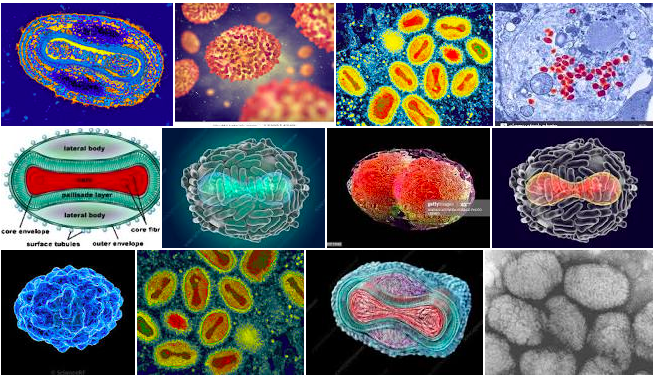
a collection of images of CIVID-19
Currently we are dealing with a pandemic, the likes of which we have not seen in over one hundred years, so these recordings caught my eye. In the 1770s the village of South Dedham was a sparsely inhabited agricultural community, and 18 deaths in a two-month span must have been devastating for this little village. These entries made me want to figure out what was happening in the fall of 1775 in the Boston area. I found that the illness Bostonians were dealing with was a small pox epidemic. In fact, one article I found online noted Bostonians were so focused on the illness that it took away their worries about the war.
Entries from my transcription of the First Book of Records for the First Church of Norwood.
Small pox is a virus, the CDC says “it was a serious infectious disease caused by the variola virus. It was contagious—meaning, it spreads from one person to another. People who had smallpox had a fever and a distinctive, progressive skin rash. Most people with smallpox recovered, but about 3 out of every 10 people with the disease died.” Bostonians were not unfamiliar with small pox. Over the 150 years since the Winthrop Fleet landed in the Massachusetts Bay Colony, they had experienced waves of this illness. The English, who had taken over the city of Boston in 1775, were not concerned about catching the virus, as many had either been previously exposed or inoculated against it. But the citizens of Boston struggled with the virus, some were sent to the countryside, by the British General Gage, some say to free up space in the city for British soldiers, others believe Gage wanted to spread the illness to the Boston countryside.
Like today, as we grapple with this strange novel virus, the American colonists, in the 1700s, recognized the importance of quarantining those with the contagious disease. Sometimes by setting an individual off by themselves or sometimes closing off an entire community until the virus had run its course. Often businesses were forced to close during these times, and farmers found they were either too sick to tend their crops or that others were too sick to help them. Even in the 1700s, there were economic consequences to these epidemics.
Back in Dedham in the fall of 1775, those that were the most effected were the children. Nathan Morse lost three children, while the families of Silas Morse, Jeremiah Kingsbury, and Benjamin Fuller each lost two children. After October, Rev. Thomas Balch’s record book does not record any deaths until Sarah Farrington and Liberty Thorp both died in January 1776. Indicating the smallpox virus had run it course for the good people of South Dedham, and likewise, today the Covid-19 virus will run its course for the people of today.
Tony Williams, an author who has written and lectured extensively on the 1721 smallpox epidemic in Boston, notes in an online article he wrote for the St. Luke’s Historic Church and Museum, in Smithfield, Virginia, “That winter, businesses opened again, ships returned to the harbor, social relations returned to normal, people walked freely through the streets without fear, believers went back to church. While their lives may have been forever changed in large and small ways, the people endured, and normal life returned again. “
I find this statement very hopeful for our own future.
Sources:
Thomas Balch, “The First Church Record Book” The First Church of Norwood, transcribed by Laurie L. Kearney
Laurie L. Kearney, “The Second Parish Cemetery List,” Census Notes, Norwood, Massachusetts
“What is Small Pox?” The Center for Disease Control, The US Department of Health & Human Services (cdc.gov: accessed May 10, 2020)
Elizabeth Fenn, The Great Small Pox Epidemic, History Today, Vol 53, issue 8 August 2003
Tony Williams, “A Pox and the Social Covenant:1721 and 2020” St. Luke’s Historic Church and Museum, stlukesmuseum.org
I have had the pleasure of helping with tours at my local historical society. The society owns a lovely Victorian house, filled with beautiful things from an era gone by. Very often people ask if the family who owned the house had live-in help, and sometimes people inquire if they can see areas of the house that are not on the regular tour, like the basement and the attic. It is clear people are intrigued with the inner workings of a Victorian home.
The Norwood Historical Society.
These questions spurred me on to researching how Victorian homes were run. Although I had a pretty good idea, as my grandmother lived in a home her grandfather built, (she still cooked on a coal stove because she never liked those new fangled electric ones!). Both my mother and my grandmother told me stories about how my great-great-grandmother ran her home.
When one thinks of a grand Victorian house, one must consider how the house was laid out: there were public reception spaces, private family spaces and working spaces. My grandmother’s house and the historical society’s house were no different. Each had a formal staircase and a back staircase for the servants to use. Butler’s pantries were for storing table linens, dishes, glassware, and silverware, and it was also a space for servants to prepare before serving food. In the historical society’s house the door to the butler’s pantry from the dining room, when closed, blends into the paneling and cannot been seen. The way this house is laid out, the kitchen is the hub for all behind the scenes work. It has five doorways leading to the various working areas of the home, making those who worked there as invisible as the butler’s pantry door.
My Grandmother’s house in West Newton, (MA)
According to census records, the family who originally owned the historical society’s house, usually had two domestic servants living in the home. This gave me names of some of the people the family relied on to help run the home over a period of seventy years. The genealogist in me just had to research these people! I wanted to write little biographies of some of these workers to tell their stories….and all I could come up with was little biographies. Yes I know, there is a dearth of information out there about working class people. I had a much easier time writing about the owners of the home.
Next I researched the kind of people who were willing to do the jobs most were not interested in, what were the jobs, and the tasks involved in performing each job. I learned the working class people hired to perform these jobs tended to be recent immigrants and after the Civil War ex-enslaved people. A small home, may have had a cook, a maid, a gardener, and nanny, while larger estates may have had several people to perform one job. For instance, the cook in a large home would need two or three people to help prepare a meal, and a scullery maid to wash the dishes, and several butlers to serve the food versus the cook in a small home would perform all of those tasks.
The old coal stove in my grandmother’s kitchen. The kitties are resting near the stove as it is only warm. If my grandmother was heating it up….those kitties would be else where! (did I forget to mention my grandmother also raised siamese cats?)
I already had a working knowledge of how a Victorian home operated. I knew fresh food was kept in an icebox and ice delivery occurred when an “Ice” sign was put in a window for the iceman to see. Coal was delivered, probably on a schedule, through a chute to the basement. Laundry was an all day process and before there was indoor plumbing people used an out house, and someone had to empty the chamber pots in the morning, not to mention heating was a room by room project, as someone had to lay a fire in the fireplace in the rooms which were to be occupied. As one can image, days were long for domestic servants. They often rose before the sun, as the coal stove had to be heated up enough to do the morning baking. They would have gone to bed, up the back staircase, to bedrooms in the attic, after the evening chores were done and most likely the mistress of the home had gone to bed.
This was actually a fun little research project to do, as it required a little genealogy, and little bit of knowledge about the workings of a Victorian homes, and I enjoy doing a historical research too!
Sources:
Daniel A. Graff, “Domestic Work and Workers,” Encyclopedia of Chicago, (encyclopedia.chicagohistory.org/pages/386: accessed March 20, 2020)
“The Backstairs at Brucemore: Life as Servants in Early 20th Century America,” Teaching With Historic Places, The National Park Service; U. S. Department of the Interior (nps.gov: accessed March 20, 2020)
So you live in old house and you want to learn more about its history. Perhaps you heard it was a stop on the underground railroad, or you heard George Washington passed by on his way to Trenton, or you are interested in its architecture, whatever your reason may be, it is actually easy to trace your home’s “genealogy.”
The Norfolk County Deeds Office, Dedham (MA)
The best place to start is your county deeds office where land deeds are filed. You can physically go there, but before you do, check to see if they offer online research. That way you can perform your search from the comfort of your own home! The first thing you will need is the book number and the page number where your deed is recorded. You can find that in the Grantor/Grantee index book. Once you have located your deed, read through it. You will find a reference to the book and page number for the sale of your home from when the previous owners purchased it. Keep working your way back until you find it was a piece of land with no structures on it. This will give you a good date for the construction of your house.
You can also refer to maps. Some maps can be found on file at the county deed office too. Very often when new streets are laid out or a new house or development is to be constructed, builders have to file plans, and those plans often include existing structures. Historical maps are also helpful as they sometimes include the structures, and they may have the added bonus of naming the owner of the home. Looking at maps was extremely helpful for my search, as the property had once been 40 acres, and now is less than one acre. Studying old boundaries and the neighborhood changes over 200 years helped me better understand my property.
Once you know all the owners of your home you can research them. FamilySearch.org will have census records and vital records that will help you reconstruct family who used to live in your home. This technique was very helpful for me. The two daughters of the original owner inherited my house; one daughter had died, so her seven children inherited her half. These children sold their shares back and forth. Following the various purchases and sales was tricky, especially as a few of the transactions were never recorded in county deeds. By reconstructing the family, I was able to figure out the sibling relationships. I also followed up probate court where I pulled wills for the various family members.
Once you have a good picture of the past owners of your home, you can visit your local library or reach out to your local historical society. They may have information on the families who owned your home, they may know if your home has any historical importance, or they may have pictures of your house from way back when.
Visiting your local library may turn up books on local history or general architecture. Having a working knowledge of house styles and trends may also help date your house. How the house is constructed? Is it post and beam? Is it stick built? Is it made from a kit? The answers to these questions will help you confirm the age of your home. It will also help you identify original details you may now want to preserve. I found in a published record that for one season, the original owners of my house allowed it to be the school for the local children. So my house may not really be a schoolhouse….but this is still an interesting tidbit!
My little 1757 Cape Cod style house!
You do not really have to hire a professional to trace the age of your home. Honestly, I do not think it is that hard to do, but it does take time and perseverance. If you do the work, you will know your house’s history, you will not question a finding or wonder if your hired researcher left something out. But mostly you can take pride in your research and know you did a good job!
When starting a program, whether it is for children or for adults, starting with some sort of icebreaker activity can set the stage for a successful presentation. It will help your group ease into the class and feel relaxed and ready to participate. It would be best to first start with an introduction (perhaps give name tags too), and the answer to a question, like how long have you been doing genealogy….or a question that pertains to the theme of the class you are about to teach. Then introduce an icebreaker game before you begin your lesson. Some can be done from the comfort of the participant’s chair, and others (depending on your class) can be done in small groups. Once your students have had an opportunity to “meet” one another, and are feeling at ease, you can start your lesson!
Some Icebreaker Activities:
One of the easiest icebreakers you can do is to have your “class” bring pictures of their families. For young learners, this activity is a foundation to build off of, and for the older learner, it can help strengthen recall. After all, everyone’s favorite topic is “themselves!” Then they can share their pictures and tell the story behind the picture.
Write the name of historical figures on the back of sticky-notes. Put a stick-note on the back of each of your students. They must ask questions about who they think their historical figure may be (yes or no answers). One question per person, that way the speak to everyone in the room. They may remove the stick-note once they have correctly guessed who is their historical figure.
Give out pennies and look at the dates. Go around the room and share something that occurred for you in the year of the penny. It can be something about your school history or it can be just about life. You’ll need a good collection of pennies with recent dates.
Two Truths and a Lie: you share two things that are true and one lie about yourself and the group tries to guess which one is the lie. “What you would like to be true?” is the follow up question.
Divide your class into groups of 5-8 students and ask each team to act out a famous scene in history. Each team can choose the scene and the characters they wish to play. As the teams take turns presenting their scene, the “audience” (students not currently performing) try to guess the historic event being portrayed. If time permits, hold a class discussion after each performance, asking the students to contribute historic facts that were not revealed during the skit.
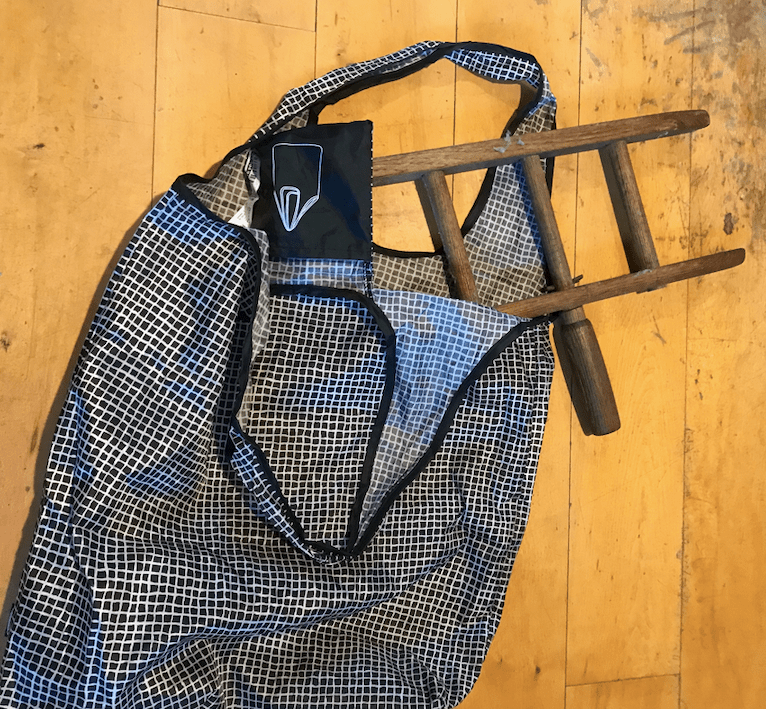
Gone Shopping. (This requires some preparation) You will need 5 to 8 shopping bags. In each shopping bag place a vintage item. They may have a theme, like all clothes, or they may be a combination of items. Also in the shopping bag place a list of discussion questions. What do you think this is? Who
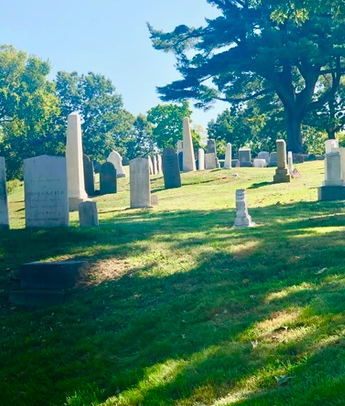
I have been going to cemeteries ever since I was a little girl. I would accompany my grandmother on Memorial Day and Veteran’s Day to help her weed and plant flowers. It funny to think, a little girl who was comfortable running between the headstones was a teen who was spooked by cemeteries by simply driving past one! As an adult, I realized how important cemeteries where for genealogists and historians; they held facts and stories of the past. Several years ago, I decided to transcribe the cemeteries in my town as well as the neighboring towns. I put them on line through my local library.
As I got to “know” each little cemetery and the people buried there, I realized what a wonderful classroom they can be! They tell the history of the town.
Lesson Idea:
This is a lesson for kids 9 to 99. (9 year olds are beginning to become abstract thinkers and can comprehend this lesson).
The first thing you will have to do, is to visit your local cemetery. You can do this in person, or via Find A Grave. Plus you will need a working knowledge of your town’s history. If you do not, reach out to the historical society. They may be willing to help you develop this lesson as they too can use it too!
As an example, I will use the Old Parish Cemetery in Norwood, MA. I would start at the gravestone of Rev. Thomas Balch. Which sits on the top of the hill, one of the earliest sections of this cemetery. When Rev. Balch was called to be the minister, the Second Parish of Dedham was officially set off, which essentially was the creation of a new “town.” The first Deacons of the Church are buried here, as well as many of the men who established businesses in the town and helped the town grow, also there are many soldiers, some who fought in the French & Indian War, or the Revolutionary War and the Civil War. As you wind your way down the hill, toward its bottom, the graves are newer, it is like walking on a timeline of Norwood’s history.
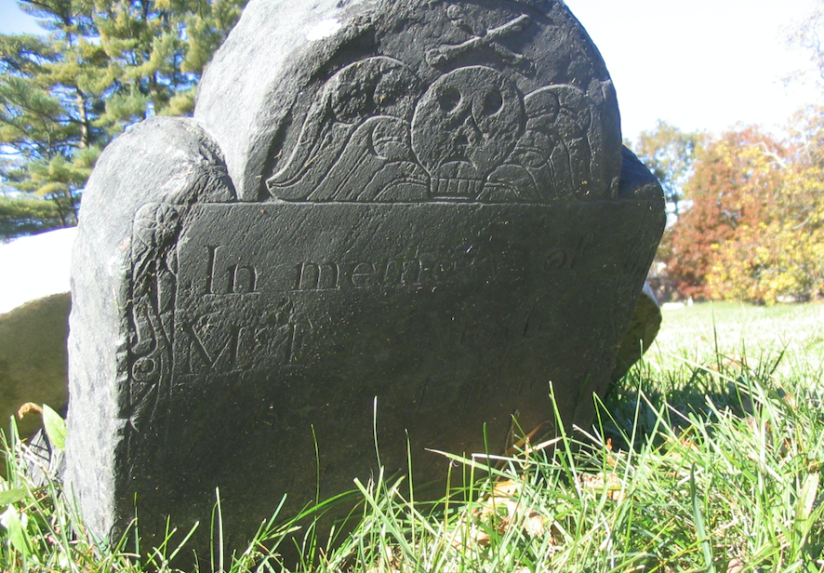
As you move through this cemetery, you will notice the gravestone styles change. Stone up to the early 1800s are slate tablets with etchings, in the early 1800s stones were made of white marble and have carvings, by the mid to late 1800s granite became popular, these stones tend to be large and each grave is marked with a footstone. This can also add to your town’s history story as you can discuss the etched and carved meanings of the stones.
There are many topics you can weave into your talk, such as is the Cemetery-Garden movement, and who gave the land to establish the cemetery. As you dig into the history, you may find interesting tidbits of information.
A follow up activity to the cemetery walking tour, you could create a scavenger hunt. Break your class up into groups of 3 to 5. Give them a clipboard and pen to record their findings. On the clipboard is a worksheet with the list of items to find; Gravestone with an angel carved on it, gravestone for someone named Elijah, gravestone for three children, etc. Give the teams a set amount of time to complete the scavenger hunt, and then review their findings.
I have had the pleasure of being a merit badge counselor for Walpole Troop 44 for several years. I helped scouts earn their Fingerprinting, Cooking, Citizenship in the Community, Disabilities Awareness merit badges and yes, the Genealogy merit badge.
I must say, getting kids interested in their heritage is not an easy task. The Boy Scouts have put together an list of requirements for the genealogy merit badge which if the leader does it correctly, a scout will enjoy working on this badge.
I would recommend working on this badge at a time when families get together….like Thanksgiving. This provides the scout with an opportunity to interview his family.
First, I like to prepare folders for each of the boys. I print copies of pedigree charts and family group sheets, and the Genealogy merit badge requirement worksheets, and provide lined paper for each folder.
At the first meeting have the boys write down the words ancestor, genealogy and descendent, then give them a few minutes to look the words up on their cell phones and write down the definitions. For the next portion of the meeting have the boys brainstorm interview questions. This activity may lead to several interesting discussions. Note, you will want to keep a list of their ideas so you (or a scout) can create a master list of questions for the boys to take with them when their family gathers. This can segue into a discussion of timelines, give the boys some lined paper to write down some of the events that have occurred in their lives. (Homework, have them turn their notes into a proper timeline and have them include a written biography to accompany their timeline). Before you end the session, have them tell you the definition of the three words they looked up at the beginning to the merit badge meeting.
At the second meeting have the boys begin by sharing their timelines and reading their biographies. When all the boys have had a turn, ask them if now they have heard other boys timelines, did that make them think of stuff they left out of their time line. Next have the boys fill in some family group sheets. The boys should know about their own family and perhaps their parent’s families. Then have them begin to fill out a pedigree chart, starting with them selves and go back a few generations. The boys will only be able to get one or two generation back, but not to worry, when the meet with their family, a grandparent may know a few more generations. Give the scouts copies of the complied interview questions they discussed at the last meeting. You can have them look them over and discuss them for a little bit. (Homework, have the boys plan to meet with a family member to be interviewed and to help filling in more family group sheets and extending their pedigree chart.)
Scouts from troop 44 Walpole (MA) take a break to pose for a photograph from working on an Eagle Scout project. (from the collection of Laurie Kerns)
Plan a field trip to the local historical society. Most historical societies have a genealogical repository/library on site, and the historian can show the boys the kinds of books and documents they have in their collections for genealogical research. Perhaps you can arrange for a professional genealogist to be on hand, either in person or online. (Homework, have the boys get a copy of a birth, marriage, death or baptismal certificate and bring a copy (not the original) of it to the next meeting.)
At the next meeting, give the boys an old document, like a will. Challenge them to see if they can read the old handwriting. They may find this activity fun as they struggle to read the document. Then provide the boys with a transcription so they can see/learn about what they were trying to read! Make sure the document has some useful genealogical information in it. Next have the boys present their vital record certificates; also provide a few other documents like obituaries and a death or birth notice, maybe a Bible entry. Have the boys discuss if each document is useful or not for charting a family tree. (Homework, have the boys log on to FamilySearch.org and to findagrave.com to see if they can extend their family trees. Have them bring their research findings and trees to the next meeting along with a few family pictures)
Scouts from Troop 44 Walpole (MA). Drew Cormier, Emerson Kerns, Ben Kerns ans Nick Kearney, are now all Eagle Scouts! (from the collection of Laurie Kerns)
Last meeting, have the boys discuss their findings, both from online and from family interviews. What was the most helpful? Ask how computers and photography has influenced genealogical research. Have them share their trees and tell what they learned about their family. Provide a few sheet protectors to the boys can assemble their findings, interviews, pictures, family group sheets and pedigree charts into a book they can keep.
Children love to explore. It is how they learn best! You can take them to a museum to show them an historical artifact or a piece of art, and they might have a lovely time, but how much are they going to remember once they have returned home? If you give them an opportunity to roll up their sleeves to handle and use artifacts, they will remember them because they will remember the fun!
Adding History Mystery Boxes to your educational programs is a fantastic way of encouraging your visitors, young and old, to explore your collections, and this will add a whole new demention to your educational programs. They are versatile because they can be switched up in a number of ways. When one History Mystery Box gets old, a new one can be created, keeping them fresh. They can be part of an in-house exhibit, they can be taken to a school as part of an out-reach educational program, or they can be used as part of an in-house educational program.
The idea behind these History Mystery Boxes is rather simple. Before you begin you will want to develop a few learning objectives – what do you want your visitors/students to learn? Let’s say you are interested in creating an exhibit that explores the various behind-the-scene jobs servants performed in a Victorian house. Next you will need a vessel (a box) to put our exploration items in. If this “box” can also be used as part of the collection, all the better! Based on your learning theme begin to find artifacts in your collections to fill the boxes. Make sure the items you select can take a lot of handling, also do not select items that may have a sharp edge, you do not want your visitor/students to get hurt.
Work Around the Victorian House:
Box
Items in the box
Wash tub
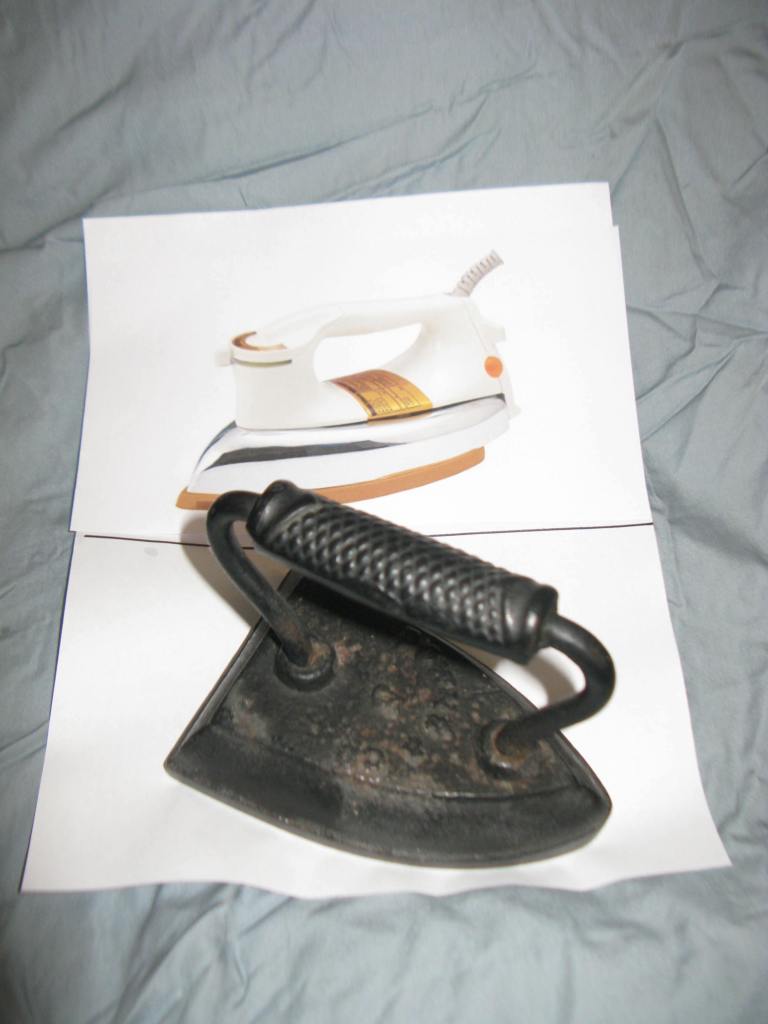
Scrub board Bar of soap Iron Piece of linen/muslin Darning form
Tool Box
Mallet Measuring stick Screw driver Nails
Flour Box
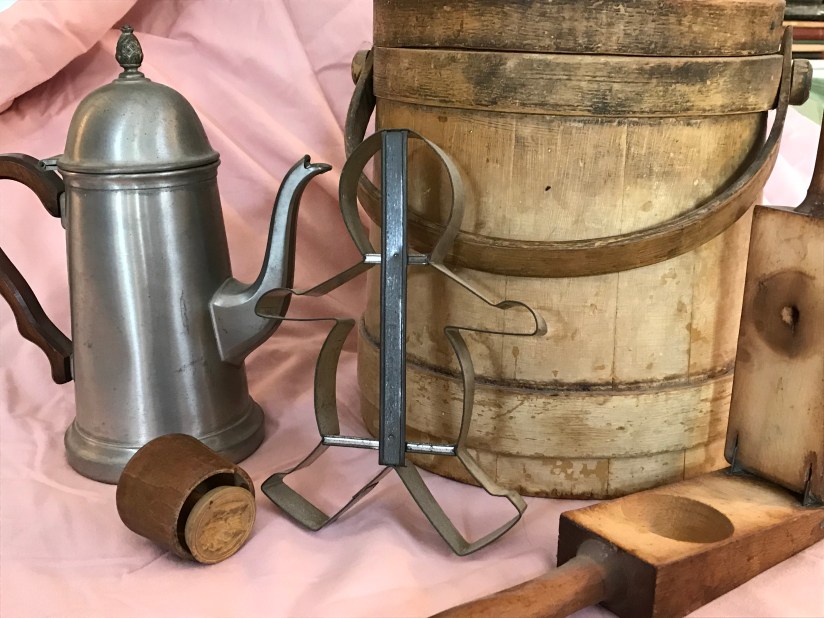
Butter press Cookie cutter Rolling pin Apron Tea pot
Once you have the items for the boxes selected, you will want to create the content that supports your lessons’ objectives. For young children you could provide laminated pictures of the modern equivalent of the artifact in your Mystery Box. Questions such as: What do you notice about the artifact? Is it heavy? What size is it? What do you think it was used for? Encourage them to think like a historian and this may spark a discussion. If you are using the Mystery Boxes in a small group setting, give each group a chance to explore each box. Having a follow up activity to reinforce your lesson. In this case, the children could each receive a sewing card, a laminated card with holes poked in them and a piece of yard (with a tape on one end and a knot on the other), then they can sew!
Mystery Boxes can also be used with seniors. Items selected from your collections should definitely have a theme and you can include items that may be a bit more delicate, and could be part of a PowerPoint presentation. Instead of playing a matching game with your laminated cards, you could use them to see if the seniors can recall the old fashioned name(s) for various artifacts, or the artifact could be displayed on the PowerPoint screen for easy viewing, and seniors could be asked to identify the object. They may even recall a parent or grandparent using the artifact. This may spark a conversation, and if recorded can be part of an oral history which ties into your exhibit.
Mystery Boxes are an excellent way to teach a lesson, show off some of your collections, and allow your visitor/students to interact with your exhibits. They can be tailored to young or old and are a fun and exciting way to create a spark!
Sometimes when teaching the history of your town it can be difficult to engage your students. Here in Massachusetts, the curriculum frame works recommend third graders should learn about their town. Eight-year-olds are just beginning to be aware of and understand things outside of themselves (social, political, and other people’s personal issues). They are becoming less egocentric. This is a good time to start to learn about their town, because it is a place they are familiar with. A local history program can be given at the historical society, the history room at the library, or it can travel to the school, but if the bulk of the program is lecture based, the children may recall very little of what is discussed. Coming up with a program to activity engage the students can be difficult, and if this program needs to travel it can be even trickier. But if students have a hands-on program that is fun, then they will remember the history of their town for many years. Making all your efforts worthwhile.
Activity One: Maps….Old and New
One of the best methods to help students learn about the changes and growth of their town is to use maps. The wonderful thing about maps is that they have been around for hundreds of years, long before photography, and illustrate the changes a town has experienced over time. Select approximately four maps, the earliest should be from about the time your town was established and the newest should be relatively recent. Choose maps that children will find easy to read. Be aware this may be the first time these children may have ever read a map. The maps should also show the same area (neighborhood) over time, in other words, be very similar. You may want to highlight the main road or a particular intersection for ease of locating streets/buildings to help compare the maps to each other. Also, when making copies of the maps, make sure they are all oriented the same, north top of the page and south on the bottom, and number each map. Make plenty of copies so students can work in small groups, and then laminate them for longevity! (plus dry erase markers can be used on lamination)
Other items you may want to have on hand when using map cards, are photographs of landmarks, dry erase markers, and paper towels. Using the map cards, have children compare and contrast the maps. Can see any changes between map 1 and map 3? Can they note changes from map to map over time? Have them locate something familiar, and circle it. Have them draw a line on an older map showing where a newer road is today. The possibilities are endless with these cards.
Activity Two: Links & Chains
Did you know an acre was once considered to be the area one could plow in a day? As time went on, a particular size was settled on (43,560 sq ft, which is a little bit smaller than a football field) and surveyors were hired to measure the land and to draw maps. In fact, George Washington was a surveyor and his surveying equipment is on display at Mount Vernon.
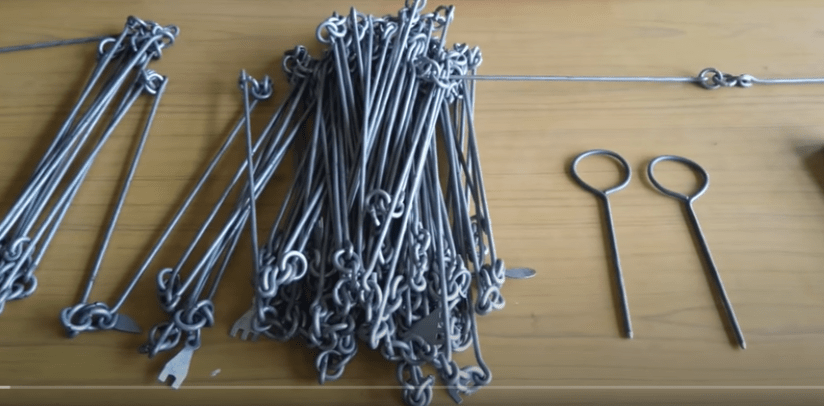
For this activity you will need: paper and a pencil, a measuring tape, a kit with chains and rods, six stakes (or orange cones) to mark out the space (length) that children will measure, and a couple of land deeds (one that lays out the area in links and chains and one that lays out the area in feet). Have a copy of the original deed, but also provide a transcription so the children can easily read the deed.
Preparation: The children will be measuring three similar lengths. Set the stakes (or cones) out, one is the starting point and the other the end. Before the children measure these lengths, have them read the deed cards and discuss the different ways measurement is recorded. Ask why they think it is important to have a standard form of measurement.
Break the children up into three groups for the measuring activity. The first length will be measured using the students’ feet in heel-toe style, the second using the measuring tape, and the third using links & chains. Have each group rotate through each measuring activity so they all have an opportunity to try each type of measurements. Gather the children together to discuss their findings and again ask if they think it is important to have a standard form of measurement.
Historical Note: A Chain is 66 feet, there are 100 links in the chain, there are 4 rods in a chain. (A chain is a little less than a ¼ the length of a football field.)
An accurate chain is not necessary for this activity. It would be too heavy and difficult for children to handle. You will find a chain at your local hardware store. It is more important to have a chain with 100 links in it, even if it does not measure 66 feet.
Activity Three: Make a map of your neighborhood
The Norwood Historical Society (MA) has in its collection a map hand drawn by a resident (circa 1900) that shows how the town looked in 1840 how this resident remembered it. He notes homes, roads and businesses. It is a wonderful piece of memorabilia. Have the children draw a map of their neighborhood. Then take their maps to add to your historical society’s collections so some day a researcher will study them and perhaps use them as part of their project.
















 Laurie L. Kearney