

Attached is a copy of a research paper I did for my church. They wanted me to “find everything I could on Jack” and to also see if he had any living descendants.
Click on the link to open the PDF file
The Lives of Jack and Hannah Robbins of Walpole
Attached is a copy of a research paper I did for my church. They wanted me to “find everything I could on Jack” and to also see if he had any living descendants.
Click on the link to open the PDF file
The Lives of Jack and Hannah Robbins of Walpole

A couple of years ago, a friend asked me to answer a genealogical question. She wanted to know the identity of her birth grandfather. Her dad, at that time was in his 80s, and had been curious about his birth father on and off over the years. Kathy provided me with as much detail as she knew, and hoped I would be able to figure this family question out by following the paper trail. She knew when and where her father was born. She was not so sure if her grandmother married this mystery man, and she believed he was in town while working on a CCC project….oh yeah, she also had his name! Unfortunately it was a rather generic name, not one that was unusual. There were at least five candidates, who had that name and of the right age to have been in the CCC at that time. With several CCC camps located within a relatively short distance from grandma’s home, it would not have been worth it to ask the National Archives to search for this mystery man. The paper trail was a dead end.

I suggested Kathy take a DNA test. Perhaps that would hold the answer. A couple of years passed, and finally Kathy decided to take an Ancestry DNA test. I happen to like Ancestry as they have a large database of DNA results and family trees. While we waited for the results to come in, I began to build out Kathy’s tree. Knowing that we would get a large number of first to fourth cousins (because they are the ones alive today to be able to take a test), and I wanted to have a good idea how they all fit into Kathy’s family. Also, back when I was searching the paper trail, I did not look at Kathy’s mom’s side. That needed to be added into the tree too, as most certainly there would be DNA matches on her side too. Plus, by building out Kathy’s tree, I was reacquainting myself with her family.
Finally the test came in! One of the first things I did was to make a Leeds Chart. By considering close matches, those with a high number of shared centi-Morgans (cM), I would be able to identify descendants of the four grandparents. Then I could narrow down my search and focus on Kathy’s paternal grandfather’s line. Out of 38 close cousins, 30 of them were all from one branch of the family! Leaving 8 other cousins from the remaining three branches of the family! And only one of these was from Kathy’s paternal grandfather’s line! The amount of cM this person shared with Kathy indicted that they were a half niece/nephew! Which obviously indicated Kathy’s dad had half-siblings! And to make it worse, this person had a private tree! Luckily, this person named their test kit using (what appeared to be) their first initial and their surname followed by a series of numbers. At least I had a clue to follow.

I used Google to see if I could find a person with the surname I was seeing, who was related to Kathy’s surname. Bingo! I found the obituary of one of Kathy’s half-uncles who had a granddaughter whose name started with the first initial….and had the same surname as the test taker. I sent Kathy an email with the obituary linked in the text, saying meet your uncle! When Kathy called me their first comment was how much of a family resemblance there was, between this uncle and her Dad (and siblings).
With this clue, I was able to begin to build out a tree with this branch of the family to see were they intersect with Kathy’s branch. Turns out the half uncle’s father had the same name as Kathy’s birth grandfather. As I worked my way through a tree with this side of the family, what became clear was that Kathy’s birth grandfather was a local boy, not someone who was stationed in town working with the CCC. In the 1930 census, census takers recorded the street address of the respondents. Using that information, I entered both grandma and birth grandfather’s 1930 addresses into a online map program….and well, they lived about 18 blocks apart from each other. The census further indicated that birth grandpa was married at that time, to the half uncle’s mother. This census, certainly begins to show why this man had been a mystery to Kathy’s family.
Suddenly, Kathy’s dad went from being an only child, to being a middle child, as records show, the birth grandpa had two sons, one older and one younger than Kathy’s dad. So I must say hanging all your research on only one DNA cousin, it well tricky and certainly leaves room for errors. But as I was researching this family, another DNA half-niece popped up in Kathy’s DNA family list! This person named their kit using their first and surname, and wouldn’t you know, she too is a granddaughter of the same half-uncle. So the DNA and paper records show, the same name for birth-grandpa as half-uncle dad’s name, plus 1930 locality would indicate that both grandma and birth-grandpa could have met either social functions or through work, and with now two DNA half-nieces, indicates this mystery man is no longer a mystery!
Please note, I used a made up name for my friend. As you can see, this is an extremely personal story. One that Kathy is planning on telling her dad in time, if he is comfortable hearing, as he is now in his nineties!

For many years now I have canned pickles, relishes, jams and jellies. Taking full advantage of the bounty of my gardens, and saving its summer goodness for consumption later in the year. It got me to thinking that it would be wonderful if we could can our memories, to share with others. One way to actively engage people of all ages to participate in and value local history, is finding a way to make history personal. I have often found that the number one topic everyone loves to discuss, are themselves and their memories.
When I was casting about for a project to do for my Master’s in Public History, I reached out to my local historical society to see they might have a project for me. What they proposed was for me to transcribe taped interviews from the 1970s. The tapes were conversations with older residents discussing their memories of the town. The historical society also had some written memories done by people in the 1920s. I thought doing something with these taped and written memories could potentially become a project for me to do. However, I also wanted to come up with a way to include today’s residents in a memory project, and thought memory jars might just be the ticket!
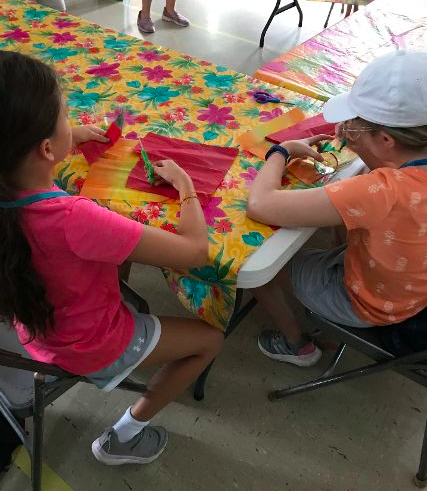
I thought it might be fun and engaging to ask people to make a memory jar. I envisioned giving participants a mason jar and a tag, then asking them to fill it with their memories. In this case I want memories of our hometown. Maybe their memory is about their school days, or the teams they played on, or splashing at the center pool on a hot summer day, or perhaps their memory was about the large Christmas tree on the common that changed color. Then they have to find something small that will fit in their mason jar that represents their memory. On the tag they write a few words about their memory. I thought it would then be fun to then display all these memories in our library. In sort of a memory open house. That way everyone can see other people’s memories, and discuss them too. I think folks, young and old, would find this a fun activity to do. The final piece would be photographing each jar and its corresponding tag so that the historical society will have these memories in their archive, before the exhibit is over and people take their memory jars home.

I truly believe that the best way to teach (and in this case, history), is to provide hands on activities, which make learning fun! For children, this activity can also be used in scouts or school, it may ask children to present a memory jar that highlights a memory from last summer. Now they really got to think creatively. First they have to recall a memory, then they need to find an item that represents that memory, and finally they need to write a little something about that memory. If done at the senior center, this activity will spark ideas and memories and conversations. Give the seniors their assignments before they come to the center, that way they have their memory and something to represent the memory in hand, and if they find the assembly is physically difficult, there are volunteers ready to lend a hand. This activity is also a great one to do as a family, and most definitely will spark great conversations!
Unfortunately my professor did not think this this was a good project for my master’s, so I went in another direction….but I still think it is a good idea. Hopefully some day I will get to do it! I think hosting a canning your memories event, has the potential for participants to have fun, and if sponsored by a local historical society, it actually is an interesting way for them to collect town histories!
So you’ve taken a DNA test, mailed it off and now you wait. Sometimes that six-week wait seems like a lifetime, especially if you are hoping to solve a family mystery. The thing is you want to be prepared when those results are in your in-box. You are going to end up with a long list of cousins. Those that you share a higher cM with are most likely going to be people you actually know, and when you get into the third or fourth cousin realm, well, they will be people that you don’t know. So you are going to want to be ready to recognize who these cousins are and how they fit into your tree.
I believe that when someone is new to genealogy, they build a rather skinny tree. Basically, self, parents, grandparents, great-grandparents and so on; perhaps with a goal to see how far they can go back. So thinking about your DNA results are going to give you a list of people who are here now….kind of like a family tree in reverse. So it is time to fill out your skinny tree and make it as robust as you possibly can!
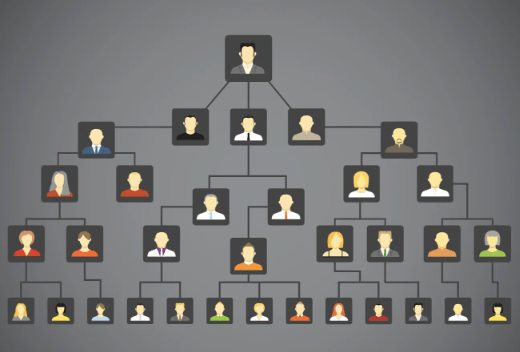
Starting with you, add in your siblings and their children. Then go to your parents and add in all your aunts & uncles and (your first) cousins, and their (your first cousins once removed) children. Then go to your grandparents, add their siblings, and their children, and their children’s children (your second cousins), and their children (your second cousins once removed). Go back for several generations, bringing each line forward, so your third cousins and fourth cousins are now in your tree. Look at the records you are using to fill out your tree. Primary sources are key to having an accurate tree. Don’t accept someone else’s tree…they just may have some errors in their tree that will infect your growing tree. If you get stuck, well that is OK. Don’t enter wrong information. Stop there and start growing another branch. If you have a question, like “who is my birth grandfather?”- there will be a branch in your tree that has not sprouted yet, and that is fine. Once you have filled out all these new branches, it will help you feel knowledgeable about the some of the matches you see when your results come in.
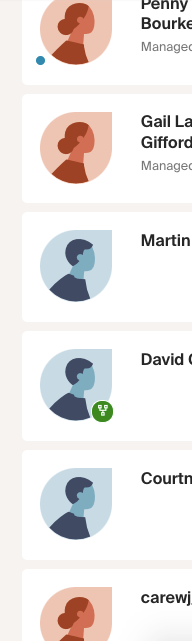
I have used several DNA sites and really like Ancestry the best. They encourage people to build trees, and they have a very large DNA database. So, you will get a ton of new cousins! Ancestry’s database + family trees + the tools they have, is fabulous for figuring out all these new cousins and how they are related to you! You can sort your matches, by parent, and then you can sort those matches again by surname, or if you have a shared ancestor, or by shared DNA. You can attach a (private) notes to these matches, (they cannot see it), you can color code matches. Play with the tools they have to offer, see how they work and what works best for you. There is a tool for you to identify your cousins (“do you recognize this person”) and attach them to your tree. You will defiantly have cousins you cannot figure out where they fit into your tree. If they have a family tree linked to their DNA kit, you can click on it and check for common ancestors…or common surnames.
Having such a robust family tree will certainly help you understand your family tree better, and bring a whole new level to the results you will get. Sure, it is fun to know about your ethnic percentages…. but having a tree with all these new cousins it can take your DNA findings to a whole other level!
Please note, If you are trying to find a mystery ancestor, there are many search angels out there who can help you find a missing family member and help you with the best way to approach them. Having an accurate robust family tree will help them with your search too! You can find a search angel on may Facebook DNA sites.
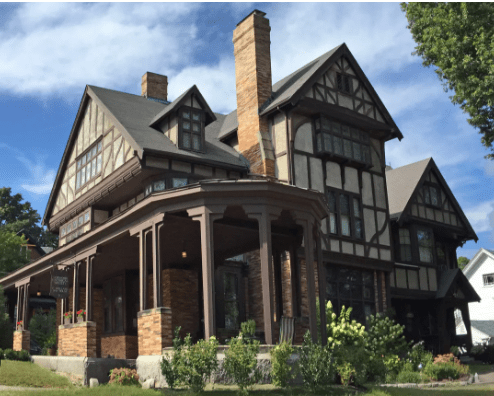
A few years ago, I was asked if I would join the Board of Directors of a local Historical Society. I became part of a dynamic group of people, each who bring a special interest or ability to the table, and together, I think we make a pretty good team. We have a beautiful old Victorian House that is our society’s headquarters, and we are always trying to come up with novel and interesting ways to physically bring people in our doors. Those that come to visit often say, “I grew up in this town and this is the first time I have been here.” Honestly, from being an active member of a couple of other local historical societies, I know this is a refrain heard over and over again. It seems our culture values the places and people who keep history alive in town, but they rarely have anything to do with that local history. When COVID hit, we, like everyone else, had to shutter our doors to guests. Although our physical home was closed, we still wanted visitors, so we went virtual.

One member of our Board of Directors created a daily posting he called “This Day in Norwood History.” Part of our collection contains bound copies of our local newspapers, going back for several decades. Taking a cue from today’s date, he looked through our collection for interesting newspaper articles with the same date. He usually selected a short article that may have featured a business or a person or a location. He transcribed it and posted it to our home page, then linked that posting to our Facebook page….of course he included a picture to catch someone’s eye. The response was incredible! Our Facebook post was shared and shared again. People often started threads discussing their memories of topic posted, and the traffic to our home page increased tremendously! We were reaching not only local folks, but those who had moved out of town settling in far way communities.
Another local historical society where I volunteer did something similar. They thought it might be fun to photograph items from their collection, and post them on their Facebook account asking people if they can identify what the item was and/or what it was used for. This was an excellent way to not only show off their collection, and to spark conversations, but an even better way to attract virtual visitors. Another take on this is posting local places long gone, and asking visitors if they know where this place was…and what is there now. Sparking a memory often will engage people, and bring you virtual visitors, who if in the area may physically walk though your doors someday.
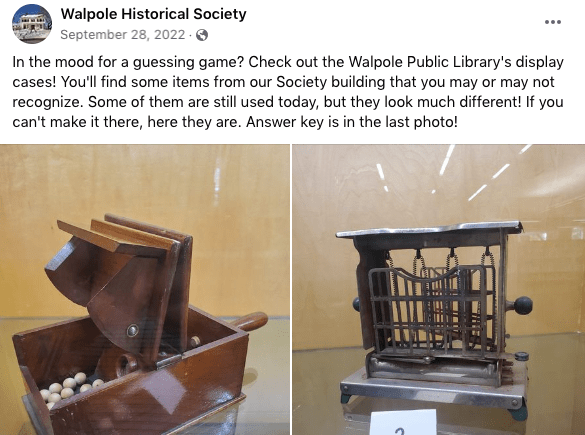
Today, so many historical societies struggle finding ways to share a their history and trying to engage people. Using the internet effectively a small society can potentially reach millions of people. Yes, using social media like Facebook, Tik Tok and Twitter (now X), can reach a large amount of people, but your society wants to have their robust own home page. One that offers visitors online exhibits to peruse, history article to read, and a place to join or buy society swag. Using social media will catch the attention of interested people, but linking those posts to your society’s home page will bring in virtual foot traffic and educate the public on your unique history.
Initially “This Day in Norwood History,” was planned to be a program we were going to run during COVID, it has been wildly successful, and is still going today! The “What is this Item” the other historical society was doing, continues but at a more sporadically. Mostly because they are fun and engaging…which I think is exactly what history should be!

I am a visual person. Sometimes when I am researching someone, whether it is a genealogical search or a historical search, I find it can be extremely helpful to make a timeline or some sort of chart to help me with my search. When you lay out the events and facts of someone’s life, without the clutter of your writing or notation of your sources, you can see the simplicity of someone’s life, and that may lead you to finding more information on that person.
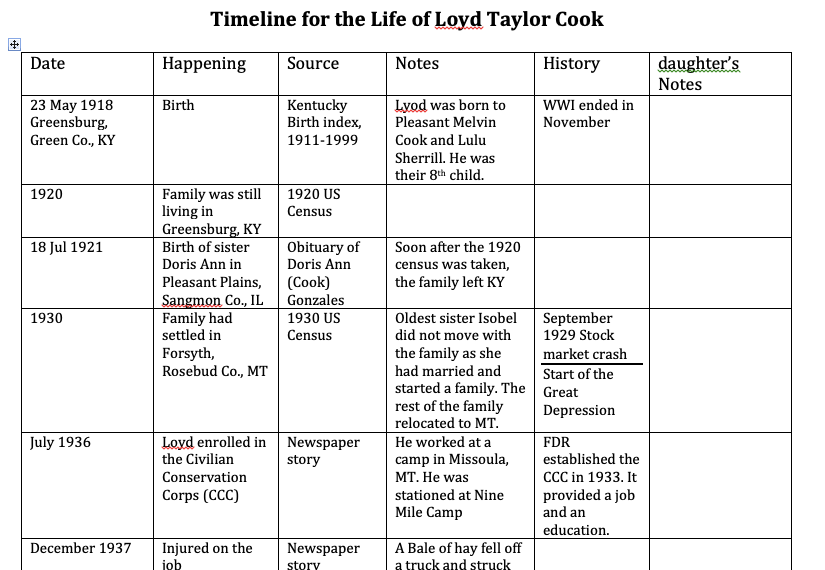
Recently, I went to the movies with a bunch of friends to see The Boys in the Boat, which was about the University of Washington’s rowing team during the depression. So many of these young men came from families that were especially struggling during this era. Some came on scholarships, some worked to pay for their education, but through their participation in the crew, they found themselves on an equal playing field…or river in there case! This story really got me thinking about my friend’s father Loyd. During the depression, his family also struggled, he went on to work in the CCC, and eventually took those skills to Washington, where he put them to use. I thought Loyd might be a good subject to write about. I filled out the tree I had on my friend’s family, paying careful attention to her dad, trying to find as much documentation as I could on his life. As you build a tree on Ancestry, a timeline is created on the profile page, but as I looked at it, I could not clearly see the story I was hoping to tell. So I opened a new Microsoft word document, and began to create my own timeline on Loyd. By considering some to the events that happened in his parents and sibling’s lives and knowing Loyd was living with his family, I was able to add new events to his life. One of the things I see missing was his voice. I sent my timeline to my friend, leaving a column for my friend to enter her dad’s stories.

Another time I found making charts helpful was trying to work out the life of my husband’s great-great-grandmother, Mary Ellen. She was someone who had been a brick wall in my family research for almost twenty years. This was a woman who came to California as a new bride, leaving her history (and family) behind in Ohio. My husband’s Granny knew more about her grandmother’s life in California, but did not know anything about the family she left behind. She had a few stories to tell that I thought might lead to a familial find. The turning point for this search occurred with a distant cousin posted images of the family bible on line. This posting started to pull the pieces of Granny’s stories together with primary sources I had found. I made several charts that compared and contrasted the information I had. Through this process I could clearly see the family connections and was able to draft, I thought, a rather compelling argument as to who was Mary Ellen’s Ohio family. Approximately two years after I felt I found Mary Ellen’s family. One of the historical newspapers I subscribe to, digitized a newspaper with Mary Ellen’s obituary, which named her siblings….and by golly, I was right!

Recently, I was looking for information on how my town handled their indigent population around 1800. As I was going through town records, and recording my findings in a chart, which I intend to use for comparing and contrasting the towns management of their poor, I found information regarding a person I had previously studied. She was a free person of color who married a formerly enslaved man and lived in my town. Church records and town records mention her from time to time, and local history books give her a passing mention. I decided to put all the primary sources into a chart (town and church), and what that chart showed me was that this woman lived here for many years and was frequently harassed by the town fathers. Shameful.
Graphing the fact you find on your ancestors can be extremely helpful with your genealogical researching. Give it a try. I think you will like it!
FamilySearch is one of the best sites out there for researching genealogy. They came online almost twenty-five years ago, with a simple format that basically coughed up lists. Originally this included some census records, a couple of databases and their International Genealogy Index (IGI), which is a database that included many primary records as well as many undocumented sources. Over the years, they have continued to update and improve their website eventually doing away with the IGI and now offering digitized records. About eleven years ago, they added a family tree component to their page, which is basically a crowd-sourced tree. So if you realize that the tree you are adding to is NOT your tree and that anyone can add whatever they like to the tree….even if it is not accurate information about your grandfather – Then go ahead and add to it!
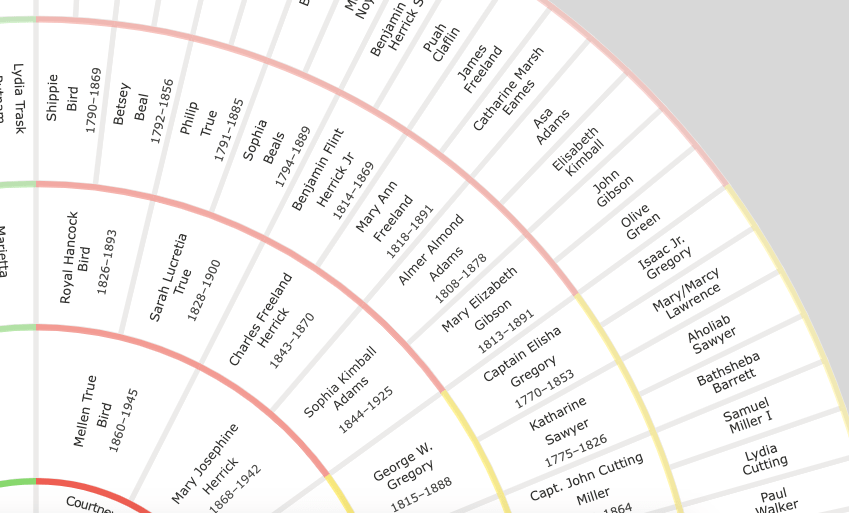
I initially was apprehensive about contributing to the tree. So apprehensive in fact, that I did not even look at it for almost ten years, mostly because wrong information drives me wacky! I can fix it of course…but someone can fix it back too. But eventually I thought why not. At least I could enter the information that pertains directly to me. I’ve added picture of ancestors, and some stories too, I have even added to branches of family lines to the tree that I am researching.
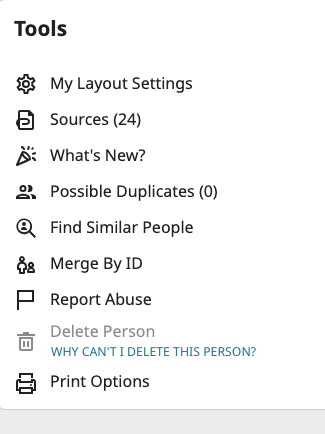
If you do not want to buy an Ancestry membership, then I would recommend keeping your tree on your computer, so do not rely on the FamilySearch tree to keep your research; mostly because someone can change it. Consider the FamilySearch tree as a clue and not fact. Do your own research and find your own documents (proof). The FamilySearch tree initially seems easy to use, first you will have to sign up for a membership. It’s free (I love free!), and therefore, they will not ask you for a credit card. The tree also has ways of attaching sources to it, which is nice as it helps prove the line. There is also a way to change information, delete people (or move them to another branch), and merge duplicate records, but I admit it is tricky to do. The learning curve is huge, and you will make mistakes. When I get stuck, I stop trying to fix it and hope someone will come along who knows how to fix my errors…I also imagine them cursing me out!
I think the FamilySearch tree is worth a try. It is a great source that can point you in a new direction…or confirm you are on the right track. But keep in mind just as easily it can be right…it can be wrong! Think of it as a clue and not fact…it is just another tool in you toolkit.

I apologize if now you have the Doobie Brothers stuck in your head, and well this discussion has nothing to do with the Doobie Brothers, and everything to do with developing walking tours. Finding and creating an informal ways to share local history can and will attract participants and draw attention to you local historical society can be challenging. One program that many people seem to enjoy are walking tours. I have been lucky enough to research, write and offer several walking tours for a local church and a couple of local historical societies. All tours were well received and many people have asked if they will be run again as they either want an encore presentation or were unable to make the scheduled tour.
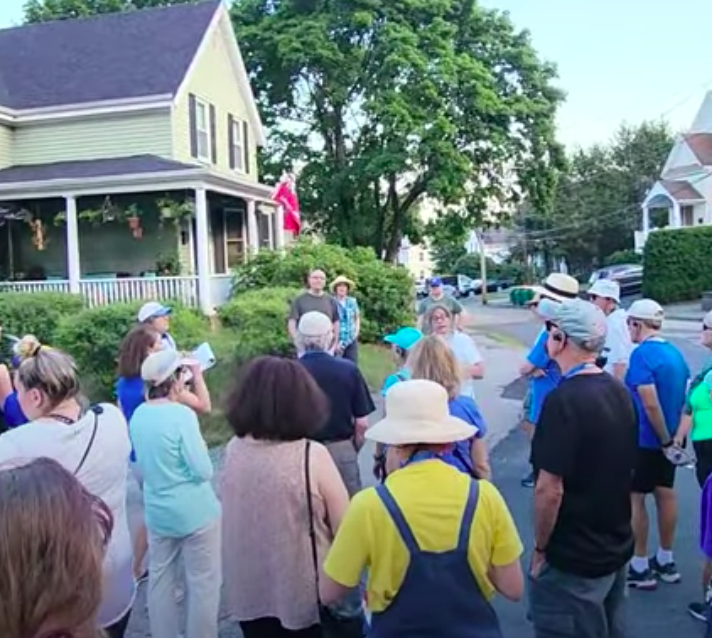
In the summer of 2022, the town of Norwood celebrated their 150th anniversary. A celebration committee was formed a couple of years in advance, and had planned some amazing year-long activities. Our historical society also wanted to offer opportunities to celebrate this anniversary, and we decided to offer several walking tours focusing on some of the ethnic neighborhoods that helped the town grow. These neighborhoods were established around 1900, and were home to so many people who came to Norwood in search is good jobs. A sort of chain migration occurred, as they told friends and family members of the wonderful opportunities Norwood had to offer. As I was researching these neighborhoods, I found it so fascinating how these new Americans shared their culture with their children in a variety of social organizations, churches, and celebrations. We offered seven tours over seven weeks over the summer on Tuesday nights. Every Tuesday, the number of attendees grew as people began talking about our tours. The last tours we gave had 50 to 60 participants!

A couple of years ago a local church began to explore the history of slavery in their church, with an eye towards reparations. I was asked to research a man who was enslaved in their town. This research led me to ask myself who else was enslaved there and what did their lives looks like during their enslavement and after (assuming they experienced freedom). First I had to identify people who had been enslaved in town, but the enslaved traditionally do not leave a lot of records behind. So I started with looking for wealthly residents and pulled wills, deeds and local published histories. As I was finding these people and the people they enslaved, I realized they all lived in walking distance of one another. I automatically thought writing and giving a walking tour about this history might be well received by the church and other interested people, but more importantly, I thought it was a wonderful way for people to learn about this history.
Currently, my hometown is celebrating its 300th anniversary. A friend, who is a member the Board of Directors of our historical society, and I are planning to present six walking tours of our local cemeteries over the course of the year. I’ve been working on the research part and I think we have selected several great topics. So instead of giving a similar tour of each cemetery, we have selected an over arching theme for each tour. Some themes we will be discussing are founding families, early industries and wars that have affected Americans. By taking these themes and tying them into people who are buried in the cemetery we will create a walking tour that is more than “here is a grave of a person….AND here is another grave of a person,” hopefully it will be a tour that presents local history in a unique way.

Some of my take-ways from the tours I have given, is to try to keep it around 1 hour to 1½ hours long. If they are too long, you will loose people. I have a couple of tours I know if are offered again, need to be edited. Also, have an idea regarding the physical length of the tour. If you cover a lot of area, let people know, that way they can judge if it is the right tour for them. It is also important to do a dry run of your tour, think of it as a dress rehearsal. On my slavery tour I just walked it, and I found the non-stop walk was about 55 minutes. I lopped off one stop on the tour, which gained be 15 minutes, and I shorten my talks at a couple of stops and hoped I was in the 1½ hour range. The other part I think is important is to share the presentation with another presenter. With the neighborhood tours, I had someone else helping me. One tour was of a swanky neighborhood filled with beautiful Victorian homes, my co-presenter was an architectural historian who offered a perspective that was not in my wheelhouse. In another neighborhood tour my co-presenter was someone who’s grandparents came to Norwood and helped established this neighborhood, her parents grew up there and she did too! She offered personal stories about the lives of the neighborhood residents, which sparked a great deal of conversation among our attendees.
Walking tours are a wonderful casual way to share local history. It is through this kinds of low-key presentations, that will engage participants. They often feel free to ask questions or share memories. Walking tours are really an enjoyable way to teach local history!

Census records are extremely helpful went researching your family. The census has been taken in the United States every ten years since 1790, and they contain a wealth of information. When I first started using online databases to help in my genealogical research, I loved census records, especially the 1850 census and those that followed it! This is because they list every one in the home. The more I delved into my genealogy I felt it was important to assemble the whole family, not just my direct ancestors. I have discovered that sometimes documentation does not add new information regarding a direct ancestor, but knowing your direct ancestor’s siblings may lead to the clue that opens up an ancestral line. Also, in the home may have extended family, grandparents, aunt and uncles, as well as cousins, all of these connections can be the clue you need to find more information on your line.
However, there are pit falls you need to watch out for, such as inconsistencies that may occur from census to census. These can include misspellings of the surname. This does not mean that your family changed the spelling of the name, but it is most likely it is how the census taker thought the name was spelled. Often, you will see a change in the place of birth column. One year you find your ancestor shows they were born in Vermont and ten years later it notes New York, or fluctuating age can be another problem with census records. These errors can be contributed to whoever provided the answers to the census taker, and they may or may not necessarily known the correct answer and simply guessed. In the case of countries, one year might say “Ireland” and in the following census “Scotland” or “England” might be recorded. This fluctuation can most likely be caulked up to the notion that people from certain countries of origins often experienced prejudice, and listing a more acceptable country of origin may have made things easier.



One sage genealogist once pointed out to me not to assume all the children in the home belonged to the two adults listed. So if four-year-old Tom Lynch is in the home of John & Sarah Lynch, who appears ten years later and ten years after that, it would be safe to think he was John & Sarah’s son, but when you pull the death certificate for Tom and discover the names of his parents were George & Abigail! After some research, you discover George and Abigail died before little Tom was two-years-old, you realize Tom was raised by his uncle and aunt! So be aware of these inconsistencies and your tree will be built on accurate information.
Useful information collected and noted in these census records, can lead to finding further information on your ancestors; this may include parents place of birth, language spoken in the home, number of years married, number of children born and number of children alive (today), and (if born in another country) when arrived in US, are they naturalized & year. This information can point you to ship manifests, naturalization records and more. In the case of the 1900 census, it can help to assemble a family, because the 1890 was destroyed, so there is a 20 year span between censuses, and if you see four children in the 1900 home and the mother states she gave birth to 10 children and six are alive, you may want to begin searching for birth and death records of the missing children.

Between 1790 and 1840 the US census record forms were more a check-off format. The form looks life graph paper or an excel spreadsheet. The rows contain ages (ex. Males 5-10, females 20-30), the first column was reserved to list the head of household. This is the only name listed and following that name, would be the number of people in each row category….2 males 5-10 and 1 female 20-30. It is just as important to study the information on these censuses as it is in the later censuses because they contain a wealth of information…but of course it can be a bit more tricky.
First locate your ancestor in the census and make a note of the number of people recorded in the home and where the family is living. If they never leave a particular town, well that is easy to follow, but if they move around, check maps and make sure the moves make sense. For demonstration purposes, we will study David Jordon of Maine. He was born about 1760 and died 30 May 1847 in Waterford, ME. He married twice, once in 1782 and again in 1785. Not all the names of all of his children are known. By studing the censuses we may be able to figure out how many children he had, total amount as well as number of boys and girls.
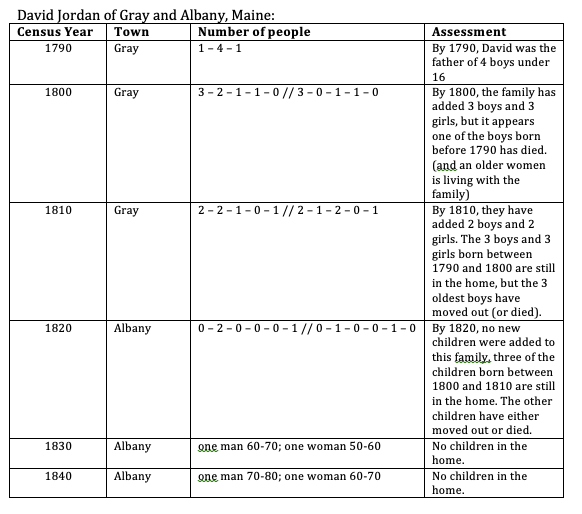
With this information, we can start to develop a skeleton outline of children born to David Jordan and his wives. Once a visual outline with number of children and their sexes is developed with these census records, we can start to search for records to fill in the blanks. David and his wives had:

By creating such a chart, we have an idea that we are looking for about 14 children born to David Jordan. Now we need to change “boy, born b/w 1782 &1790” to a name of a son. However, there are not any vital record entries for this family in either Gray or Albany, Maine, searching for documentation in less obvious places is required; published genealogies found on Google books, probate records and pension applications provided a source of information on this family. Then it was important to look at all these possible children to see if they note their parent’s names in their marriage and death records, and to check Find A Grave (.com) for gravestones to figure out birth order.
Documentation:
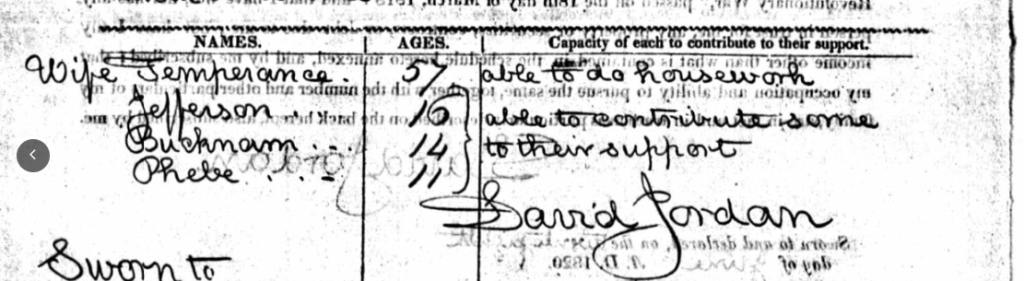
Now with this information and the outline we created we can develop David’s family:
Children of David & first wife are:
Children of David & second wife are:
Locating the probate record was a wonderful find! It confirmed what the various genealogies had to say and made it very easy to fill in the blanks. Knowing how to best utilize and analyze census records and then taking the kernals of information they provide and knowing where to look for new information may lead to answers. However, it make take years of searching to find missing ancestors, but don’t give up!

So you think you have searched just about everywhere to find an elusive document that will prove a family connection. You know they come from a particular town in a particular state. You have searched every online database you could find, you’ve written to the town clerk and local historical society and you have not had any luck. Now you are totally frustrated and do not know where to turn next. I would suggest you take a break from your genealogy hunt and start a history hunt!
Having a working knowledge of the history of a certain area, immigration patterns, naming conventions, etc., can help you to break down a brick wall, or at the very least, it will help you to understand why your ancestors did what they did as well as put them into historical context. Having a better understanding of the big picture, can point you in a new direction to research, or to the archive that may have that elusive document in their collection.
The Establishment of States, Counties and Towns
I live outside of Boston, Massachusetts. Records here go way back, which is awesome, but knowing where to find them can be tricky! For instance, Norfolk County was established in 1793, being “set off” from Suffolk County. So if you are looking for land deeds, probate records or any other legal document for someone who lived in Norfolk County pre-1793, you will find it in Suffolk County. Then there is the added confusion of an old Norfolk County in Massachusetts. It was established in 1643 and was what is today New Hampshire’s seacoast. Records from this old county, which ceased to exist when New Hampshire was established in the early 1690s can be found in the Essex County Registry or Deeds in Salem, Massachusetts. The town of Norwood was established in 1872, for almost 150 years it had been the Village of South Dedham, which was a precinct of the town of Dedham. Records regarding people who lived in Norwood/South Dedham before 1872 can be found in the town of Dedham. Have you done research in the state of Maine? Knowing that it was established in 1820, being set off from Massachusetts, will point you to the Massachusetts State Archives to find documents on Maine pre-1820. Out west, many counties were established from larger counties, and much of Arizona, New Mexico, California and Texas at one time were part of Mexico. So it is important to learn about these geographical changes in order to find information.
The New York State Dutch

The Dutch settled in New York State. We know the original name of Manhattan was New Amsterdam, which was a city within the colony of New Netherlands. This colony encompassed parts of modern day New Jersey, parts of coastal Delaware and stretched as far north as Schenectady and into parts of New England and was originally settled in the early 1600s and by 1700, it became part of the English colonies. Some Records from New Netherlands can be found at the New York State Archives and records from the Dutch India Company can be found at the National Archives in The Hague, in the Netherlands. Most of these records are in Dutch, so a translator may be necessary. When researching New York Dutch it is important to keep in mind that when they came to the east coast of North America, they brought with them their Dutch customs. One of these customs was their patriarchal naming custom. In other words their surname was their father’s first name with “son” or “daughter” following (ex. Jansson or Jansdotter) by the mid-1700s they began to adopt the family name custom, their English neighbors had been using for hundreds of years.
Immigration Patterns
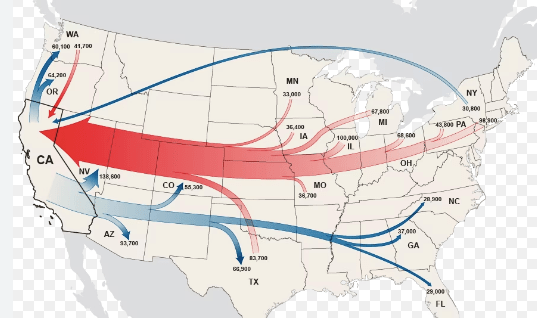
Knowing the paths immigrants took as they moved across North America is important, as well as knowing why they moved. I have run across records where someone recorded a New England groom marrying a Virginia bride in the early 1700s, and then of course this error is repeated and repeated in dozens of trees. Sure, there is a possibility this could have happened, but it is more likely there was a woman from New England who had the same name, and some researcher just clicked and accepted the name. With research, you can confirm these connections, some make sense and others do not. I had a family I was working on who lived outside of Boston, then someone shows they had a son move to New Jersey in the late 1700s. I thought this was an error, as most New Englanders either relocated to other New England states, or just kept pushing west through New York. With some study, I discovered this fellow indeed went to New Jersey. I tracked another New Englander from Vermont, through New York and finally Ohio over the course of thirty years. Many online trees had him coming from New Jersey. That is because his third (possibly fourth wife) Sabra (Mount) Vorhees (Look! There is one of those Dutch surnames!) was from New Jersey. Then he joins up with the Mormons and I further track him to a variety of Mormon settlements. Through careful study all his relocations make sense. Further, they can help confirm other familial relationships.
It is in the history of an area answers to genealogical questions can be found. So do not give up your genealogical searches….instead switch it up and look for the history. You never know what you will find!

I think as learners we all get to a place where we need to turn to someone for help. There are plenty of online sites that have information that may hold the key to your questions – Facebook, YouTube, and blog posts are just a few that come to mind, and they may indeed have the answer you are looking for….but they can just as easily give you what you think is the answer, but it only confuses you more. As genealogical researcher, your questions may go from what does this word mean? To how do I break down a brick wall? And pretty much everything in between. The very best thing for you to do is to consider attending a genealogical club or conference to teach YOU how to do something new, instead of relying on input from a stranger. Over the years I have attended many genealogical conferences that not only simply educated me on a new technique or showed me a better way to find records, but these conference presentations fortified my research skills and has continued to assist me as a researcher, because I know what I am looking at.
When DNA first came on the scene as a way to find wayward ancestors, I was not interested. I had a friend who was lovin’ it! And even she could not convince me to give it a whirl. Then one weekend I found my schedule was free AND my husband was willing to hang out with the kids, so I went to nearby Genealogy Conference….it was being held at a facility less then an hour from my home. I showed up as a walk in. There were booths to peruse, and books for sale, but best of all there were programs to attend. I decided to take in the DNA presentation, which was a two-part presentation.

The presenter really started with the basics, starting with the vocabulary and then moved into using that vocabulary to explain what a DNA report was showing, and how to use that information to find family connections. She had a family mystery she was hoping to solve. She took us through her search step by step, showing us the breadcrumbs she discovered along the way. As her presentation progressed, she began to show us how she then put these pieces together to find her answer. I walked away with a new appreciation of DNA and how it can be used to break down a brick wall. I played with it for a couple of years, before I decided I needed to attend another conference. This was a week long one, and sadly because of COVID, I ended up attending it from the comfort of my own couch. We had presentations from several genealogical DNA rock stars. Their information added to my DNA tool kit, giving me a deeper understanding, as well as some new techniques that strengthened my skills.

These conferences have been very helpful to me! Plus, hanging out with a bunch of Genealogists for a couple of days is fun! Imagine talking to someone who shares your enthusiasm! My poor husband has listened me, trying to be excited for my discoveries, but I know he is not. The conference that kicked off my DNA journey is only one of many conferences I have attended. I have taken in an all day “how to search and find Irish records,” a program I though would be helpful finding my husband’s Kearney ancestors. Another presentation I took in was “how to use ArkivDigital” Sweden’s Archives, which I figured would be helpful researching my grandmother’s line.
As genealogists, we need to think of ourselves as life long learners. The more you learn….the better genealogist you will become!
(NOTE: All pictures are from RootsTech. A large in person/virtual Genealogy Conference. It happens every year in Frebrary. Some day I plan to go!)
I married into the Kearney family almost thirty years ago, and since that time, I have been researching this family. Let me tell you it has been very slow going! First of all, my husband did not know his Kearney side of the family. This was due to the fact that his parents separated when he was an infant, and the adults involved in this generation basically had nothing to do with each other. As a child, my husband asked questions, but sensed it was a painful time in his mother’s life that she did not want to discuss. Enter the genealogist.

My mother-in-law knew how much I enjoyed family research. Over the years she would tell me stories about her family, so she was not taken aback when I asked about the Kearneys. And seeing as over thirty years had passed, she was ready to tell me what she knew…which honestly was not a lot; his parent’s first names (but not grandma’s maiden name) and the state where her ex-husband was born. However, as I was asking questions, she remembered that a few months after she and her husband separated, his father died and she attended the funeral. So she knew exactly where his family was buried. A phone call to the cemetery gave me the full names and birth/death dates of my husband’s grandparents. Folks I knew I could find in censuses! Woohoo!
Back then genealogical databases did not have a lot of information and often were rather clunky to use. Bit by bit, and over many years, I pieced together a rather full tree for the Kearneys, but knew very little about their life before they came to the US from Ireland in the late 1800s. Obituaries in Chicago newspapers filled in some of the siblings of my husband’s great-grandfather, Cornelius Kearney. It seemed they came from County Kerry as it appeared there are baptism records (and digitized on FamilySearch), but some of the dates were off. This lead me to question what I was finding, plus in all the United States records where Cornelius Kearney appears he says he was from County Cork. Within the last year or so, I not only found through document research, more of Cornelius’s siblings…. the ones who either died young, or never relocated to the United States, but I found Irish census records that show the family in County Cork. Cornelius’ youngest sibling was born there when Cornelius was about ten years old. Which means that when Cornelius was asked where he came from…. he said correctly, he came from County Cork.
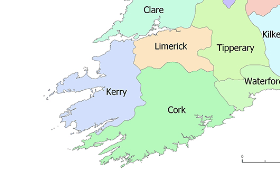
Irish research is tricky. I am extremely lucky to have found records on this family. Lack of Irish records is largely due to Ireland’s Civil War, as the country’s archives were destroyed. This means Irish records are spotty, and often a researcher must rely on records at the village/city or county level; records like land records, dog license applications, etc.
Very recently, I decided to look at DNA to see if I could expand the Kearney line. Both my sons have taken Ancestry DNA and my husband 23 and Me DNA. Looking at their matches and figuring out how they fit into the family tree, I’ve been able to learn more about Cornelius’ siblings who stayed in Ireland…marriage, children (‘cause they are the DNA descendants who took a test) and from their trees I found the death date for some of these siblings. I should note that originally I found Cornelius was one of five siblings who came to the United States. Kerry church records show he was one of twelve children, one who died young.

The DNA also showed me a genealogical match to a Kearney branch who moved to New Zealand. Interestingly, someone from this branch reached out to me a few years ago. She had a theory that her great-uncle Patrick Kearney, married his cousin, Anna Kearney (Cornelius’ sister). She wondered what I had on my branch and if there was any truth that could prove her theory. Today I know that answer. My sons share DNA with this woman…. as well as another woman who is a second cousin to the lady from New Zealand. This shows that Patrick Kearney and Anna Kearney were cousins! When Patrick’s father married a second time, he listed the name of his father as Patrick…and Cornelius and Anna also have a brother Patrick. Further exploration is need with this line. One technique I did was to make a spreadsheet to record all the baptisms of Cornelius and his siblings, but I included the names of all the sponsors, hoping this will give some clues to other family members.
Kearney DNA is also showing me relatives to Cornelius’ mother, Catherine Curtin’s family. Although I have not proven any line, it appears Catherine has relatives…either brothers or a father named Cornelius Curtin and Laurence Curtin. Catherine named two of her sons: Cornelius Curtin Kearney (my husband’s great grandfather) and Laurence Curtin Kearney.
You can see that by using DNA records one can grow a family tree, and not just find a missing DNA relative. I can see this is the start of something promising, but it is going to need a lot more research to prove anything. But I am up to it!

