

What kid doesn’t like a good game of Hide and Seek? Or I Spy with my Little Eye? Here is an activity that has finding-game vibes, but is also a way to give tidbits of information to get the game going.
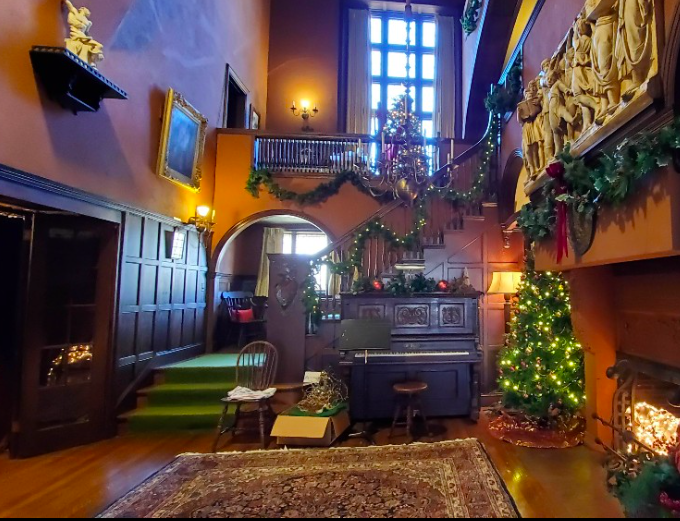
The Norwood Historical Society has a beautiful Victorian House as their headquarters. It contains a wonderful collection of papers and artifacts that help to tell the story of Norwood. But if you were to enter with a child, you might see the entire house as a giant “do not touch” zone. Trying to come up with ideas to make history inclusive for families and fun for children is the trick, especially in a grand old house.

In Norwood the resource officer has a dog, Mustang Sally, and all the children in town just love her. She is a rock star at every event she comes to. Finding a way to incorporate Mustang Sally in the Norwood Historical Society’s house seemed like an opportunity to make a fun game for the children who came to visit. If you think this is a fun idea for your historical society or museum, of course you should find an item that represents your town or museum or history. The possibilities are endless!
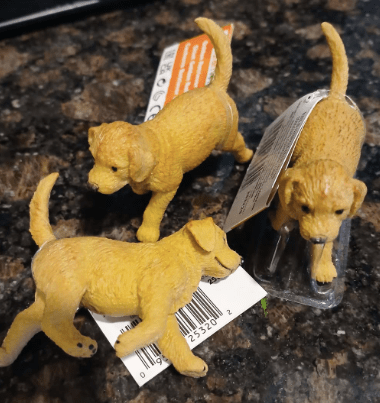
You will want to acquire several history icons. I found small golden retriever statutes that look a lot like Mustang Sally at a local craft store. To get the game going, you will have to first decide the places your little icon will hide. Think about hiding it at kid eye level. Also consider the history you want your little visitors to learn.
Next make clue cards that will give the seekers a hint as to where the little icon is hiding. That card can have little nuggets of historical information in it. Place the card just inside the room where you have hidden your icon. This way, children will know there is a little something to find in that particular room. That way they are not searching in rooms where nothing is hidden. You can provide a check-list for each child to write down the locations of the hidden objects. When children are done with the search, you can ask them questions about the game, what they found interesting, and so on.
Being creative with ways to present your museum to younger visitors or to families with children, can be a fun way to tell your museum’s history.

 Laurie L. Kearney