
I have been going to cemeteries ever since I was a little girl. I would accompany my grandmother on Memorial Day and Veteran’s Day to help her weed and plant flowers. It funny to think, a little girl who was comfortable running between the headstones was a teen who was spooked by cemeteries by simply driving past one! As an adult, I realized how important cemeteries where for genealogists and historians; they held facts and stories of the past. Several years ago, I decided to transcribe the cemeteries in my town as well as the neighboring towns. I put them on line through my local library.
As I got to “know” each little cemetery and the people buried there, I realized what a wonderful classroom they can be! They tell the history of the town.
Lesson Idea:
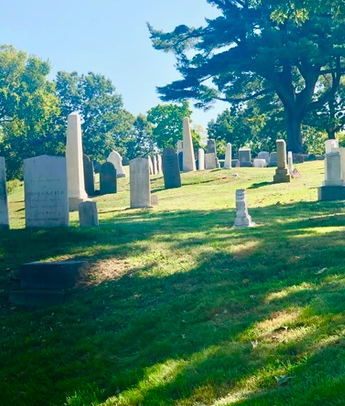
This is a lesson for kids 9 to 99. (9 year olds are beginning to become abstract thinkers and can comprehend this lesson).
The first thing you will have to do, is to visit your local cemetery. You can do this in person, or via Find A Grave. Plus you will need a working knowledge of your town’s history. If you do not, reach out to the historical society. They may be willing to help you develop this lesson as they too can use it too!
As an example, I will use the Old Parish Cemetery in Norwood, MA. I would start at the gravestone of Rev. Thomas Balch. Which sits on the top of the hill, one of the earliest sections of this cemetery. When Rev. Balch was called to be the minister, the Second Parish of Dedham was officially set off, which essentially was the creation of a new “town.” The first Deacons of the Church are buried here, as well as many of the men who established businesses in the town and helped the town grow, also there are many soldiers, some who fought in the French & Indian War, or the Revolutionary War and the Civil War. As you wind your way down the hill, toward its bottom, the graves are newer, it is like walking on a timeline of Norwood’s history.

As you move through this cemetery, you will notice the gravestone styles change. Stone up to the early 1800s are slate tablets with etchings, in the early 1800s stones were made of white marble and have carvings, by the mid to late 1800s granite became popular, these stones tend to be large and each grave is marked with a footstone. This can also add to your town’s history story as you can discuss the etched and carved meanings of the stones.
There are many topics you can weave into your talk, such as is the Cemetery-Garden movement, and who gave the land to establish the cemetery. As you dig into the history, you may find interesting tidbits of information.
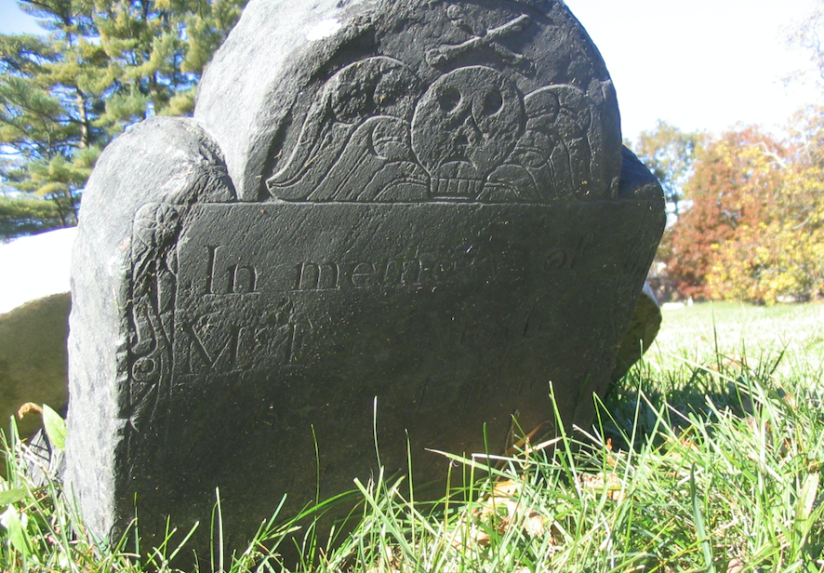
A follow up activity to the cemetery walking tour, you could create a scavenger hunt. Break your class up into groups of 3 to 5. Give them a clipboard and pen to record their findings. On the clipboard is a worksheet with the list of items to find; Gravestone with an angel carved on it, gravestone for someone named Elijah, gravestone for three children, etc. Give the teams a set amount of time to complete the scavenger hunt, and then review their findings.

 Laurie L. Kearney