

Who were the enslaved people who lived within the towns of the original Dedham land grant and what was life like for them? Identifying the enslavers, helps to illustrate the kinds of jobs enslaved people were expected to perform for their enslavers, and knowing the kinds of jobs enslaved people performed may provide clues as to the kind of jobs they took once they were freed. Most of the towns considered within this study were mostly agricultural communities, and most of the enslaved appear to have performed farm labor, however, some learned trade such as blacksmithing. Another benefit of identifying who the enslavers were, also helps to identify whom they enslaved. These are people who did not leave behind documents, nor have studies been done on them. Unfortunately, many are not named in some documents, they are simply listed as “Negro servant woman,” or if they are named in these documents, once they were freed, they may have taken a new name. All of these factors make it tricky to uncover their stories.

Clues can be found in the naming patterns of enslaved people. Traditional names that were selected for people of color, by their New England masters certainly have a pattern. Some names for males came from classical Greek mythology – Ceasar, Cato, and Nero. Some had their roots in Latin – Primus or Felix, and others got their names from cities or towns – Boston, London or Newport. Females names also were taken from Greek mythology, such as Dido and Phoebe, and often females names are derived from plants, like Violet and Flora, which appear to be frequently used names of enslaved women. It is interesting to note that when enslaved people named their children, they selected traditional English names – William, Francis and Esther. It also appears that when they are trapped in enslavement, they do not have a surname, but when they are free, they take a surname. Sometimes that name may be the surname of their enslavers, and other times they select their own unique surname. Mum Bet, an enslaved woman who sued for her freedom under the newly ratified Massachusetts Constitution in 1780, took the name “Elizabeth Freeman,” which proclaimed her status as a free person.
An interesting fact bubbles to the surface regarding those who had been enslaved in the original Dedham land grant towns. Once people of color were freed, they very seem to remain local. Staying in the town where they were enslaved, or moving to a neighboring town, and others appear to move frequently between neighboring towns, never seeming to settle anywhere – but still staying local. There are several logical reasons newly freed people of color stayed either in their “hometown” or moved to a neighboring town. They could have chosen to live anywhere, such as Boston where there was a large population of people of color living on the backside of Beacon Hill. In Boston, people of color may have found it easier to pick up manual labor jobs along the waterfront, plus being part of a large community of people who shared similar values and traditions, would have provided a feeling of belonging – something they most likely did not have in small white towns. However, those unskilled labor jobs on the waterfront could be dangerous for people of color, because there was always the possibility of being kidnapped and shipped to places where slavery was still legal, and be sold – perhaps a reason to remain in their known community.
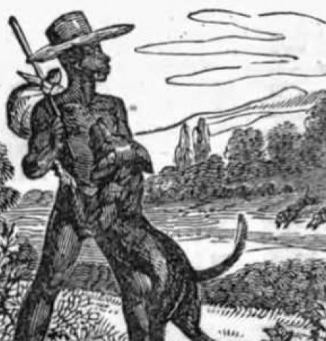
Another reason, so many ex-enslaved may have stayed in the towns where they had been enslaved, is that town was were they “belonged.” This term does not denote ownership, but indicates someone’s hometown. Should they become indigent and a town charge, then their hometown was responsible for caring for them. If a possible indigent person was not living in their hometown, they would be “warned out,” in other words, told to leave, unless someone stepped forward an told the town they were providing for the indigent person. In 1703, the Commonwealth of Massachusetts passed a law making enslavers pay a bond to their town, if they wished to free their enslaved, just incase their ex-enslaved person should become a town charge, then there would be funds to help support that person. After 1783, this was a huge issue for Massachusetts towns, as they found themselves with a population of poor ex-enslaved in need of care, but because the state deemed then “free,” enslavers did not pay any bond. It should be noted, that enslavers did not believe they should be responsible for their ex-enslaved people, as they did not free them. Towns began to sue other towns and the state for the support of these indigent ex-enslaved people, trying to establish were these people “belonged” and making that town pay support.
Another reason to stay local is it might be easier to find jobs, because people in the community knew them. Unskilled labor jobs in agricultural communities most likely were seasonal, making it difficult to find long-term employment. These were the people who often ended up on the town’s poor rolls. Those who had specialized training, such as blacksmithing, were able to find more steady and consistent employment, which meant they could financially support themselves and their families, and not become a charge on the town. As a member of a country community, a person of color was known and recognized as a neighbor, which may have provided a small level of safety. However, it should be noted that even though people of color that were known by their neighbors, always lived on the edges of white society. Never being allowed in, but providing labor to help run white society and relying on white society to provide alms should they become indigent.
Once some of the enslaved people who lived in the original Dedham land grant towns have been identified, a sketch of their lives can be developed. By looking the scant primary and secondary documents that can be found on the lives several people of color, from Dedham, Medfield, Medway and Walpole, of people who had been enslaved and then freed, will help to illustrate their lives during their enslavement and after they were granted freedom. Some bought their own freedom, others were granted their freedom, but in theory all enslaved people had eventually acquired their freedom after 1783, when slavery was deemed to be unconstitutional in Massachusetts.
 Laurie L. Kearney