

Today, many people are often surprised to learn that at one time, Massachusetts’ residents could legally own slaves. In fact, captured Africans began arriving in New England soon after the English began settling the Massachusetts Bay and Plymouth Colonies. The earliest recording of “negros” arriving in Boston is 1638, and by 1641 legislation was passed called the “Bodies of Liberties,” making slavery legal in Massachusetts. This practice remained acceptable in the Commonwealth until a 1783 judicial declaration; The Massachusetts State Constitution did not support slavery.
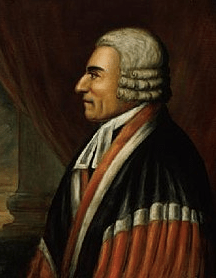
In 1783, Massachusetts Supreme Court Chief Justice William Cushing said in a charge to a Jury that slavery was incompatible with the Massachusetts Constitution. In the case, Commonwealth v Jennison, (known as one of the Quock Walker cases), Massachusetts prosecuted Jennison with criminal assault, as he had physically attacked Walker a few years earlier. This attack was event that initiated the Quock Walker cases, and in Walker v Jennison, it had been decided that Walker was a free man. Cushing seems to be charging the jury to decide if Jennison was guilty of assault and not if Walker was free (as that had already been decided). The jury agreed and found Jennison guilty of assault. Although Cushing’s charge is theoretically considered the end of slavery in Massachusetts, it does not mean slavery ended immediately in 1783. Today most historians believe slavery ended gradually over the next decade or so. It is interesting to ponder, how did that change things for enslaved people after 1783?
Compared to other states, people of color, both enslaved and freed, were a small percent of Massachusetts population. Most lived in port towns where their labor was needed on the waterfront. Quite a bit of information is easily found or has been previously researched on wealthy Massachusetts slave-owners, and some of their slaves, most who lived in large towns, such as Boston and Salem. Less is known about slave owners and their enslaved people who lived in the countryside around Boston. Often when we think about slavery in agricultural areas, we think of large southern plantations that relied on many enslaved people to work their fields. So why were enslaved people needed in the remote countryside of Massachusetts, where most farms were basically subsistence farms?
Considering the history of slavery in Massachusetts, this study will look at slavery in some of the fifteen towns that were set off from Dedham’s original land grant, because of this, Dedham is often referred to as “the mother of towns.” Dedham was settled in 1636, and over the next century, fifteen towns and parishes were established from Dedham’s original land grant. Slavery in these towns most certainly occurred, and yet history is silent. What were these towns association with slavery? Who were the slave owners? And what about the people they enslaved? This study attempts to answer these questions, by identifying the enslavers and the enslaved, through primary sources – church and town records, wills, land deeds, court records, tax records, and censuses – and then cross referencing them with published histories of these Dedham land grant towns.

Focusing on a time frame in the late 1700s, just before and after slavery was deemed unconstitutional in Massachusetts, this study will attempt to uncover people who were enslaved. The first step was to find enslavers, which would hopefully lead to a documentary trail of the people they enslaved. Admittedly, this is often a trail that does not exist, because the labor class seldom leaves behind evidence of their lives. The research began by looking at published histories of towns who were set off from Dedham’s original land grant, to identify people who most likely would have owned slaves, then possible candidates were cross referenced with published genealogies; some which may confirm slave ownership. The other source considered were published church and town records, some which noted a baptism or a marriage of a “negro servant,” and listed the enslaver. Once a list of possible enslavers was developed, the next step was to look at the documentary evidence these people left behind, because the wealthy class almost always leaves evidence of their lives. It is through these censuses, wills and administrations of estates, deeds, tax and court records that enslaved people can be found.
By studying primary documents, in a time frame of approximately 1740 to 1810, from a few selected towns who were originally part of the Dedham land grant, will identify and give some insight into what life was life for enslaved people who lived during and after slavery.
 Laurie L. Kearney