

Newport Green according to his military papers was born in 1741. Like most enslaved people, his origins are unknown; where was he born and who were his parents? There are conflicting secondary sources stating where he was born. Medfield published histories (Tilden) say he was born in Africa, and Needham histories (Clarke) note he may be of mixed race, – – half native American and half African indicating he was born in the Colonies to an enslaved woman. One thing is curious, Newport was a nailor, a skilled laborer who made nails. Where and when he learned this trade is unknown. He first appears in records on April 6, 1763 when Uriah Morse of Medway sold him to Moses Hartshorn of Medfield, by for £60. This high price indicates Newport had a skill, making him more valuable than an average laborer. It is reported that at one time, the receipt for this sale was on display at the Medfield Public Library. Knowing who two of Newport’s enslavers were, Uriah Morse an Innkeeper and Moses Hartshorn a blacksmith, may not provide an answer as to where Newport learned to be a nailor, but indicates he learned the trade before 1763.
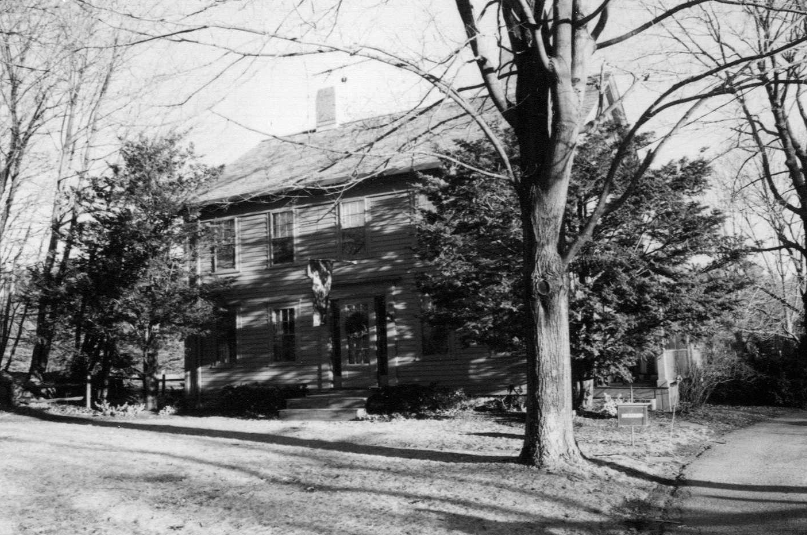
It is not known how long Newport was enslaved by Hartshorn. It is reported that Hartshorn was an abusive master. So much so that several concerned citizens pooled their money and bought Newport’s freedom and posted a bond to the town of Medfield should Newport become a charge on the town’s poor rolls. Newport most certainly was free when he enlisted in the militia in July of 1778, where he served a two-month term in Capt. Amos Ellis’ Company. It is said he took the surname Green at this time, in honor of his friend Warwick Green. Newport’s relationship with Warwick adds another level of confusion to documenting Newport’s life. In a 1897 paper presented to the Medfield Historical Society by William Tilden, a Medfield Historian, noted that both Newport and Warwick “were attached to the same wealthy family,” presumably to John Greene. Warwick is definitely attached to John Greene as he served in the Revolutionary War for John Greene, which also appears to be how Warwick received his freedom. There are indeed similarities between Newport and Warwick which could possibly give credence to the notion they both belonged to John Greene; both were nailors, both were named after towns in Rhode Island, both carried the surname “Green,” and they most certainly seem to have known each other. However, John Greene’s time line does not fit with Newport’s timeline, as Greene came to Medfield around 1770 and Newport had already been there for approximately eight years.
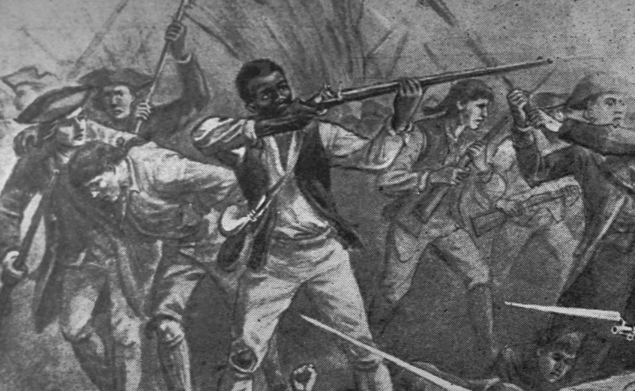
Newport begins to show up in documents at the time of his enlistment in 1778. He re-enlisted for another two-month term in February of 1779 serving in Capt. Elijah Lewis’ Company, and in 1780 he was stationed in Springfield. Horace Mann reports Newport moved to Natick in 1778, if this is true, it would have happened after his military service, but when he married, he recorded his intentions in both Natick and Medfield, indicating he was still a resident of Medfield. On November 11, 1784, Newport married Phillis Fudee. They settled in Medfield, where they are enumerated in the 1790 Federal census, and where the births of their first three children are recorded. By the time the family moved to Natick in 1793, two of their children died. The family settled in Natick very close to the West Needham (now Wellesley) border. Initially Newport was issued a warning out of town, telling him “to depart and tarry here no longer,” but the family did not leave. At that time, Natick was worried the Green family would become a financial burden on the town. However, their had no need to worry as according to a 1798 tax list, Newport was renting a three-acre property from Peter Brandt. It appears Newport found jobs as a nailor, and was able to afford a comfortable life for his family. He was paid for making the nails for Natick’s West School. It was even reported that Newport provided a lot of assistance to some of Natick’s poor. In 1797, Newport and Phillis welcomed a daughter into their family, which is reflected in the 1800 US Census for Natick, reporting four “all other persons” in Newport’s home; Newport, Phillis, and their children William and Permillia.

In the early 1800s, life for Newport and his family took a dramatic change. The development of the cut nail, meant nails could now be mass-produced and Newport’s skill as a nailor was no longer needed. Jobs came his way less and less and the family began to struggle financially. Sometime before 1804 Phillis died, because on February 3, 1805 Newport married Sally Garden in Needham. The family does not appear in the 1810 Federal Census in either Natick or Medfield, perhaps they were living in someone else’s home, but it is believed Newport returned to Medfield in 1811 and settled in the area of today’s Green Street. Newport or his family, never appear to end up on Medfield’s poor rolls, perhaps this was due to the fact that a bond was paid to Medfield at the time of Newport’s emancipation. Newport died in Medfield on June 13, 1816. What happened to his family, wife Sally and children William and Permilla is unknown as records of deaths or marriages have yet to be found.
Newport experienced great financial success when he was able to make a living as a skilled laborer – making nails. So much so, he was able to help others less fortunate. When the need for his trade went away, it appears he struggled financially. Newport’s fall from the “haves” to the “have nots” illustrate how a skilled person of color had an easier time supporting himself and his family, verses one who was simply an unskilled laborer.
 Laurie L. Kearney